
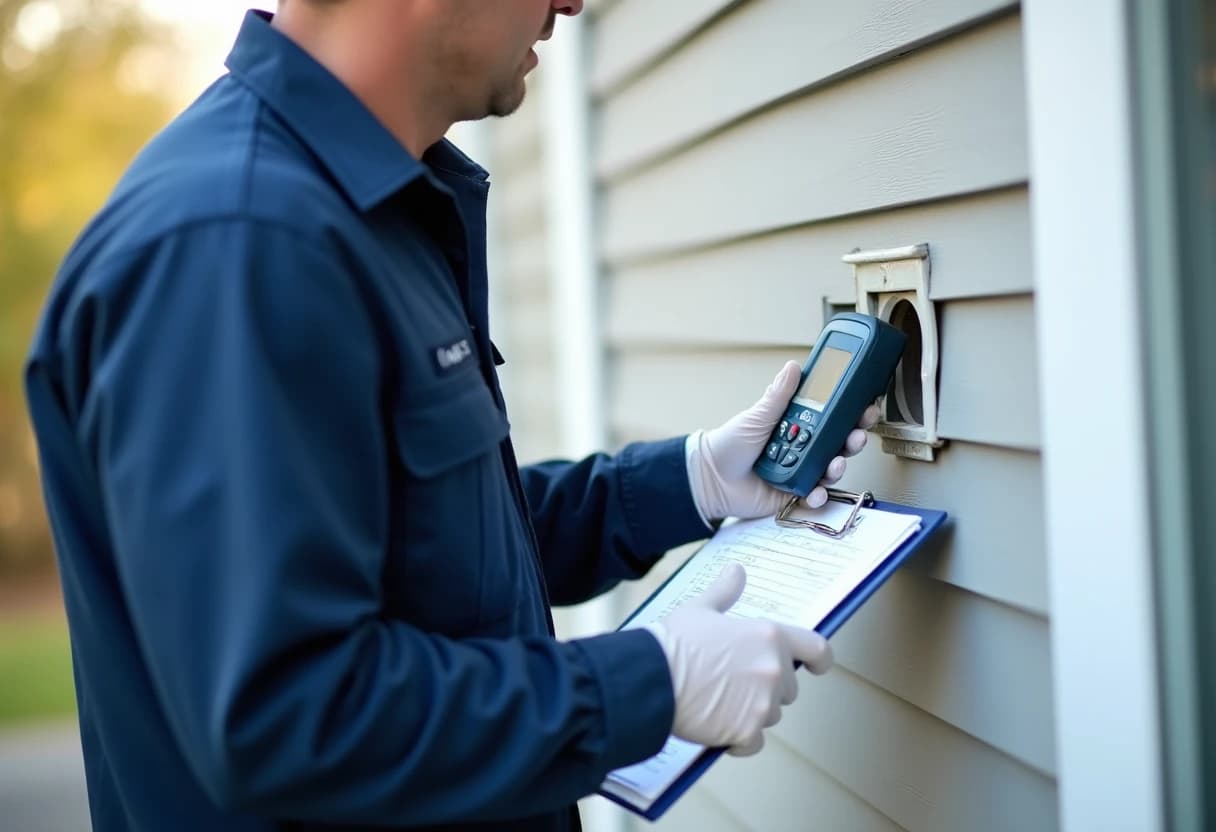
Think of a dryer vent inspection as an annual physical for the hardest-working exhaust duct in your house. In one visit, our Back Bay technician verifies four things: that air is actually moving at the volume a dryer requires, that the duct interior is not accumulating a dangerous lint load, that the exterior hood and damper open freely and seal properly, and that the installation follows the code rules written to prevent dryer fires — smooth metal duct, legal length, proper joints. Most inspections take under an hour. Many end with good news; the rest catch a developing hazard years before it becomes a house-fire statistic or a dead heating element.
Why Dryer Vent Inspection & Safety Check Matters for Back Bay Homes
The mechanical case for annual inspection is about heat and moisture, not just fire. A restricted vent forces the dryer to run longer per load, which costs electricity or gas, wears the appliance, and cooks fabrics. It also raises the temperature inside the dryer cabinet, cycling the high-limit thermostat — a safety component designed for occasional intervention, not daily duty — until it fails, which in Massachusetts usually means a repair call in the middle of winter laundry season. Meanwhile, every minute of restricted exhaust pushes warm, moisture-laden air backward through leaks in the duct, and for gas dryers, impedes the removal of combustion byproducts including carbon monoxide. A vent that measures healthy protects the appliance, the utility bill, the indoor air and the house at once. A vent that measures weak announces the problem years before it announces itself — and an annual inspection is the only way anyone ever hears it.
Ask a Back Bay firefighter what they think about dryer vents and you will get a strong opinion — lint fires are a call they run every year, and nearly all of them were preventable. Back Bay is a nearly unbroken grid of Victorian brownstones built on filled land between the 1860s and 1890s, most long since divided into condos, alongside luxury towers near the Prudential and Copley Place. Original coal-and-radiator buildings have been retrofitted over and over - high-velocity mini-duct systems, ceiling-cassette air handlers, and full forced-air conversions threaded through plaster walls and marble-trimmed stairwells. Those retrofit runs are narrow, joint-heavy and notoriously dusty. The high-velocity small-duct systems common in Back Bay brownstones clog faster than conventional ductwork because the two-inch flexible tubing has so little tolerance for buildup. Add in landmark-district window restrictions that limit natural ventilation and dryer vents that exit through rear alley walls after long horizontal runs, and Back Bay units benefit from cleaning more often than almost anywhere we serve. That combination of aging housing and hardworking laundry rooms is precisely where annual inspections earn their keep. Our Back Bay inspections take under an hour: airflow measured at the hood, camera run the length of the duct, termination and damper checked, lint load scored, code compliance reviewed. About a third of local vents pass clean. The rest get caught early — which is the entire point.
Our Dryer Vent Inspection & Safety Check Process in Back Bay
1Interview & Visual Assessment
Every inspection opens with a short conversation and a visual survey. Drying times, error codes, humidity in the laundry room and the age of the installation all steer the inspection. The technician checks the transition duct behind the dryer first — foil accordion duct and plastic flex are immediate findings, since both are recognized fire hazards.
2Airflow Measurement at the Termination
We quantify before we diagnose. An anemometer reading at the outside hood, taken while the dryer runs, measures delivered airflow against the benchmark a dryer needs to operate safely. Strong flow with a clean camera pass means a pass; weak flow tells us restriction exists and the camera's job is to find it.
3Full-Length Camera Inspection
This is the step no flashlight can replace: a camera pass of the complete exhaust run, wall cavities and ceiling sections included. You can watch live as it travels. Lint depth, joint condition, duct material transitions and any obstructions are recorded, and representative frames go into your written report as evidence for every finding.
4Termination Hood & Damper Check
We check the exit as carefully as the run. A damper that will not open steals airflow; one that will not close invites cold air, moisture and animals. We also flag code and safety issues here: mesh screens that catch lint, terminations too close to openings or grade, and hoods damaged by weather or renovation work.
5Lint-Load Assessment & Fire-Risk Scoring
We translate the inspection into a plain-English risk score. You will know approximately what percentage of the duct's cross-section remains open, where the worst accumulation sits, and how urgent intervention is. FEMA attributes roughly 2,900 dryer fires a year primarily to lint — the score tells you honestly where your vent stands relative to that risk.
6Code-Compliance Review
We review the installation against the residential mechanical code for dryer exhaust: smooth rigid metal duct (not foil or plastic flex in concealed runs), a maximum of 35 feet equivalent length with deductions for each elbow, no screws penetrating the airstream, proper termination with a backdraft damper and no screen. Violations are photographed and explained.
7Written Safety Report & Recommendations
You receive a dated written report: airflow measurement, camera findings with photos, termination condition, lint-load score, code observations and a clear recommendation. It is formatted for practical reuse — insurance files, condo boards, real-estate disclosures — and it establishes the baseline every future annual inspection is compared against.
Benefits of Professional Dryer Vent Inspection & Safety Check in Back Bay
No Unnecessary Cleanings
The $79 inspection frequently saves the $200 cleaning. When airflow measures strong and the camera shows light accumulation, we say so in writing and leave. Customers who used to buy blind annual cleanings routinely discover their actual interval is longer — and their total maintenance spend drops accordingly.
Fire Risk Caught Before It Matters
Lint fires do not announce themselves; they accumulate. An inspection converts that slow, invisible buildup into a number and a photograph you can act on. Homeowners who inspect annually essentially never experience a vent-related fire, because the fuel never gets the chance to reach a dangerous load.
A Written Report You Can Actually Use
The report is the product: dated, photographed, measured. Homeowners file it with insurance records, sellers attach it to disclosures, landlords and condo boards accept it as compliance documentation, and buyers use it to negotiate or verify. A verbal 'looks fine' from a handyman does none of those jobs.
Protection From Moisture & Carbon Monoxide
Gas dryer owners get an extra layer of safety from inspection: the same duct carrying lint and moisture carries combustion exhaust. Verified airflow and a tight, intact run mean carbon monoxide leaves the house completely — a check that takes minutes and covers a risk most homeowners never consider.
Hidden Code Violations Exposed
Plastic flex duct in a wall, a 50-foot equivalent run, screws bristling into the airstream, a screened termination — these violations hide inside structures and cause chronic problems until someone cameras the run. Finding them converts a recurring symptom into a one-time fix.
Lower Drying Costs & Longer Appliance Life
A restricted vent makes every load take longer, and longer cycles cost real money in electricity or gas — often hundreds of dollars a year in heavy-laundry households. Inspection catches restriction at the stage where a single cleaning restores one-cycle drying and normal operating costs.
Signs Your Back Bay Home Needs Dryer Vent Inspection & Safety Check
Clothes Take More Than One Cycle
Two cycles to dry a normal load is the classic symptom of a restricted vent. The dryer produces the same heat as always — the moisture simply has nowhere to go, so it recirculates through the drum. An inspection will measure exactly how much airflow the duct is stealing.
No Visible Exhaust at the Outside Hood
The outdoor hood is the one part of the system you can check yourself, and a weak or absent exhaust stream there is diagnostic. But the hood cannot tell you where the problem lives — the duct, the damper or the dryer. The anemometer and camera answer that in one visit.
Insurance, Condo or Sale Requirements
If your carrier, condo board or property manager has asked for proof of dryer vent maintenance, that is the sign — the requirement itself. Our written report is built to satisfy exactly these requests: dated, photographed, measured and signed, delivered after a single visit.
Burning or Musty Smells During Operation
Trust your nose. Scorched smells mean lint meeting heat; sour smells mean water pooling where it should not; animal odors mean something has moved into the duct or hood. Each has a distinct cause and a distinct fix, and a single camera inspection distinguishes among them definitively.
The Dryer or Laundry Room Feels Hot
A dryer cabinet that is hot to the touch, or a laundry room that turns into a sauna mid-cycle, means exhaust heat is staying in the house instead of leaving through the duct. That trapped heat is the same heat that ignites lint. It warrants a measurement promptly.
Recent Renovation, New Dryer or New Home
Renovations disturb dryer ducts constantly — runs get crushed by new framing, terminations get sided or painted over, and 'temporary' flex connections become permanent. If contractors have worked near your laundry area or exterior walls, an inspection verifies the exhaust path survived the project.
Dryer Vent Inspection & Safety Check Cost in Back Bay, MA
For real-estate and compliance uses, pricing stays in the same $79–$149 band with a few specifics. Pre-listing and pre-purchase inspections cost the same as annual ones and include transaction-ready documentation — dated report, photographs, airflow figures and code notes formatted for disclosure packages or inspection responses; rush scheduling for pending closings is usually possible within 48 hours. Condo associations and landlords booking multiple units in one visit receive per-unit pricing that steps down meaningfully with volume — a full triple-decker or small building costs far less per unit than three separate appointments. Annual-plan customers who book recurring inspections lock the current rate and receive reminder scheduling. If the inspection finds work: cleaning typically runs $129–$249 depending on the run, repairs are quoted flat from the camera findings, and nothing proceeds without your written approval. The inspection stands alone; everything beyond it is your decision made with the evidence in hand.
Want the full pricing picture? See our complete Boston-area cost guide or call (617) 390-7145 for an exact flat quote for your Back Bay home.
Local Knowledge: Back Bay, Suffolk County
Every town's ductwork tells the story of its housing. Back Bay is a nearly unbroken grid of Victorian brownstones built on filled land between the 1860s and 1890s, most long since divided into condos, alongside luxury towers near the Prudential and Copley Place. Original coal-and-radiator buildings have been retrofitted over and over - high-velocity mini-duct systems, ceiling-cassette air handlers, and full forced-air conversions threaded through plaster walls and marble-trimmed stairwells. Those retrofit runs are narrow, joint-heavy and notoriously dusty. The high-velocity small-duct systems common in Back Bay brownstones clog faster than conventional ductwork because the two-inch flexible tubing has so little tolerance for buildup. Add in landmark-district window restrictions that limit natural ventilation and dryer vents that exit through rear alley walls after long horizontal runs, and Back Bay units benefit from cleaning more often than almost anywhere we serve. We plan Back Bay jobs around those realities, from equipment selection to time on site, and it shows in the results. If you live near Prudential Center or anywhere across Back Bay's 02116 area, we have almost certainly cleaned a system like yours before — and we can tell you exactly what to expect before we arrive.
The Best Time of Year in Back Bay
Fall is dryer vent inspection season in New England for good reason: laundry loads get heavier as the weather cools — jeans, flannels, bedding, towels — exactly when a marginal vent is least able to keep up. NFPA data also shows home dryer fires peak in the colder months, when the appliance works hardest and lint accumulates fastest. An October inspection catches summer's accumulation, verifies the termination damper before snow and ice test it, and sets the system up for the six heaviest laundry months of the year. Book it alongside the furnace tune-up; the two together cover the season's biggest hidden-heat risks in one week.
Why Choose Boston Air Duct Cleaners
Boston Air Duct Cleaners is a local, owner-operated company based at 1121 Washington St in West Newton — not a national franchise dispatching subcontractors. Every crew is our own: background-checked, factory-trained on commercial negative-pressure equipment, and fully insured. We quote flat prices before work begins, document every job with before-and-after photos, and follow NADCA-standard source-removal methods on every system we touch. That is why so much of our work comes from repeat customers, property managers and word-of-mouth referrals across Suffolk County.
Serving Back Bay and Surrounding Communities
Back Bay sits in the heart of our service area, and neighboring Beacon Hill, South End, Boston, Brookline, Seaport District, Allston appointments share the same routes. That density is why our response times in this part of Suffolk County are among our fastest — and why you will see our trucks in the area week after week.