
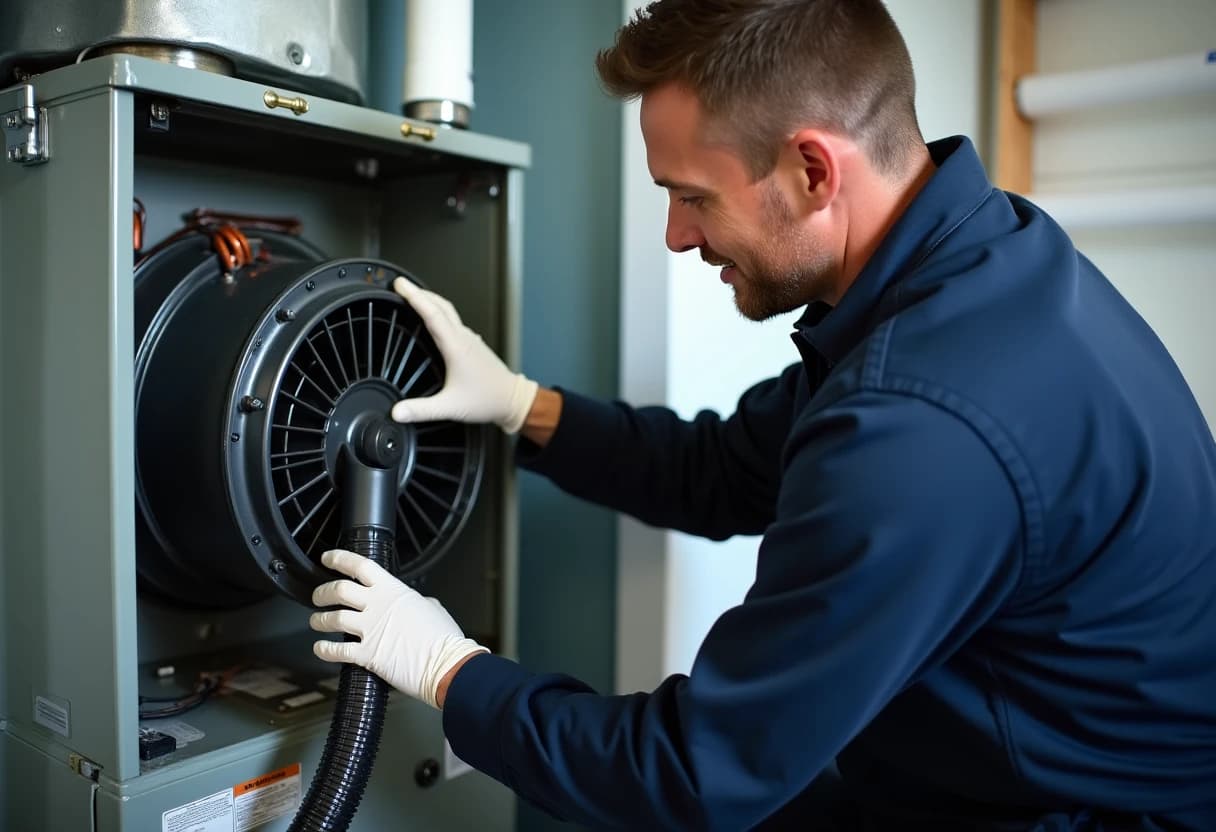
HVAC system cleaning is duct cleaning finished properly: the complete air side of your heating and cooling system — every supply and return run, the main trunks, the supply and return plenums, the blower wheel and housing, the evaporator coil and the air handler cabinet — cleaned in one coordinated visit. The distinction matters because the components work as one circuit: air that passes through a dust-caked blower and a fouled coil recontaminates clean ducts within months, and dirty ducts re-foul a freshly serviced blower just as fast. Our Greater Boston crews clean the circuit end to end under HEPA-filtered negative pressure, following NADCA source-removal standards, and verify the result with before-and-after imaging. One visit, whole system, and the airflow difference is measurable at every register.
Dust is the quiet tax on every HVAC system in Greater Boston. It collects on the blower blades and unbalances the fan; it blankets the coil and insulates it against the heat exchange it exists to perform; it lines the ducts and raises the static pressure the motor must fight every minute it runs. The system compensates the only way it can — longer cycles, higher bills, hotter-running components, earlier failures. HVAC system cleaning removes the tax. We clean ducts, plenums, blower, coil and cabinet as one job, using truck-grade negative pressure and NADCA-standard methods, and we document the transformation with photos. Customers most often report three changes within the week: stronger register airflow, faster temperature recovery, and a system suddenly quiet enough to forget.
Why HVAC System Cleaning Matters
The air side of an HVAC system fouls as a circuit, and it must be cleaned as one. Return ducts inhale household dust and deliver it to the blower; the blower drives it through the coil, where the wet fin surfaces trap a share of everything passing; the rest coats the supply plenum and duct runs on its way to the rooms, which shed it back toward the returns. Clean any single stage and the others reseed it — a fresh blower behind dirty returns is matted again within a season, and pristine ducts fed by a fouled blower gray out just as fast. That is the engineering case for whole-system cleaning, and it is also the economics: mobilization, system sealing and negative-pressure setup are the expensive parts of the visit, so cleaning the equipment while the system is already open costs far less than a second appointment ever would. NADCA's cleaning standard reflects the same logic — it defines HVAC cleaning as the full air-conveyance system, components included, precisely because partial cleanings produce temporary results.
The Greater Boston housing and equipment stock makes the whole-system case stronger than the national average. Local systems run brutal duty cycles — heating from October into April, cooling through increasingly hot humid summers — so accumulation rates are high and the efficiency stakes higher. Much of the equipment sits in basements that contribute their own load: fieldstone-foundation dust, humidity that makes buildup sticky and biologically active, and mechanical rooms that double as storage. The ductwork above it is frequently a palimpsest of decades — original trunks from a gravity-furnace conversion, extensions from two renovations, flexible runs from a condo conversion — with correspondingly generous interior surface area and leak points. And a striking share of local systems have simply never had the equipment side opened for cleaning at all: filters changed, burners tuned, blower and coil untouched since installation. For systems like these, the first whole-system cleaning is transformative — the photos look like restoration work — and the airflow recovery is the kind owners describe to their neighbors, which is how most of our Greater Boston routes filled in the first place.
How Our HVAC System Cleaning Process Works
1Full System Inspection & Airflow Baseline
Every job opens with a complete assessment: ductwork mapped and inspected by camera, filter and filter rack checked, blower compartment and coil examined, and register airflow noted room by room as a baseline. You see the pre-cleaning photos — matted blower, grayed coil face, duct interiors — and approve a confirmed flat price before any equipment starts.
2Protection, Sealing & Negative Pressure
Floor protection goes down along every work path, registers come off, and all supply and return openings are sealed. A HEPA-filtered negative-air machine connects to the main trunks, placing the full duct network under continuous vacuum — the containment that lets us clean aggressively while your living spaces stay dust-free throughout the visit.
3Complete Duct Network Cleaning
Under negative pressure, every run gets individually agitated: rotary brushes sized to each duct scrub the walls while compressed-air whips chase debris from the register end back toward the vacuum. Supplies, returns, vertical risers and both main trunks are cleaned in sequence — no run skipped, with repeat passes wherever camera checks show buildup remaining.
4Blower Wheel & Motor Compartment Detailing
The blower assembly gets restoration-grade attention: wheel removed where design allows or detailed in place, blades cleared of the compacted felt that steals airflow, motor housing vacuumed and wiped, and the compartment HEPA-cleaned to bare metal. A clean wheel moves dramatically more air — this single component is where most of the felt recovery lives.
5Evaporator Coil Cleaning
The coil is the system's radiator and its biggest hidden airflow chokepoint — fins spaced tighter than a millimeter apart trap fine dust that filters miss, and the wet cooling-season surface glues it in place. We clean the coil face and fins with methods matched to buildup severity, restoring the heat transfer and airflow the Department of Energy identifies as central to system efficiency.
6Cabinet, Plenums & Condensate Service
The air handler cabinet and both plenums — the supply box distributing to the trunks and the return box feeding the blower — are HEPA-vacuumed and wiped to clean surfaces. The drain pan under the coil is scrubbed and the condensate line flushed clear, closing off the standing-water conditions behind musty odors and cooling-season microbial growth.
7Fresh Filter, Reassembly & Verified Results
We close the system with a fresh filter — quality pleated media, or your preferred spec — reinstall every register, and run the system live. The walkthrough covers register-by-register airflow against the morning's baseline, the complete before-and-after photo set, and written notes on anything worth watching. You see the recovery, not just an invoice describing it.
Benefits You Can Expect
Airflow Restored to Design Capacity
Cleaning the full circuit — ducts, blower, coil, plenums — removes every restriction at once, and the recovery is felt at the registers the same day: stronger flow, faster temperature response, and conditioned air finally reaching the rooms at the end of the line. Weak-airflow complaints that survived a duct-only cleaning almost always resolve here, because the blower and coil were the missing half.
Lower Energy Bills, Month After Month
A clean air side moves more air per watt and exchanges more heat per cycle — the Department of Energy points to dirty coils and blowers as core efficiency drains, and Massachusetts energy prices make the recovery unusually valuable here. Customers with visibly fouled systems routinely see the difference in the next bill, and the savings recur every month the system runs.
Years Added to Equipment Life
The failure modes that kill furnaces and condensers early — overheated blower motors, stress-cycled heat exchangers, iced coils, overworked compressors — all begin with restricted, dirty airflow. Whole-system cleaning removes the root cause, letting every component run at the temperatures and loads it was engineered for. Against five-figure Massachusetts replacement costs, it is the cheapest longevity insurance available.
Cooling That Keeps Up in July
A blanketed evaporator coil cannot shed heat, so the AC runs longer, delivers less, and loses exactly when you need it most — the humid Massachusetts afternoons that now define our summers. Coil cleaning restores rated cooling capacity and, just as important here, dehumidification, so the house gets cool and dry instead of cool-ish and clammy.
Cleaner Air From a Cleaner Machine
Whole-system cleaning is the complete version of the air-quality upgrade: the duct reservoir removed and the equipment surfaces — wet coil, biofilmed pan, shedding blower — cleaned behind it. Air crossing clean components picks up nothing on its way to your rooms, which is why households report less dust, neutral-smelling airflow and easier breathing within days.
Quieter Operation, Fewer Odors
An unbalanced, matted blower wheel hums, drones and vibrates its way through every cycle — noise most owners attribute to age. Cleaning rebalances the assembly and clears the restrictions that make air whistle through starved returns, and the system drops to the background again. Many customers say the new quiet is the benefit they notice most.
One Visit, Complete Documentation
Bundling ducts and equipment into one appointment beats the piecemeal alternative on every axis: one mobilization cost instead of two, one afternoon of access instead of several, and no gap period where the uncleaned half recontaminates the cleaned one. The flat system price runs well below the summed cost of duct cleaning, coil service and blower work booked separately.
Warning Signs to Watch For
Energy Bills Creeping Up Year Over Year
If usage climbs while rates and habits hold steady, your system is paying an efficiency tax somewhere — and the air side is the usual collector. Fouled blowers and coils force longer runtimes for the same comfort, and the loss compounds annually as buildup grows. A bill trending wrong across two or three seasons is a cleaning inspection's strongest referral.
Weak Airflow at Some or All Registers
Hold a hand to the registers: airflow you can barely feel — especially in far rooms and upper floors — means the system is losing delivered air to restriction somewhere between blower and grille. Matted wheels, blanketed coils and dust-narrowed runs are the usual suspects, and whole-system cleaning addresses all three in one pass.
AC Struggling, Icing, or Running Nonstop
An air conditioner that runs all afternoon without reaching setpoint on hot days is usually starved, not undersized: a fouled coil cannot shed heat and a matted blower cannot feed it enough air. If your AC 'got old' over a few seasons rather than gradually across decades, buildup is the likelier culprit — and cleaning is the cheaper test than replacement.
Visible Buildup on the Blower or Around the Air Handler
Pull the blower compartment door and look at the wheel with a flashlight: blades carrying a visible felt of compacted dust are stealing airflow every minute the system runs, and the wheel you can see is cleaner than the coil you cannot. Visible equipment buildup is definitive — no further diagnosis needed, the system is due.
Burnt-Dust Smell at Furnace Startup
The acrid smell when the heat first fires each fall is accumulation cooking off the heat exchanger, plenums and duct surfaces — a direct sensory report of what the system carries. A faint note that clears in an hour is common; a strong smell recurring for days, or returning at every cold-snap restart, indicates a load worth removing before the season.
No Record of the System Ever Being Cleaned
Filters changed, burners tuned, blower and coil never once opened: that is the maintenance biography of most residential systems, and it means decades of accumulation on the components that matter most. If you cannot name the year the equipment side was cleaned, it has not been — and the first whole-system service will be the dramatic one.
Uneven Rooms, Noisy Cycles, Dust Everywhere
The classic trio of a fouled air side: rooms that heat and cool unevenly, a system that has grown audibly louder over the years, and dust that returns to surfaces within days of cleaning. Each has other possible causes; together they point one direction. A single whole-system cleaning typically improves all three at once, which is itself diagnostic.
HVAC System Cleaning Cost in the Boston Area
Whole-system HVAC cleaning in Greater Boston typically runs $450 to $900 — the ductwork cleaning plus blower detailing, evaporator coil cleaning, plenum and cabinet work, and condensate service in one visit. The comparison worth making: booked piecemeal, duct cleaning ($350–$700), coil cleaning ($150–$350) and blower service ($100–$250) sum well past the bundled price, because mobilization, system sealing and negative-pressure setup — the expensive parts of any visit — get paid once instead of three times. Within our range, price tracks system size (vent and return count, zone count), equipment configuration (coil accessibility varies enormously between furnace-with-A-coil setups and air handlers; some coils require panel work to reach), buildup severity (heavily fouled blowers and bonded coil blankets take repeat passes), and access (finished basements, attic air handlers, rooftop condos). Multi-system homes are quoted per system with multi-system discounts. Every quote is flat, confirmed after inspection, and inclusive — no per-main surcharges, no fuel fees, no on-site renegotiation.
Timing and bundling move the price meaningfully. Pairing whole-system cleaning with your annual furnace tune-up is the highest-value configuration — the services are complementary, not redundant: the tune-up tech handles combustion, controls and mechanical health; we handle the air side the tune-up scope skips. Booked in the same season, each service makes the other's results better and longer-lasting, and cleaning first means your tech tunes a system breathing properly. Shoulder seasons price best: late spring and late summer bookings avoid the October tune-up crush and the July AC panic, and our calendars hold genuine availability. Bundle economics apply across our services too — adding dryer vent cleaning to a whole-system visit is our most popular pairing, priced well below the standalone sum, and sanitizing treatment adds $75 to $200 when equipment or odor conditions warrant it. Finally, maintenance cadence is the quiet discount: systems on a three-to-five-year cleaning cycle stay in light-buildup territory, where jobs run faster and quote lower — the cheapest whole-system cleaning is the one that never lets the system get truly dirty.
Seasonal Considerations in New England
The Massachusetts HVAC calendar has two brutal seasons and two smart ones. Heating runs October into April — six-plus months of near-daily blower duty that both demands a clean air side and rebuilds buildup steadily. Cooling now brings genuine heat waves and weeks of tropical humidity that expose every fouled coil in the region. The smart seasons are the shoulders: a late-summer or early-fall cleaning hands the furnace a clean system for its half-year marathon and eliminates the October burnt-dust startup entirely, while a spring cleaning restores full coil capacity before the first heat wave finds the systems that cannot keep up. Book the shoulder ahead of your harder season — for most households, that means fall — and the cleaning earns its price across the entire season that follows.
Why Boston Air Duct Cleaners
Boston Air Duct Cleaners is a local, owner-operated company based at 1121 Washington St in West Newton — not a national franchise dispatching subcontractors. Every crew is our own: background-checked, factory-trained on commercial negative-pressure equipment, and fully insured. We quote flat prices before work begins, document every job with before-and-after photos, and follow NADCA-standard source-removal methods on every system we touch. That is why so much of our work comes from repeat customers, property managers and word-of-mouth referrals across Greater Boston.