
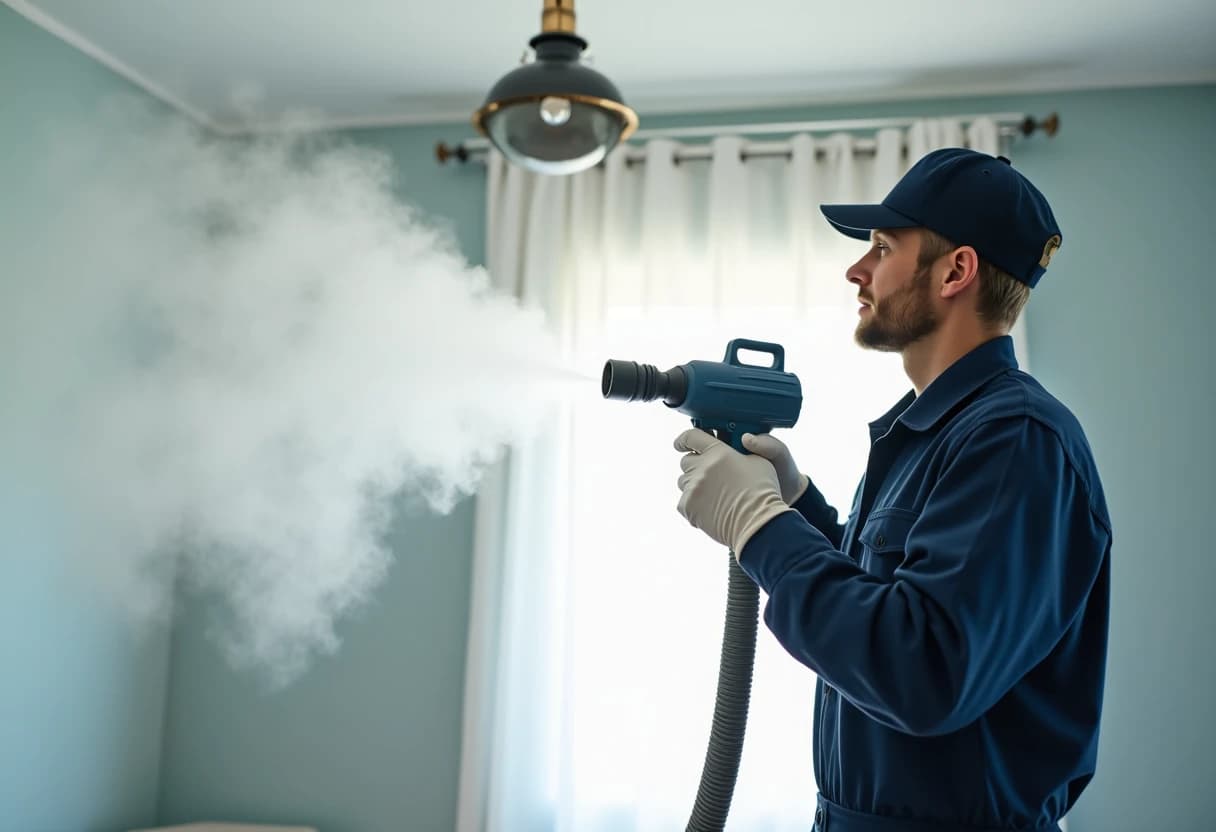
The EPA's guidance on duct treatments is specific: chemical biocides should be applied only after mechanical cleaning, and only products registered for use in HVAC systems belong in your air path. That is exactly how we sanitize ducts in Cambridge. First the system is cleaned to bare surfaces under negative pressure; then an EPA-registered antimicrobial is atomized through the supply and return network at label rates, treating the seams, joints and textures no brush can fully reach. The treatment kills odor-causing bacteria, neutralizes microbial residue and inhibits regrowth — and because it lands on clean metal rather than a dust blanket, it actually works. We will also tell you plainly when your system does not need it.
Why Air Duct Sanitizing & Deodorizing Matters for Cambridge Homes
Odors that ride the airflow defeat every surface-level remedy because the HVAC system out-circulates them all. A home's air passes through the duct network several times an hour; if that network holds odor-saturated residue, every pass re-scents every room. This is why the dog smell survives shampooing the carpets, why the smoke ghost outlives three coats of paint, and why the musty note returns each summer no matter what happens in the basement. Candles, plug-ins and sprays add fragrance on top of the odor — the olfactory equivalent of painting over rust. Source treatment is the only durable fix: remove the odor-holding film mechanically, then neutralize what remains chemically with an EPA-registered antimicrobial designed for HVAC application. Homes treated this way do not smell like lavender or 'clean linen' afterward. They smell like nothing — which, as anyone who has fought a persistent house odor knows, is the entire goal. The difference walking in the front door is immediate, and it is the single most commented-on result in our customer reviews.
Anyone who has spent a humid August near Harvard Square knows the Cambridge basement smell — and in homes with forced-air systems, that smell rarely stays in the basement. Cambridge packs an enormous range into seven square miles: 19th-century mansards and Victorians around Harvard and Porter Squares, dense triple-deckers and two-families in Cambridgeport and East Cambridge, brick apartment blocks along Massachusetts Avenue, and glassy new towers rising in Kendall Square. Many older multifamilies have had condo-by-condo mini-split and forced-air retrofits, producing short, oddly-routed duct runs squeezed into century-old framing. Return leaks and duct runs through damp below-grade spaces pull musty air into the system, where it saturates the interior film and re-broadcasts upstairs all season. Cambridge condo associations are among our most frequent callers, since a single triple-decker can hold three separate duct systems of three different ages. Dense urban traffic on Mass Ave and Memorial Drive also loads fine soot into intake ducts faster than in the quieter suburbs. Our cleaning-plus-sanitizing pairing removes the saturated film and neutralizes the biology behind the odor, which is why Cambridge mustiness calls are among our most satisfying jobs: the fix is genuinely complete.
Our Air Duct Sanitizing & Deodorizing Process in Cambridge
1Odor Assessment & Honest Qualification
We qualify the job before we book the fog. Odors that ride the airflow, spike at cycle start, or track the seasons implicate the system; odors independent of airflow usually do not. The assessment separates the two, checks for the moisture or contamination that sometimes underlies duct smells, and produces a flat written quote for exactly the work your situation supports.
2Source-Removal Cleaning First
Step one is removing the reservoir. The odor-saturated film lining your ducts is physically extracted under negative pressure — rotary brushes and pneumatic whips strip it from every supply, return and trunk while the HEPA vacuum captures it. Most of the odor leaves the house in this step; the fogging that follows neutralizes what remains and prevents the smell from rebuilding.
3Product Selection & Preparation
Preparation is checklist work that determines results: product selected for your specific odor profile, dilution mixed to label specification, fogging equipment matched to your system's size so droplet distribution covers the full duct network. We also plan the airflow path — which registers stay open, how the blower assists — so the treatment reaches the far end of every run, not just the trunks.
4Whole-System Antimicrobial Fogging
With the system freshly cleaned, the EPA-registered fog does its work at the surface level: contact-killing the bacteria that metabolize duct residue into odor, neutralizing the residual film chemically, and leaving an inhibiting layer that suppresses microbial regrowth. The application follows label contact times precisely — this is regulated chemistry applied to specification, not a scented mist waved through the vents.
5Coil, Drain Pan & Blower Treatment
The dampest components carry the strongest biology, so the air handler wet section gets direct treatment: evaporator coil surfaces, the drain pan and its trap, and the blower wheel and housing. Musty odors disproportionately originate here — a slimy pan or biofilmed coil can perfume an entire house — and treating the ducts while skipping the equipment leaves the source in place.
6Deodorizing Pass for Stubborn Odors
Antimicrobial treatment handles biological odors, but some smells are chemical: tar and nicotine films, cooking-oil residue, fire smoke. For those, we deploy counteractants that chemically neutralize the odor compounds themselves. The distinction matters — treating a smoke house with antimicrobial alone leaves the tar film broadcasting — and diagnosing which chemistry your odor needs is exactly what the initial assessment is for.
7System Airing, Verification & Walkthrough
After label contact time elapses, we run the system to air the treatment through, reinstall registers, and walk the home with you register by register. You should smell neutral air — not fragrance, not chemicals, nothing. You receive the product documentation, re-entry guidance already satisfied by the airing process in most cases, and our callback commitment if any trace of the original odor resurfaces.
Benefits of Professional Air Duct Sanitizing & Deodorizing in Cambridge
Musty Summer Smell Broken for Good
The musty cycle is self-reinforcing: each humid season's growth adds residue that feeds the next season's growth. Breaking it requires actually removing the substrate, which is what the cleaning-plus-treatment pairing does. Homeowners who assumed the smell was 'just what old houses do' discover it was just what untreated ducts do — old houses smell fine with a neutral air path.
Microbial Load Reduced System-Wide
After specific contamination events — pest activity in the ducts, confirmed mold, water intrusion — this benefit becomes the headline: droppings, spores and bloom residue carry genuine pathogen and allergen loads, and mechanical cleaning alone does not neutralize them. The EPA-registered treatment does, which is why sanitizing moves from optional to advised the moment contamination history enters the picture.
Small Add-On Cost, Outsized Payoff
Standalone treatments run $250 to $500; bundled with cleaning, the marginal cost drops by half or more. That pricing asymmetry is why we encourage odor-motivated customers to book the pairing — one visit, one setup, both halves of the fix. The alternative sequence, cleaning now and a separate sanitizing visit after the smell persists, costs more and delays the result.
Odors Neutralized at the Source, Not Masked
Homeowners who have fought a duct-borne smell describe the same arc: sprays, candles, filters, ozone gadgets, shampooed carpets — hundreds of dollars of masking, months of frustration, smell intact. Source treatment ends the arc in one visit because it is aimed at the right target. The register air itself comes out neutral, so the rooms finally stay that way.
Pet Odor Elimination That Actually Holds
The cruel mechanics of pet odor: residents go nose-blind while every guest detects it instantly. If you have wondered whether your house 'smells like dog,' the ducts are almost certainly broadcasting more than you can perceive. Sanitizing after source-removal cleaning resets the broadcast to zero — and unlike surface remedies, it stays reset, because the reservoir itself is gone.
Smoke Ghosts Finally Evicted
Tobacco residue is the most persistent household odor there is — tar and nicotine films bond to duct metal and off-gas for years, outliving paint, carpet and every previous owner. Our layered treatment pairs antimicrobial fogging with odor-counteractant chemistry that neutralizes the smoke compounds specifically, which is why it succeeds where repainting and time both failed.
Signs Your Cambridge Home Needs Air Duct Sanitizing & Deodorizing
You Just Bought the Home
An unknown air system is a reasonable default for sanitizing: you cannot see the duct film's history, and whatever the previous owners' household deposited — pets, smoke, cooking, dampness — is now on replay in your air. Between closing and move-in is the ideal window: empty rooms, open access, and a fresh biological baseline before your family breathes the system daily.
Odors Return No Matter How Much You Clean
The tell is the rhythm: rooms smell fine with the system off, and the odor rebuilds when it runs. Surfaces cannot cause that pattern; airflow can. Homeowners often spend months eliminating suspects — carpets, drains, trash areas, basements — before checking the one system that touches every room. The register test takes ten seconds: smell the air it delivers.
Pets Present or Past
Current pets write dander into the duct film continuously; previous owners' pets left their chapters behind. Either way the system holds an animal-scent reservoir that surface cleaning never touches. If the house smells of pets anywhere, it smells of pets from the registers — and treating the registers' source is the only fix with reach into every room.
Smoke History in the Home
If any era of the home's life included indoor smoking, the duct network carries the tar-and-nicotine film to prove it — and that film off-gasses for years, strongest on warm humid days when the residue softens. Paint and carpet replacement miss it entirely. Counteractant duct treatment is the step that finally clears a smoker's house.
Guests Notice a Smell You No Longer Can
A useful self-test: leave home for a full week, then pay attention in the first ten seconds through the front door before your nose recalibrates. Whatever you catch in that window is what everyone else gets every visit. If there is anything there — mustiness, animals, staleness — the air system is the first place to look.
Musty Blast When the Heat or AC Starts
Many households normalize this smell for years — a funky thirty seconds, then fine, so it never quite becomes a project. It should: the odor is live biology metabolizing residue in your air path, it recurs because the substrate remains, and it trends worse. One treatment visit ends a nuisance you had stopped noticing you tolerated.
Air Duct Sanitizing & Deodorizing Cost in Cambridge, MA
Air duct sanitizing in Greater Boston runs $250 to $500 as a standalone service, and $75 to $200 when bundled with duct cleaning — the bundle discount reflects that the system is already sealed, accessed and under negative pressure, so the marginal cost is chemistry and application time rather than a second full mobilization. Within those ranges, price tracks system size (number of runs and zones determines product volume and fogging time), the odor profile (straightforward musty or pet situations need the antimicrobial pass alone, while smoke and severe cases add counteractant treatment), and how much wet-section work the coil, drain pan and blower need. One structural note on honest pricing: because effective sanitizing requires clean surfaces, a standalone quote for a system with dirty ducts must include cleaning — which is why legitimate standalone pricing converges toward the bundle anyway. A company happy to fog your uncleaned ducts for $149 is selling you a scented failure; the EPA's guidance that biocides follow mechanical cleaning is not a formality, it is why the treatment works at all.
Want the full pricing picture? See our complete Boston-area cost guide or call (617) 390-7145 for an exact flat quote for your Cambridge home.
Local Knowledge: Cambridge, Middlesex County
Every town's ductwork tells the story of its housing. Cambridge packs an enormous range into seven square miles: 19th-century mansards and Victorians around Harvard and Porter Squares, dense triple-deckers and two-families in Cambridgeport and East Cambridge, brick apartment blocks along Massachusetts Avenue, and glassy new towers rising in Kendall Square. Many older multifamilies have had condo-by-condo mini-split and forced-air retrofits, producing short, oddly-routed duct runs squeezed into century-old framing. Cambridge condo associations are among our most frequent callers, since a single triple-decker can hold three separate duct systems of three different ages. Dense urban traffic on Mass Ave and Memorial Drive also loads fine soot into intake ducts faster than in the quieter suburbs. We plan Cambridge jobs around those realities, from equipment selection to time on site, and it shows in the results. If you live near Harvard Square or anywhere across Cambridge's 02139 area, we have almost certainly cleaned a system like yours before — and we can tell you exactly what to expect before we arrive.
The Best Time of Year in Cambridge
Summer humidity is the engine of Greater Boston's duct-odor cycle. When dew points camp in the high 60s, moisture condenses on every cool surface in the air path — coil, pan, basement trunk lines — and the organic film absorbs it like a sponge. Bacteria respond within days, and their metabolism is the musty smell that arrives with every cooling cycle from July onward. Coastal and near-coastal homes get an extended version, with marine air keeping duct-adjacent spaces damp well into fall. Sanitizing breaks the biological half of the cycle; pairing it with the moisture-side fixes — insulating sweating runs, managing basement humidity, keeping condensate lines clear — breaks the whole loop, and the pairing is what turns a yearly complaint into a solved problem.
Why Choose Boston Air Duct Cleaners
Homeowners across Middlesex County choose Boston Air Duct Cleaners for three reasons. First, honesty: our inspection camera tells you whether your system actually needs cleaning — and sometimes the answer is no. Second, capability: truck-grade negative-air machines, rotary brush systems and HEPA filtration handle everything from antique gravity-furnace conversions to brand-new high-velocity systems. Third, accountability: flat quoted pricing, before-and-after photos, insured technicians, and a real local office you can call at (617) 390-7145. That combination is rarer in this industry than it should be.
Serving Cambridge and Surrounding Communities
Cambridge sits in the heart of our service area, and neighboring Somerville, Boston, Watertown, Belmont, Arlington, Allston appointments share the same routes. That density is why our response times in this part of Middlesex County are among our fastest — and why you will see our trucks in the area week after week.