
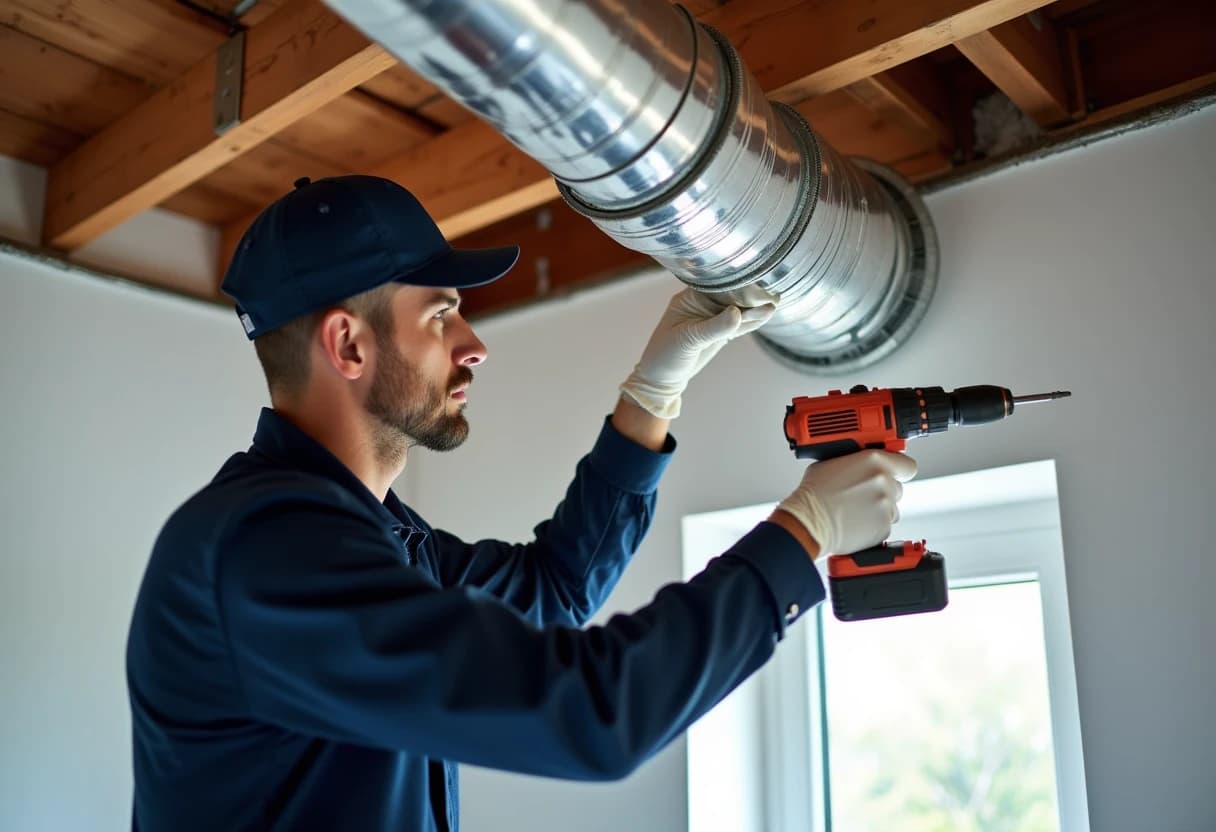
An overlong dryer vent is a permanent tax on every load of laundry. Each foot of duct and every elbow adds resistance; the code caps the total at 35 equivalent feet — with each 90-degree elbow typically counting as five feet — because beyond that, dryers simply cannot push lint and moisture to the outlet. Yet Greater Boston basements are full of runs half again that long, snaking around decades of renovations. Our rerouting service shortens them: we find the nearest legal path outdoors, often cutting a 40-foot wander to a 12-foot straight shot, and rebuild it in rigid metal. Drying times drop immediately, lint accumulation slows permanently, and the fire-risk math improves for good.
Why Dryer Vent Installation & Rerouting Matters for Manchester-by-the-Sea Homes
There is also a straightforward performance and cost case. A dryer on a proper vent dries a standard load in one cycle; on a bad vent, in two — doubling energy per load, roughly $10 to $20 a month for a busy household, while heat-cycling the machine toward early component failure. A rigid, correctly sloped, correctly sized system also changes the maintenance economics: annual cleanings on smooth duct are quick and thorough, blockage-level service calls largely disappear, and appliance repairs caused by backpressure — thermal fuses, elements, high-limit switches — stop recurring. Add the avoided moisture damage (each load carries about a gallon of water that either exits the termination or enters your building assemblies) and the installation typically pays a real fraction of its cost back within a couple of years, then keeps paying. For homes about to sell, documented code-compliant venting removes a standard inspection flag before it costs a negotiation. For homes about to install a new dryer, it protects the warranty, which manufacturers condition on adequate exhaust. Either way, it is infrastructure bought once and used every laundry day for decades.
Renovation activity around Tuck's Point keeps our Manchester-by-the-Sea installation calendar full: finished basements, relocated laundries, in-law suites and condo conversions all need new dryer exhaust, and general contractors do not always give it the attention a fire-safety system deserves. Singing Beach fog and constant salt spray make Manchester one of the harshest corrosion environments we service - exterior dryer vent hoods and flappers here fail years earlier than inland. Ocean humidity also works into duct runs of older shorefront homes, so we check coastal systems closely for moisture and microbial growth. Manchester-by-the-Sea's stock leans historic and high-end: shingle-style summer cottages turned year-round homes, antique captains' houses near the harbor and gracious estates along the Smith's Point shoreline. Many have been meticulously renovated with modern forced-air and high-velocity systems threaded through old post-and-beam framing, creating long concealed duct paths that are easy to forget about. We work alongside contractors and homeowners at the planning stage — advising on laundry placement while walls are still open, when a ten-minute routing decision can save thirty feet of duct — and we build the vent to code with documentation your building inspector will recognize. Neighbors in Gloucester and Essex use us the same way, which is why our trucks are on renovation sites across Essex County all season.
Our Dryer Vent Installation & Rerouting Process in Manchester-by-the-Sea
1Site Assessment & Route Planning
Every installation begins with the route. We assess the laundry location, measure candidate paths to the exterior, and score each against the code's 35-foot equivalent-length budget — deducting for every elbow — and against your home's structure: framing, foundation type, finished spaces, and where a termination can legally and sensibly exit. You get options with trade-offs explained, and a flat price for the route you choose.
2Demolition of Non-Compliant Venting
Where the old route will be reused, we strip it to sound structure; where it is abandoned, we seal the redundant penetrations properly — foam and blocking inside, patched and flashed outside — so the old path does not remain as an air leak or pest entry. Clean removal is part of the installation, not an extra.
3Cut & Flash the Exterior Penetration
Roof terminations get roofing-grade treatment: shingles lifted and re-laid over proper flashing, a cap rated for dryer exhaust with a working damper, and sealant appropriate to the roofing material. We schedule roof penetrations for dry weather and verify water-tightness before leaving — a roof leak is not an acceptable side effect of a laundry upgrade.
4Install Rigid Metal Duct on the Planned Route
The run goes in as 4-inch smooth-interior rigid metal duct — the material the IRC specifies — cut to fit, joined male-to-female in the direction of airflow, and assembled without a single screw protruding into the airstream: joints are clamped or externally fastened and sealed with UL-listed foil tape. Elbows are used sparingly and counted against the length budget.
5Mount the Termination Hood & Damper
The termination is a quality metal hood matched to the 4-inch duct, with a backdraft damper that swings fully open under airflow and closes tight against weather, drafts and pests — and no screen, which the code prohibits on dryer terminations because mesh mats over with lint. It is fastened to the cladding, sealed at the perimeter, and tested by hand before the first cycle.
6Connect the Appliance & Seal the System
System sealing is completed end to end: every joint taped with UL-listed foil tape, the wall penetration sealed inside and out, and the transition clamped tight. A dryer vent is a pressure system; leaks anywhere cost airflow at the termination and push lint and moisture into places they do not belong. Sealed means sealed everywhere.
7Test, Verify & Document the Installation
You receive complete documentation: photos of the route (including concealed sections before they closed), the materials used, the equivalent-length math, and the finished termination. For permitted work, condo approvals or home sales, this record answers every question an inspector, board or buyer will ask about what is behind the walls.
Benefits of Professional Dryer Vent Installation & Rerouting in Manchester-by-the-Sea
Dramatically Faster Drying
Every elbow removed and every foot shortened is resistance the dryer no longer fights on every load, forever. The performance gain is not subtle on bad systems — 30 to 50 percent cycle-time reductions are common when we replace overlong flex runs — and unlike an appliance upgrade, it benefits every dryer the laundry will ever have.
Moisture Managed, Structure Protected
For basement laundries — the Massachusetts default — proper installation is the difference between a dry basement and a damp one. Vents that dump into crawlspaces, leak at joints or condense in cold runs feed exactly the humidity and mold problems New England basements already fight; a correct rim-joist installation removes the dryer from that fight entirely.
Code Compliance That Closes Every Question
Insurers and condo associations increasingly ask about dryer venting after regional fire losses, and 'professionally installed to code, with photos' is the answer that ends the conversation. We provide certificates of insurance for association work and per-unit records for multi-family buildings as standard practice.
Permanently Lower Energy Costs
The efficiency also shows up in maintenance economics: smooth, short, sealed runs need only quick annual cleanings, while flex mazes generate blockage-level service calls and appliance repairs. Over ten years, the well-installed vent is the cheaper vent by a wide margin, before counting a single kilowatt-hour.
A Laundry Located Where You Actually Want It
Relocation also fixes inherited mistakes: many Manchester-by-the-Sea-area laundries sit where a previous owner could most easily improvise a vent, not where the household actually wants to do laundry. Once the exhaust is treated as a designed system, the laundry can finally move to where life happens.
Decades of Service From a One-Day Job
Because we also clean and repair dryer vents across Greater Boston, we install with the next twenty years of maintenance in mind — routes our own brushes can traverse, access preserved where it matters, baselines recorded for future verification. We build systems we expect to service ourselves, and it shows in the choices.
Signs Your Manchester-by-the-Sea Home Needs Dryer Vent Installation & Rerouting
Chronic Condensation the Route Guarantees
Watch the laundry itself: loads that come out damp-smelling, a duct that drips after cycles, rust tracks under joints. Chronic internal moisture is rotting the system from the inside while it feeds blockages. The permanent fix is a route engineered for New England winters, not another season of drip trays and patches.
The Dryer Vents Indoors — Anywhere
Indoor venting is often invisible until you look: the duct disappears upward and no exterior hood exists anywhere on the house. If you cannot find your termination outside, find out where the exhaust actually goes — attic discoveries after years of indoor venting routinely involve soaked insulation, staining and mold remediation on top of the vent work.
Your Vent Is Flexible Plastic or Foil Duct
Flex duct concealed in walls and cavities is the worst case: it cannot be effectively brushed, so no cleaning ever truly clears it, and it accumulates lint until it blocks. If a cleaning service has ever told you your run 'can't really be cleaned,' this is what they meant — and rigid replacement is the answer.
The Run Is Overlong or Elbow-Heavy
The symptom pattern of an overlong run: drying times that were never good, cleanings that help briefly and fade fast, and lint accumulating mid-run rather than at the ends. No maintenance schedule fixes a route that exceeds the appliance's reach; rerouting to a shorter path is the only durable answer.
Blockages and Repairs Keep Recurring
If your vent needs cleaning twice a year, blocks anyway, and has accumulated a history of repairs, the route itself is the problem — too long, too bent, wrong materials, or condensation-prone by design. At some point serial maintenance costs more than the reroute that ends it. We will do that math with you honestly; often the crossover is closer than expected.
A New Laundry Location Needs Its First Vent
Moving laundry upstairs, finishing a basement, building an in-law suite or converting a condo all create the same requirement: a new exhaust route, designed before the walls close if at all possible. Vent routing decided at the framing stage is shorter, cheaper and cleaner than the same route retrofitted through finished surfaces months later.
Dryer Vent Installation & Rerouting Cost in Manchester-by-the-Sea, MA
A note on what our installation price includes, because scope games are common in this trade. Our flat quote covers: site assessment and route design with equivalent-length verification; demolition and disposal of non-compliant existing venting, including sealing abandoned penetrations; the exterior penetration, flashed and sealed to the cladding or roof; 4-inch smooth rigid metal duct, supported, sloped and joined without airstream-piercing fasteners; insulation over unheated space where the route requires it; a quality damper-equipped termination; the UL-listed transition connector at the appliance; commissioning with a live dryer cycle and airflow verification; and photo documentation of the complete system, concealed sections included. Restoration of finishes we must open (drywall patching and paint) is quoted separately and clearly beforehand, as is any permit your municipality requires — we tell you when one applies. If a competing quote is meaningfully lower, check it against this list; the difference is usually something missing that you will pay for later.
Want the full pricing picture? See our complete Boston-area cost guide or call (617) 390-7145 for an exact flat quote for your Manchester-by-the-Sea home.
Local Knowledge: Manchester-by-the-Sea, Essex County
What makes Manchester-by-the-Sea different? Manchester-by-the-Sea's stock leans historic and high-end: shingle-style summer cottages turned year-round homes, antique captains' houses near the harbor and gracious estates along the Smith's Point shoreline. Many have been meticulously renovated with modern forced-air and high-velocity systems threaded through old post-and-beam framing, creating long concealed duct paths that are easy to forget about. Singing Beach fog and constant salt spray make Manchester one of the harshest corrosion environments we service - exterior dryer vent hoods and flappers here fail years earlier than inland. Ocean humidity also works into duct runs of older shorefront homes, so we check coastal systems closely for moisture and microbial growth. For duct and dryer vent systems, those local factors translate into specific, predictable problems — and predictable problems are the ones we solve fastest. Call (617) 390-7145, tell us your street and home style, and we will quote the job accurately the first time, usually in under five minutes.
The Best Time of Year in Manchester-by-the-Sea
New England's building stock gives installation a seasonal maintenance logic too. Coastal and near-coastal homes lose termination hardware to salt corrosion years ahead of inland schedules, making hood quality and periodic inspection part of the design conversation. Freeze-thaw cycles work on every exterior penetration, which is why our flashing details are built to roofing standards rather than caulk-and-hope. And the region's centuries-old walls — balloon framing, stone foundations, triple wythe brick — reward installers who have opened them before and punish those improvising on the day. We schedule the weather-sensitive stages around the forecast, stock the fittings old construction demands, and build every system for the specific abuse a Massachusetts year delivers: forty inches of snow, ninety-degree dew-point weeks, and the two hundred laundry days in between.
Why Choose Boston Air Duct Cleaners
Boston Air Duct Cleaners is a local, owner-operated company based at 1121 Washington St in West Newton — not a national franchise dispatching subcontractors. Every crew is our own: background-checked, factory-trained on commercial negative-pressure equipment, and fully insured. We quote flat prices before work begins, document every job with before-and-after photos, and follow NADCA-standard source-removal methods on every system we touch. That is why so much of our work comes from repeat customers, property managers and word-of-mouth referrals across Essex County.
Serving Manchester-by-the-Sea and Surrounding Communities
We serve every community around Manchester-by-the-Sea as well: Gloucester, Essex, Beverly, Hamilton, Wenham, Salem all fall inside our regular service routes. If you have a second property, a rental, or family nearby, ask about multi-home scheduling — grouped appointments on the same route are our most requested discount.