
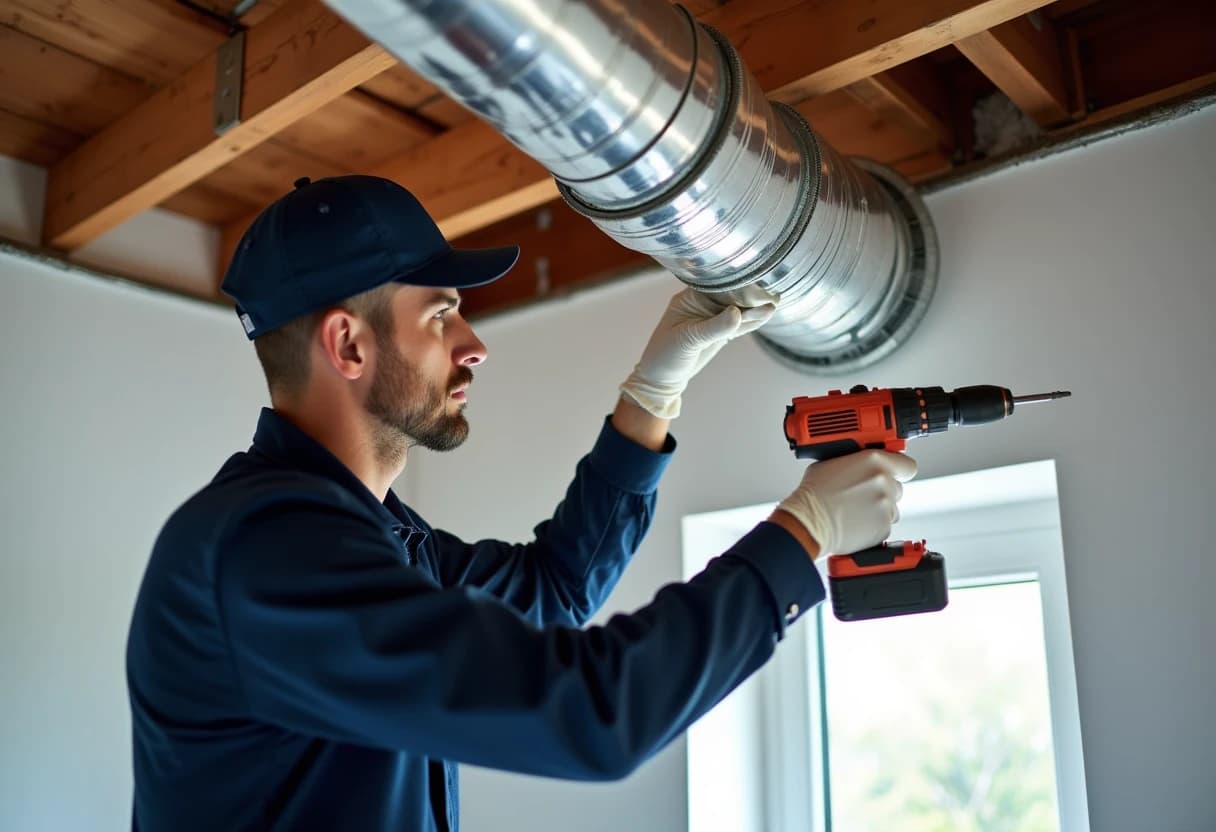
Some dryer vents cannot be cleaned or repaired into safety — they were never right to begin with. Runs assembled from vinyl or foil flex duct, routes that wander fifty feet through a basement, dryers venting into crawlspaces or garages, laundry areas with no vent at all: these call for installation, not maintenance. Our Plainville crews design and build code-compliant dryer exhaust systems from scratch — 4-inch smooth rigid metal duct, the shortest practical route to outdoors, joints without airstream-piercing screws, and a proper damper-equipped termination through the side wall, roof or rim joist. Priced flat from $300 to $900, finished in a day, and built to outlast the dryer itself.
Why Dryer Vent Installation & Rerouting Matters for Plainville Homes
Where the vent terminates shapes both the house and the maintenance schedule. Every option has an engineering trade: side-wall terminations are shortest and easiest to inspect, but must clear grade, snow line, and required distances from openings; rim-joist terminations serve basement laundries elegantly with minimal envelope disruption; roof terminations suit interior laundry rooms in condos and capes but load up faster — lint fights gravity the whole vertical run — and need durable, steep-weather-rated caps. What is never acceptable: terminating into an attic, crawlspace, garage, soffit vent or chimney, all of which we find regularly and all of which pump moisture and lint into the structure. The termination itself must have a backdraft damper that closes against winter wind and pests, and no screen — mesh mats over with lint in months, which is why the code forbids it. Our installations weigh the options against your home's layout and Massachusetts weather, cut clean penetrations through clapboard, shingle, brick or block, and flash and seal them so the envelope stays weather-tight for decades.
Routing a dryer vent through Plainville housing is a local craft. Plainville pairs a small historic center along South Street with postwar capes and ranches, and has added a substantial share of newer housing since 2000 - townhouse communities, 55-plus developments and single-family subdivisions near the Wrentham line. The newer stock runs modern multi-zone forced-air systems, while the mid-century homes typically carry first-generation ductwork that has never been professionally cleaned. Slab-built ranches here often route ducts through attics exposed to big temperature swings. Laundry areas in homes like these were carved out of basements, back halls and closets long after construction, and the legal path outdoors is rarely obvious — it threads between old framing, past stone or brick foundation, around a century of renovations. Plainville's growth spurt along Routes 1 and 152 means many residents live in homes under a decade old, where builder debris left in ducts is the most common problem we find. The town's older capes near Turnpike Lake bring the opposite issue - sixty years of dust in systems installed when the homes were new. Our installers plan Plainville routes against the code's 35-foot equivalent-length budget on site, carry the masonry bits and flashing older walls demand, and build in rigid metal that the next owner will never have to think about.
Our Dryer Vent Installation & Rerouting Process in Plainville
1Site Assessment & Route Planning
The technician maps what exists and what is possible: where the dryer sits (or will sit), which walls are exterior, what the framing and foundation allow, and where obstacles — plumbing, wiring, ductwork, finished ceilings — constrain the path. Shortest is best: fewer feet and fewer elbows mean faster drying and slower lint accumulation for the life of the system.
2Demolition of Non-Compliant Venting
Replacement jobs start with removing what failed: vinyl and foil flex pulled from cavities and joist bays, abandoned duct capped or extracted, screened hoods and window inserts taken out, and improvised terminations into attics or crawlspaces closed off. We vacuum the lint these systems have shed along their routes — hidden accumulation that should not stay in the structure.
3Cut & Flash the Exterior Penetration
Roof terminations get roofing-grade treatment: shingles lifted and re-laid over proper flashing, a cap rated for dryer exhaust with a working damper, and sealant appropriate to the roofing material. We schedule roof penetrations for dry weather and verify water-tightness before leaving — a roof leak is not an acceptable side effect of a laundry upgrade.
4Install Rigid Metal Duct on the Planned Route
Support and slope are built in as we go: hangers and strapping at proper intervals so no section can sag into a condensation belly, and a continuous pitch toward the termination so any moisture that does condense drains outdoors instead of pooling. These details are invisible when the job is done and decisive for how the system ages.
5Mount the Termination Hood & Damper
The termination is a quality metal hood matched to the 4-inch duct, with a backdraft damper that swings fully open under airflow and closes tight against weather, drafts and pests — and no screen, which the code prohibits on dryer terminations because mesh mats over with lint. It is fastened to the cladding, sealed at the perimeter, and tested by hand before the first cycle.
6Connect the Appliance & Seal the System
Gas dryers are handled with the care the fuel demands: the flexible gas connector unstrained, the machine leveled and positioned, and the connection checked before operation. Electric units get cords routed clear of the duct. The appliance end is where good systems get ruined by casual reconnection, so we finish it to the same standard as the concealed run.
7Test, Verify & Document the Installation
Before we leave: work areas vacuumed with HEPA equipment, penetration debris removed, the dryer set and leveled, and a walkthrough of the finished system — where it runs, how the damper should look during a cycle, and when the first annual cleaning is due. A correctly built vent needs almost nothing from you; we make sure you know the little it does.
Benefits of Professional Dryer Vent Installation & Rerouting in Plainville
Moisture Managed, Structure Protected
Every load pushes about a gallon of water vapor through the vent, and an engineered system delivers all of it outdoors: continuous slope drains any condensate to the termination, insulation keeps exhaust above its dew point across cold spaces, and sealed joints leave nothing to drip. Your framing, insulation and finishes stay dry, load after load, year after year.
A Laundry Located Where You Actually Want It
For renovations, early vent planning is leverage: consulted while walls are open, we can route a short, straight, fully concealed run that would be expensive or impossible after drywall. A ten-minute conversation at framing stage regularly saves homeowners hundreds of dollars and a compromised route.
Dramatically Faster Drying
Shortening a wandering 40-foot run to a direct 12-foot route transforms drying performance: full airflow means each cycle actually exhausts the gallon of moisture a load releases, so sensor dryers stop running overtime and heavy loads finish in one pass. Customers routinely describe post-installation performance as having bought a new machine.
Code Compliance That Closes Every Question
The finished system meets the IRC's dryer exhaust provisions line by line: 4-inch smooth rigid metal, equivalent length within the 35-foot budget, no fasteners in the airstream, damper-equipped unscreened termination. For home sales, that removes a standard inspection flag; for permits and condo approvals, our documentation answers the questions before they are asked.
Fire-Safe by Design, Not by Vigilance
A code-compliant installation attacks fire risk structurally: smooth rigid metal that lint slides across instead of catching on, a run short enough that exhaust velocity carries fibers all the way out, joints without screw tips to snag them, and a termination that cannot mat over. The system accumulates fuel slowly by design — safety that does not depend on anyone remembering anything.
Permanently Lower Energy Costs
The efficiency also shows up in maintenance economics: smooth, short, sealed runs need only quick annual cleanings, while flex mazes generate blockage-level service calls and appliance repairs. Over ten years, the well-installed vent is the cheaper vent by a wide margin, before counting a single kilowatt-hour.
Signs Your Plainville Home Needs Dryer Vent Installation & Rerouting
The Dryer Vents Indoors — Anywhere
A vent that ends in an attic, crawlspace, garage, ceiling cavity or bucket-style indoor 'lint trap' is an urgent installation call. Every load pumps a gallon of moisture and a charge of fine lint into the structure or living space — feeding mold, soaking insulation, and accumulating fuel where no one will ever clean it. This setup should not run another season.
Inspection, Insurance or Association Requirements
Condo associations across Greater Boston have tightened dryer vent requirements after regional fire losses, and some now mandate compliant installation on unit turnover or renovation. If your building has issued requirements, we handle the full sequence: scope for board approval, insured installation, and per-unit documentation for the association's records.
Blockages and Repairs Keep Recurring
If your vent needs cleaning twice a year, blocks anyway, and has accumulated a history of repairs, the route itself is the problem — too long, too bent, wrong materials, or condensation-prone by design. At some point serial maintenance costs more than the reroute that ends it. We will do that math with you honestly; often the crossover is closer than expected.
Chronic Condensation the Route Guarantees
Some vents condense because of damage; others condense because of design — long uninsulated passages through cold basements, garages or attics where exhaust cannot stay above its dew point, or bellied routes with no slope to drain. When repair visits keep treating water in the same duct, the route is the diagnosis, and rerouting or rebuilt insulation and slope is the cure.
A New Laundry Location Needs Its First Vent
New dryer purchases trigger the question too: installers deliver the machine but rarely build ductwork, and a new appliance connected to no vent — or a condemned one — sits unusable. If your delivery is scheduled, get the vent designed and installed ahead of it, so the first load runs the day the dryer arrives.
Your Vent Is Flexible Plastic or Foil Duct
Flex duct concealed in walls and cavities is the worst case: it cannot be effectively brushed, so no cleaning ever truly clears it, and it accumulates lint until it blocks. If a cleaning service has ever told you your run 'can't really be cleaned,' this is what they meant — and rigid replacement is the answer.
Dryer Vent Installation & Rerouting Cost in Plainville, MA
Understanding the cost drivers helps you compare quotes intelligently. Distance and elbows set the duct budget — both in dollars and in the code's 35-foot equivalent-length allowance — so the shortest workable route is cheapest twice over. The penetration is the next driver: hole-sawing clapboard is quick; core-drilling stone foundation or flashing a roof cap takes equipment and time. Access is third: exposed basement routes install fast, while runs concealed through finished walls and ceilings involve careful openings and coordination on restoration. Termination choice matters modestly — quality wall hoods, rim-joist hoods and dryer-rated roof caps span roughly $30 to $150 in parts — but skimping there is false economy, since the damper is the system's one wear component. Beware quotes that reach a low number with flex duct, screened hoods or screwed joints: each is a code violation that converts your installation savings into years of accelerated lint accumulation and future service calls. The correct comparison is rigid-to-rigid, and on that basis our pricing is consistently competitive across Eastern Massachusetts.
Want the full pricing picture? See our complete Boston-area cost guide or call (617) 390-7145 for an exact flat quote for your Plainville home.
Local Knowledge: Plainville, Norfolk County
Every town's ductwork tells the story of its housing. Plainville pairs a small historic center along South Street with postwar capes and ranches, and has added a substantial share of newer housing since 2000 - townhouse communities, 55-plus developments and single-family subdivisions near the Wrentham line. The newer stock runs modern multi-zone forced-air systems, while the mid-century homes typically carry first-generation ductwork that has never been professionally cleaned. Slab-built ranches here often route ducts through attics exposed to big temperature swings. Plainville's growth spurt along Routes 1 and 152 means many residents live in homes under a decade old, where builder debris left in ducts is the most common problem we find. The town's older capes near Turnpike Lake bring the opposite issue - sixty years of dust in systems installed when the homes were new. We plan Plainville jobs around those realities, from equipment selection to time on site, and it shows in the results. If you live near Angle Tree Stone or anywhere across Plainville's 02762 area, we have almost certainly cleaned a system like yours before — and we can tell you exactly what to expect before we arrive.
The Best Time of Year in Plainville
Winter is the season your vent's design gets examined, whether it passed inspection or not. Cold amplifies every routing flaw: exhaust crossing uninsulated basements and garages condenses hard, marginal slopes pool water into lint mats, and terminations without quality dampers ice open or shut. Meanwhile the laundry load peaks — sweaters, blankets, snow-soaked layers — pushing maximum moisture through the system at its coldest. Installations we design for New England build the winter case in from the start: insulated duct across unheated space, continuous outward slope, and dampers chosen to swing free at ten degrees in a nor'easter. If last winter exposed your current vent's design — drips, frost, February blockages — this year's install season is the time to retire it.
Why Choose Boston Air Duct Cleaners
Choosing a duct cleaner is really a trust decision — you are letting a crew work inside the system that feeds air to your family. We make that decision easy: a local West Newton company with insured, uniformed technicians, transparent flat-rate quotes, NADCA-standard equipment and methods, and photographic proof of the finished work. No door-to-door sales, no bait-and-switch coupons, no invented 'mold emergencies.' Just honest mechanical cleaning done properly the first time, backed by a written guarantee.
Serving Plainville and Surrounding Communities
Beyond Plainville, our crews cover the surrounding communities daily — including Wrentham, Foxborough, Mansfield, Franklin, Norfolk. Because routes cluster geographically, booking alongside a neighboring appointment often unlocks same-day service and combined-visit savings. Wherever you are in Norfolk County, the same flat-rate pricing, insured technicians and photo-documented process applies.