
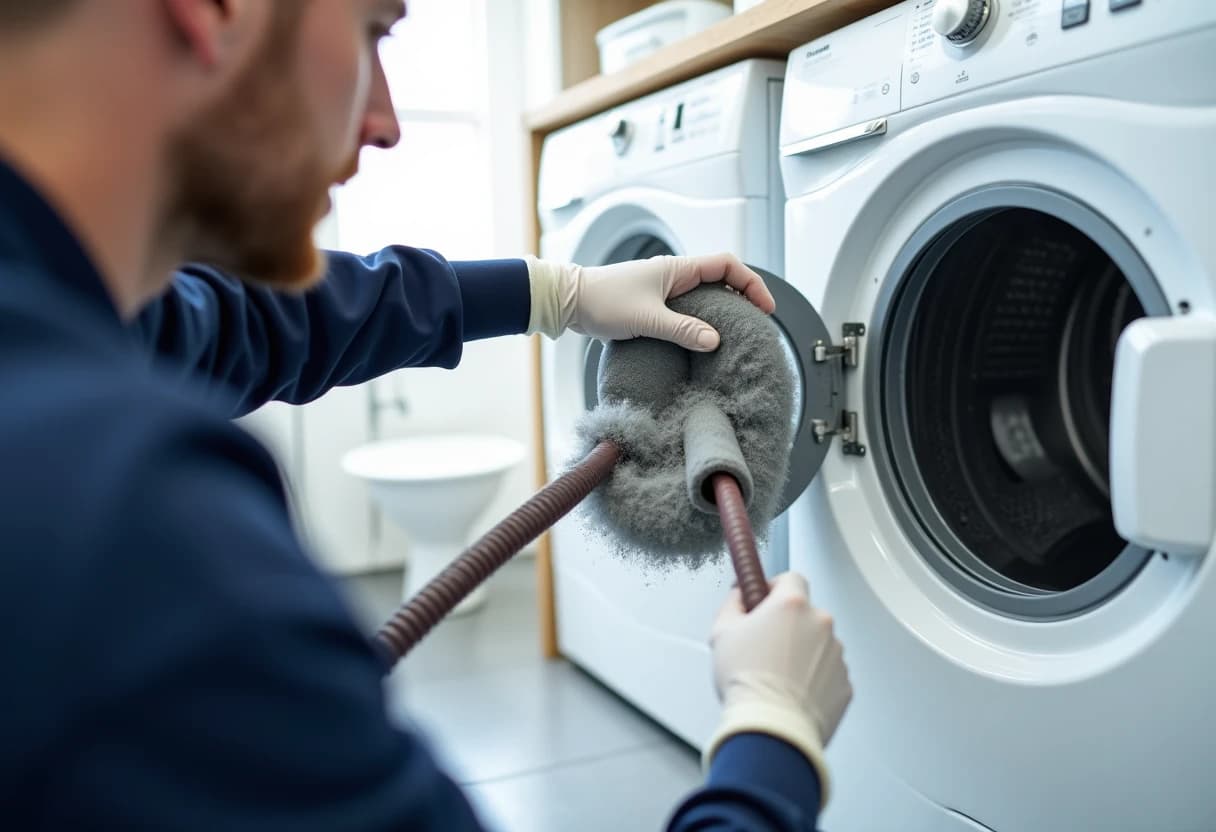
That burning smell during a drying cycle, the laundry room that turns into a sauna, the clothes that come out damp after a full hour — these are all symptoms of one problem: a dryer vent choked with lint. Beyond the inconvenience, a blocked vent forces exhaust temperatures up and gives the resulting heat a duct full of fuel. We provide professional dryer vent cleaning throughout Brockton using the same source-removal principle as our duct cleaning: mechanical agitation with rotating brushes, simultaneous HEPA vacuum capture, and cleaning from both ends of the run. Most appointments take under ninety minutes, and the improvement is obvious on the very next load.
Why Dryer Vent Cleaning Matters for Brockton Homes
Some homeowners ask whether they can just clean the vent themselves with a leaf blower or a hardware-store brush kit — and for a short, straight, first-floor vent, a diligent DIY cleaning is better than nothing. The trouble is that most Greater Boston vents are not short or straight. Runs from basement or interior laundry rooms commonly stretch 15 to 35 feet with three or four elbows, and consumer brush kits lose effectiveness with every bend, often compacting lint into a plug instead of removing it. Leaf blowers can blow a soft clog into a dense one, or blow the exterior damper shut. Professional equipment is different in kind: motor-driven rotary brushes that maintain scrubbing force through every elbow, HEPA vacuums that capture lint at the same time, inspection of the transition duct and termination, and an airflow measurement that verifies the result. We also spot the problems a brush cannot fix — crushed duct, disconnected joints, illegal flex materials — before they turn a maintenance visit into an emergency.
In Brockton's older housing stock, we regularly find dryer vents that violate every modern guideline — vinyl flex duct sagging through a basement, screws catching lint at every joint, runs far past the 35-foot code maximum. The old Shoe City is dense with turn-of-the-century two-families, triple-deckers and workers' cottages in Campello and Montello, ringed by post-war capes and ranches toward the city line. Much of this stock has been carved into multi-unit rentals with layered heating retrofits, so it is common to find two or three generations of ductwork - and their accumulated debris - stacked in one building. These systems clog two or three times faster than a code-compliant rigid duct, which makes annual cleaning genuinely important rather than merely advisable. Brockton's multi-family conversions mean shared basements and shared air: one unit's dust, smoke or cooking residue often circulates building-wide through interconnected returns. Former shoe-factory buildings downtown converted to lofts bring their own issue, with century-old industrial residue in floor cavities that duct systems pull from if not properly sealed and cleaned. We clean what is there, document what we find with photos, and tell you honestly whether the duct itself needs repair or replacement — a judgment call our crews make in Brockton homes every week.
Our Dryer Vent Cleaning Process in Brockton
1Inspect the Dryer, Transition Duct & Vent Path
First we establish what we are cleaning: duct material, run length, number of bends, and termination type. We also measure baseline airflow at the exterior hood with the dryer running. That number matters — it is how we prove, at the end of the visit, that the cleaning actually restored the exhaust capacity your dryer needs.
2Protect the Laundry Area & Disconnect the Dryer
Before cleaning starts, we lay floor protection, carefully slide the dryer out without scarring floors, and disconnect the transition duct. Gas dryers are handled with proper care around the flexible gas connector — we never strain it. With the duct open at the appliance end, we have the access needed to clean the entire run.
3Rotary Brush the Full Length of the Duct
Mechanical agitation is what separates professional cleaning from blow-through methods. The rotary brush physically breaks up compacted lint that air pressure alone would only compress further. We select brush heads sized to your duct — standard 4-inch for code-compliant lines, alternates for older oversized or reduced runs — so the bristles actually contact the duct wall the whole way.
4Capture Everything With HEPA Vacuum Extraction
Loosened lint has to go somewhere, and we make sure that somewhere is our vacuum. HEPA filtration captures the fine fiber dust that ordinary shop vacs exhaust straight back into the air — important in tight laundry areas and essential for allergy-sensitive households. Most cleanings fill a startling bag; we are happy to show you the haul.
5Clean From the Exterior Termination Inward
Cleaning from both ends is non-negotiable on longer runs. The last few feet before the termination, and the hood itself, accumulate the densest lint — it is where moist exhaust meets cold outdoor air and fibers mat together. We open the hood, clear the damper, remove nesting if present, and brush the final duct section back toward the vacuum.
6Service the Transition Duct & Reconnect
Reassembly is done to code and to the appliance manual: UL-listed transition duct, proper clamps, no more than the listed connector length, and the dryer set far enough from the wall that the duct keeps its shape. We level the machine, verify the gas connection is undisturbed on gas units, and run a test cycle before calling the mechanical work done.
7Verify Airflow & Walk You Through the Results
Final checks: test cycle run, exhaust verified at the hood, laundry area vacuumed and everything returned to place. If we found issues cleaning cannot fix — overlong runs, crushed sections, illegal materials — you get straight documentation and a separate quote, never pressure. Most vents simply need this cleaning, once a year, and nothing more.
Benefits of Professional Dryer Vent Cleaning in Brockton
Faster Drying Times
Airflow is what dries clothes; heat just helps. Restore full exhaust capacity and loads that limped through two cycles finish in one, towels stop coming out damp at the seams, and the dryer's moisture sensors — which many modern machines rely on — start reading accurately again. Most customers notice the difference on the first load after our visit.
Safer Operation for Gas Dryers
Massachusetts homes rely heavily on natural gas, and gas dryers are common across Greater Boston's housing stock. If yours vents through a long or aging duct, annual cleaning plus an airflow check is the standard of care fire and gas utilities recommend. It takes an hour and removes an entire category of risk.
Dramatically Reduced Fire Risk
After cleaning, your dryer's exhaust runs cool and free, its high-temperature safety switches stop cycling, and the duct holds no fuel load waiting for a spark. For households that run daily laundry — big families, home businesses, multi-generational homes — that risk reduction compounds with every load.
Less Moisture, Mildew & Musty Odor
Damp lint inside a restricted duct becomes a mold and bacteria medium — the source of the sour smell some dryers push into freshly washed clothes. Removing the lint removes the colony. If your 'clean' laundry has ever come out smelling worse than it went in, the vent is the likeliest culprit.
Documentation for Insurance, Condos & Peace of Mind
The quiet benefit is simply knowing. A dryer vent is invisible infrastructure that most homeowners have never once seen inside — and after our visit, you have photos, airflow numbers and a professional's assessment on file. That certainty, renewed once a year, is worth the modest price by itself.
Lower Energy Bills
Every minute of unnecessary drying time is metered energy. A restricted vent that doubles cycle times roughly doubles the dryer's share of your utility bill — often $10 to $20 a month for an average household. Annual cleaning typically pays for a large fraction of itself in the first year of restored efficiency.
Signs Your Brockton Home Needs Dryer Vent Cleaning
Clothes Take More Than One Cycle to Dry
The single most reliable symptom. A healthy dryer dries a standard load in 35 to 50 minutes; when towels need a second cycle or jeans come out damp at the waistband, exhaust airflow has dropped. The dryer has not gotten weaker — the vent has gotten narrower. Cleaning restores the original performance in one visit.
Burning Smell During a Cycle
A hot, singed odor while the dryer runs is lint beginning to scorch — on the heating element, in the internal ducting or in the exhaust line. It is the most serious warning sign on this list. Stop the dryer, let it cool, and do not run full loads again until the vent and machine interior have been cleaned.
Dryer or Clothes Are Hot to the Touch
Some heat is normal; radiating heat is not. When the exhaust cannot escape, the drum, cabinet and surrounding wall absorb it instead. Homes where we measure the highest cabinet temperatures reliably produce the fullest lint bags — the correlation between heat and blockage is nearly one to one.
Laundry Room Gets Hot and Humid
In winter, backed-up dryer moisture migrates to the coldest nearby surfaces — window frames, exterior-wall corners, basement sills — and condenses there, feeding mold New England homes already fight. If winter condensation spikes on laundry days, your vent is contributing and a cleaning will subtract it.
Lint Building Up Behind or Inside the Dryer
Check your lint screen pattern too: if the screen suddenly catches less than usual, lint is bypassing it into the machine and duct — often because backpressure from a blocked vent is redirecting airflow. Less lint on the screen frequently means more in the duct, not cleaner laundry.
The Exterior Vent Flap Barely Opens
Lint visible around the exterior hood, on the siding or in the shrubs below means the duct is shedding overflow. Paradoxically, a completely lint-free hood on an older system can be worse news: it may mean nothing is reaching the exit at all. Either extreme warrants a cleaning and airflow check.
Dryer Vent Cleaning Cost in Brockton, MA
Expect to pay $149 to $299 for a professional cleaning in Eastern Massachusetts, with most single-family homes landing near the middle. Three questions set your exact price: Where is the dryer (first floor, basement, or interior room far from an outside wall)? Where does the vent exit (grade-level wall, high wall, soffit or roof)? And when was it last cleaned (routine maintenance versus a full blockage)? Roof terminations carry the largest premium — safe roof access takes equipment and time — and fully plugged runs take staged brushing rather than a single pass. Optional add-ons are few and honest: replacing a damaged or non-compliant transition hose runs $30 to $60 installed, and a new exterior hood, if yours is broken or screened, is quoted flat. Bundling dryer vent cleaning with air duct cleaning is our most popular package and typically saves $50 to $75 versus booking separately.
Want the full pricing picture? See our complete Boston-area cost guide or call (617) 390-7145 for an exact flat quote for your Brockton home.
Local Knowledge: Brockton, Plymouth County
Every town's ductwork tells the story of its housing. The old Shoe City is dense with turn-of-the-century two-families, triple-deckers and workers' cottages in Campello and Montello, ringed by post-war capes and ranches toward the city line. Much of this stock has been carved into multi-unit rentals with layered heating retrofits, so it is common to find two or three generations of ductwork - and their accumulated debris - stacked in one building. Brockton's multi-family conversions mean shared basements and shared air: one unit's dust, smoke or cooking residue often circulates building-wide through interconnected returns. Former shoe-factory buildings downtown converted to lofts bring their own issue, with century-old industrial residue in floor cavities that duct systems pull from if not properly sealed and cleaned. We plan Brockton jobs around those realities, from equipment selection to time on site, and it shows in the results. If you live near Fuller Craft Museum or anywhere across Brockton's 02301 area, we have almost certainly cleaned a system like yours before — and we can tell you exactly what to expect before we arrive.
The Best Time of Year in Brockton
Winter is when Greater Boston dryer vents fail. Cold stiffens exterior damper flaps, snow drifts block grade-level hoods, and warm moist exhaust hitting a freezing duct section condenses — turning loose lint into dense, damp mats that can plug a marginal vent in weeks. Meanwhile laundry loads peak: heavy sweaters, extra blankets, snow-soaked layers. It is no coincidence that dryer fires are most frequent in winter, with January the peak month in federal fire data. The smart schedule is a fall cleaning — clear the system before the heavy season — but if winter has already exposed a problem, we keep cold-month availability across Plymouth County precisely because these calls cannot wait.
Why Choose Boston Air Duct Cleaners
What separates us from the coupon crowd is simple: we do the whole job, we prove it, and we charge what we quoted. Our technicians clean supplies, returns, trunks and blower compartments on every visit — never a cosmetic vent wipe. Photo documentation comes standard, pricing is flat and confirmed up front, and our trucks carry true commercial vacuum equipment, not rented shop-vacs. Based in West Newton and serving Brockton year-round, we answer our own phone at (617) 390-7145 and stand behind every cleaning with a satisfaction guarantee.
Serving Brockton and Surrounding Communities
Brockton sits in the heart of our service area, and neighboring Avon, Abington, Whitman, Easton, Stoughton, East Bridgewater appointments share the same routes. That density is why our response times in this part of Plymouth County are among our fastest — and why you will see our trucks in the area week after week.