
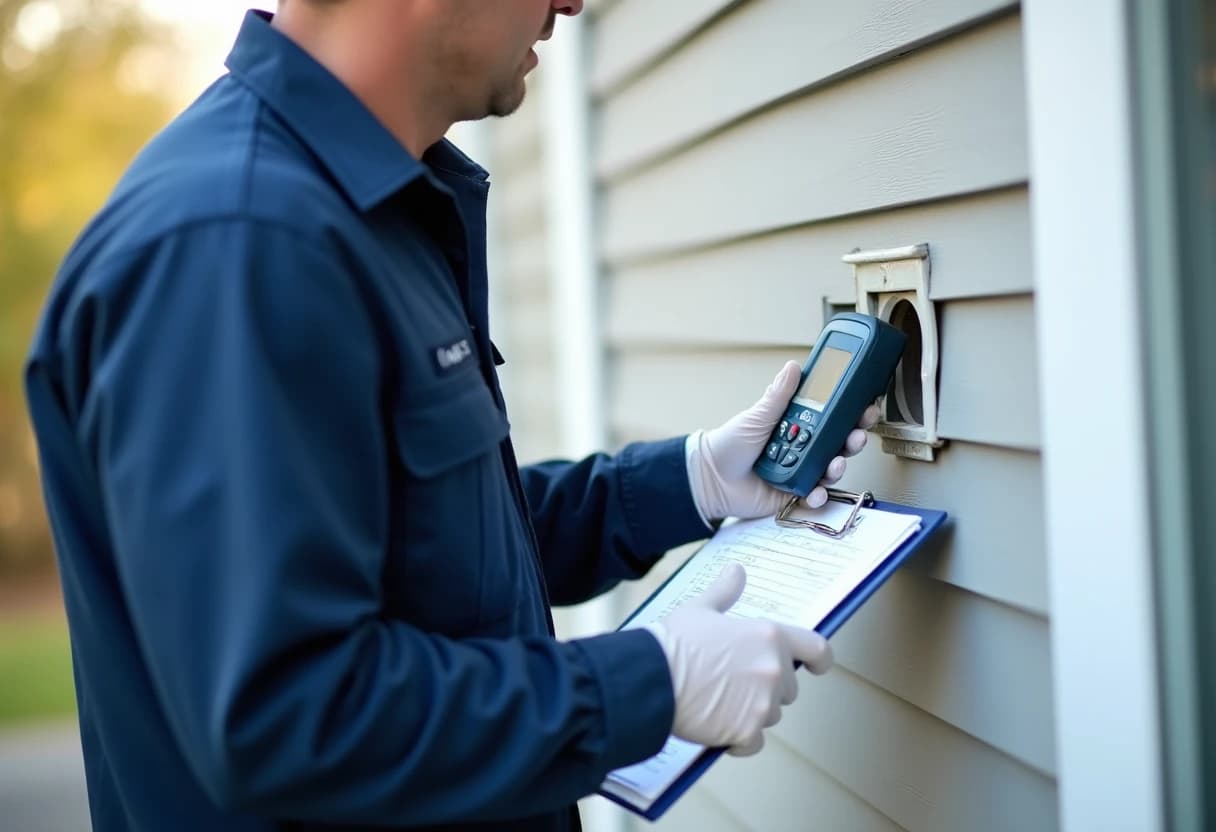
Your dryer cannot tell you when its vent is half-blocked — it just runs longer, hotter and closer to the edge. By the time clothes need two cycles, the duct is often carrying a serious lint load and the high-limit safety switch is doing regular overtime. A professional inspection catches the problem while it is still just an airflow number. In Cambridge, our technicians combine instrument measurements with a full camera pass of the duct, so the assessment is objective: cubic feet per minute at the hood, percent restriction visible in the run, condition of every joint and elbow. You get facts, photos and a recommendation — never a scare pitch.
Why Dryer Vent Inspection & Safety Check Matters for Cambridge Homes
Dryer fires are among the most preventable house fires in America, and the statistics are stubbornly consistent: FEMA and NFPA data attribute roughly 2,900 residential clothes dryer fires per year to U.S. homes, causing deaths, injuries and tens of millions of dollars in property loss — with lint the leading ignition source and failure to clean the leading contributing factor. What makes these fires preventable is that the hazard builds slowly and measurably. Lint accumulates in the duct, airflow drops, drying times stretch, the dryer cabinet runs hotter, and eventually a heating element or a spark meets a fuel supply that has been growing for years. An annual inspection interrupts that chain at the first link. Airflow measurement detects restriction long before it becomes dangerous; camera imaging shows exactly where lint is packing and whether the duct itself — crushed sections, separated joints, an accordion foil transition — is contributing. For less than the cost of a dinner out, you convert an invisible risk into a documented, managed one.
The Cambridge climate is quietly hard on dryer terminations. Cambridge condo associations are among our most frequent callers, since a single triple-decker can hold three separate duct systems of three different ages. Dense urban traffic on Mass Ave and Memorial Drive also loads fine soot into intake ducts faster than in the quieter suburbs. Wind-driven rain, coastal air and freeze-thaw cycles corrode hoods and stiffen damper flaps, and by late winter we routinely find Cambridge terminations that no longer open fully — or no longer close, inviting drafts and pests. Cambridge packs an enormous range into seven square miles: 19th-century mansards and Victorians around Harvard and Porter Squares, dense triple-deckers and two-families in Cambridgeport and East Cambridge, brick apartment blocks along Massachusetts Avenue, and glassy new towers rising in Kendall Square. Many older multifamilies have had condo-by-condo mini-split and forced-air retrofits, producing short, oddly-routed duct runs squeezed into century-old framing. An annual inspection catches termination problems along with everything else: our checklist covers the hood, damper, exterior seal, duct interior, airflow volume, lint load and code compliance in one visit. Neighbors in Somerville and Boston book us for the same annual check, which keeps our trucks in the area and appointment windows short.
Our Dryer Vent Inspection & Safety Check Process in Cambridge
1Interview & Visual Assessment
First, context: your answers about drying performance and service history frame the inspection, and a walk of the laundry area frames the system. We identify the duct material, count visible elbows, locate where the run enters the structure, and note anything — crushing, kinks, tape-only joints — that already tells part of the story.
2Airflow Measurement at the Termination
We quantify before we diagnose. An anemometer reading at the outside hood, taken while the dryer runs, measures delivered airflow against the benchmark a dryer needs to operate safely. Strong flow with a clean camera pass means a pass; weak flow tells us restriction exists and the camera's job is to find it.
3Full-Length Camera Inspection
The camera answers the question the airflow number raises. We feed it the full length of the duct, documenting interior condition foot by foot: where lint is packing, whether joints have pulled apart inside the wall, whether a previous installer used screws or materials the code prohibits. Nothing in the run stays hidden or hypothetical.
4Termination Hood & Damper Check
The exterior hood gets a hands-on inspection — flap movement, spring tension, seal condition, evidence of pest entry, and clearance from grade and snow lines. New England weather is hard on terminations; corroded hinges and stuck dampers are among our most common findings, and both restrict airflow as effectively as a clogged duct.
5Lint-Load Assessment & Fire-Risk Scoring
We translate the inspection into a plain-English risk score. You will know approximately what percentage of the duct's cross-section remains open, where the worst accumulation sits, and how urgent intervention is. FEMA attributes roughly 2,900 dryer fires a year primarily to lint — the score tells you honestly where your vent stands relative to that risk.
6Code-Compliance Review
Many Massachusetts dryer runs predate modern code or were improvised during renovations, so this review frequently finds the root cause behind chronic lint problems: an over-length run, an accordion foil transition, a screened termination collecting lint like a filter. Identifying the violation matters because cleaning a non-compliant duct treats the symptom on a schedule; correcting it treats the cause once.
7Written Safety Report & Recommendations
The visit ends with documentation, not a verbal shrug. Your report states plainly whether the vent passed, what was found where, and what — if anything — we recommend, with flat-rate pricing for any corrective work so you can decide on your own schedule. No findings are invented to sell a cleaning; the photos speak for themselves.
Benefits of Professional Dryer Vent Inspection & Safety Check in Cambridge
Hidden Code Violations Exposed
Many chronic lint problems are really installation problems: the duct violates length, material or fastening rules and will clog on schedule forever until corrected. The compliance review identifies the root cause, so you can stop paying to clean a duct that was built to fail.
Real-Estate & Insurance Documentation
Condo associations and landlords in Massachusetts are steadily adding dryer vent verification to their maintenance requirements after well-publicized multi-family lint fires. Our per-unit reports satisfy property managers and boards in one visit, with scheduling built for buildings — multiple units, one appointment block, individual documentation.
Fire Risk Caught Before It Matters
Lint fires do not announce themselves; they accumulate. An inspection converts that slow, invisible buildup into a number and a photograph you can act on. Homeowners who inspect annually essentially never experience a vent-related fire, because the fuel never gets the chance to reach a dangerous load.
No Unnecessary Cleanings
Inspection-first service means you only pay for cleaning when measurement says the vent needs it. Short, efficient runs in some homes stay healthy for two or three years between cleanings; heavy-laundry households may need annual service. The instruments decide — not a calendar, and not a salesperson.
Protection From Moisture & Carbon Monoxide
A leaking or restricted dryer duct pushes warm, saturated air into wall cavities and framing — a slow moisture problem that shows up later as mold, peeling paint or rot. For gas dryers, exhaust integrity also governs the removal of combustion byproducts, including carbon monoxide. Inspection verifies both.
Lower Drying Costs & Longer Appliance Life
A restricted vent makes every load take longer, and longer cycles cost real money in electricity or gas — often hundreds of dollars a year in heavy-laundry households. Inspection catches restriction at the stage where a single cleaning restores one-cycle drying and normal operating costs.
Signs Your Cambridge Home Needs Dryer Vent Inspection & Safety Check
The Dryer or Laundry Room Feels Hot
Modern dryers protect themselves from restricted vents by cycling their high-limit switch — you experience this as a hot machine, lukewarm loads and mysteriously long cycles. The safety is working, but it was not designed for daily duty. An inspection identifies the restriction before the safety component fails.
Insurance, Condo or Sale Requirements
Multi-family buildings across Massachusetts are adding periodic dryer vent verification to bylaws after highly publicized lint fires in stacked-laundry buildings. If a notice has landed in your mailbox, we handle single units and whole buildings, with per-unit documentation the board can file.
Recent Renovation, New Dryer or New Home
Just bought the house? Your home inspector almost certainly did not camera the dryer duct or measure its airflow — general inspections do not include it. Given that lint fires are among the most common preventable house fires, a dedicated vent inspection belongs on every new-owner checklist.
Burning or Musty Smells During Operation
Trust your nose. Scorched smells mean lint meeting heat; sour smells mean water pooling where it should not; animal odors mean something has moved into the duct or hood. Each has a distinct cause and a distinct fix, and a single camera inspection distinguishes among them definitively.
No Visible Exhaust at the Outside Hood
Step outside while the dryer runs: you should see the damper held open by strong airflow and feel a confident stream of warm air. A flap barely moving — or not moving at all — means severe restriction or a stuck damper, and the system needs professional attention.
Clothes Take More Than One Cycle
Two cycles to dry a normal load is the classic symptom of a restricted vent. The dryer produces the same heat as always — the moisture simply has nowhere to go, so it recirculates through the drum. An inspection will measure exactly how much airflow the duct is stealing.
Dryer Vent Inspection & Safety Check Cost in Cambridge, MA
It helps to price the inspection against what it prevents. A restricted vent adds 20 to 40 minutes to every load; at Massachusetts electricity rates, heavy-laundry households can burn through several hundred dollars a year in wasted drying energy alone — several times the inspection fee. A thermal fuse or high-limit failure from chronic overheating means an appliance repair visit starting around $150 plus parts. A moisture leak inside a wall from a separated joint means drywall, paint and possibly mold remediation. And a lint fire, even a small contained one, means smoke damage, insurance claims and premiums that never quite come back down. Against that menu, $79–$149 once a year with a written report is the least expensive line item in home fire safety. We keep the price deliberately low because inspection is how responsible vent maintenance should start — measurement first, then only the work the measurements justify.
Want the full pricing picture? See our complete Boston-area cost guide or call (617) 390-7145 for an exact flat quote for your Cambridge home.
Local Knowledge: Cambridge, Middlesex County
Every town's ductwork tells the story of its housing. Cambridge packs an enormous range into seven square miles: 19th-century mansards and Victorians around Harvard and Porter Squares, dense triple-deckers and two-families in Cambridgeport and East Cambridge, brick apartment blocks along Massachusetts Avenue, and glassy new towers rising in Kendall Square. Many older multifamilies have had condo-by-condo mini-split and forced-air retrofits, producing short, oddly-routed duct runs squeezed into century-old framing. Cambridge condo associations are among our most frequent callers, since a single triple-decker can hold three separate duct systems of three different ages. Dense urban traffic on Mass Ave and Memorial Drive also loads fine soot into intake ducts faster than in the quieter suburbs. We plan Cambridge jobs around those realities, from equipment selection to time on site, and it shows in the results. If you live near MIT or anywhere across Cambridge's 02139 area, we have almost certainly cleaned a system like yours before — and we can tell you exactly what to expect before we arrive.
The Best Time of Year in Cambridge
Humid Boston summers change what we find inside dryer ducts. Moisture-laden ambient air combines with exhaust condensation in long or cool runs — basement ducts especially — and lint that would stay loose and fluffy in dry conditions mats into dense, damp accumulations that restrict flow and occasionally host mold. Coastal and near-coastal homes add salt air to the equation, which corrodes hoods, hinge pins and damper springs measurably faster than inland exposure. A summer inspection catches both patterns, and it is also the easiest season to schedule: our calendar is lightest between June and August, which makes it the smart pick for annual-plan customers.
Why Choose Boston Air Duct Cleaners
We built this company around the jobs other duct cleaners do badly: the 130-year-old Victorian with panned-joist returns, the Cambridge condo with a 60-foot dryer run to the roof, the post-renovation house full of drywall dust. Our crews see Greater Boston's hardest systems every week, and the experience shows in the details — floor protection on the way in, sealed registers during the work, HEPA-vacuumed work areas on the way out, and imagery that proves the ducts are actually clean. Call (617) 390-7145 and judge the difference from the first conversation.
Serving Cambridge and Surrounding Communities
We serve every community around Cambridge as well: Somerville, Boston, Watertown, Belmont, Arlington, Allston all fall inside our regular service routes. If you have a second property, a rental, or family nearby, ask about multi-home scheduling — grouped appointments on the same route are our most requested discount.