
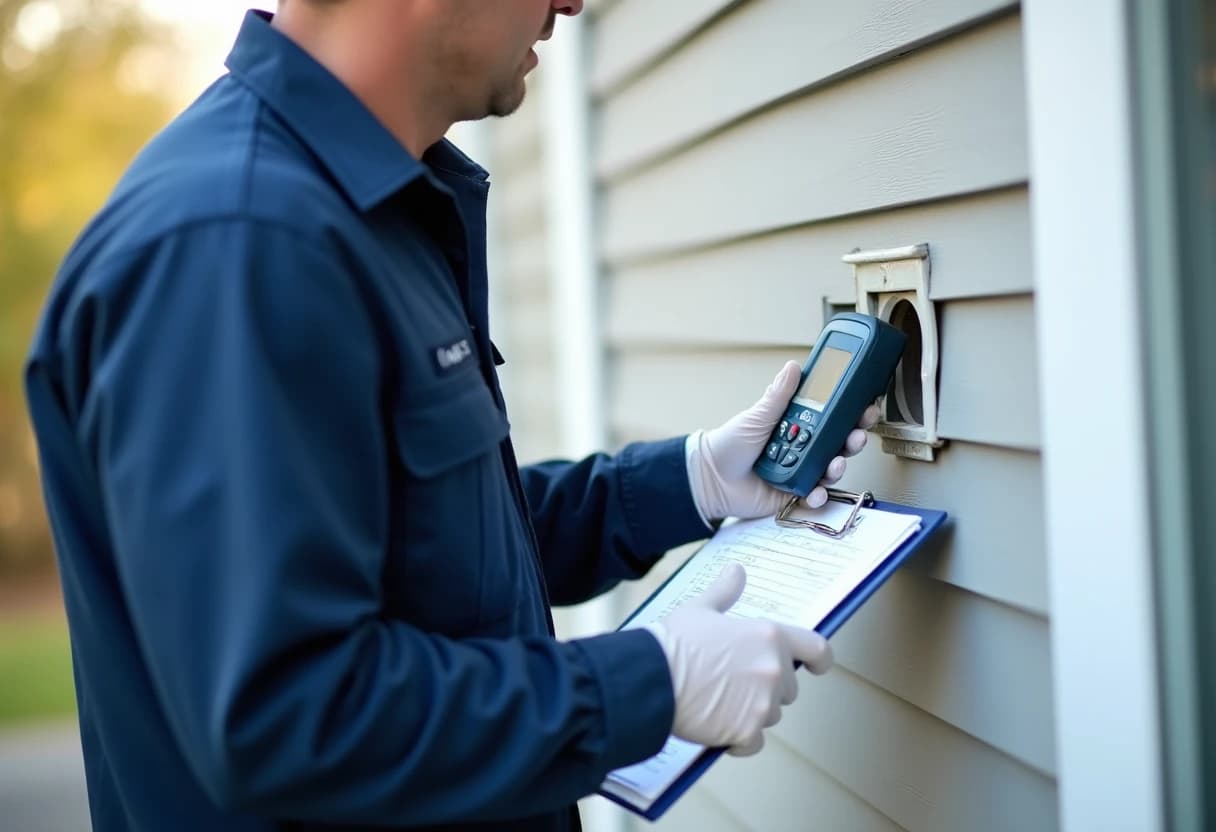
Not every dryer vent needs cleaning every year — but every dryer vent deserves inspecting every year, because the failure modes are silent and the worst-case outcome is a fire. Our Franklin inspection service exists for homeowners who want the truth about their vent without committing to a service they may not need. We measure exhaust airflow, camera the complete duct run, check the termination hood, verify the installation against code, and score the lint load. Roughly a third of the vents we inspect are fine, and we say so in writing. The rest get a documented finding and a flat-rate path to fixing it — your call, no pressure.
Why Dryer Vent Inspection & Safety Check Matters for Franklin Homes
There are moments when a dryer vent inspection stops being optional. Buying a home: the general home inspector looks at the dryer connection but almost never cameras the duct or measures airflow, so the one appliance system most associated with house fires goes essentially unexamined at purchase. Selling a home: a documented, dated inspection removes a negotiation point and signals maintenance discipline. Insurance: a growing number of carriers ask about dryer vent maintenance after lint-fire claims, and a written report answers the question definitively. Condo and rental compliance: many Massachusetts associations and landlords now require periodic dryer vent verification, and our report format is written to satisfy them. New dryer installation: manufacturers void warranties for vent-related failures, and installers frequently connect brand-new machines to old, non-compliant ducts. In every one of these situations, the inspection costs a fraction of what it protects, and the paperwork is often the point.
Dryer vents in Franklin have a habit of being longer, older and stranger than the code ever intended. Franklin grew explosively in the 1980s and 1990s, so its housing stock leans heavily toward Colonial-style subdivision homes on cul-de-sacs, joined by newer townhouse and condo developments near the two commuter rail stations. Nearly all of it was built with central forced-air systems, and many of those builder-grade duct installations used flex duct and panned joist returns that collect dust far faster than rigid metal trunk lines. Laundry areas in these homes were frequently added or relocated decades after construction — into basements, closets and upper floors — which means exhaust runs that snake through joist bays, take extra elbows, and terminate wherever a long-ago installer could reach the outside. Franklin's homes are young by Massachusetts standards, but thirty-year-old builder-grade ductwork is exactly the age where seams loosen and blower compartments fill with construction debris that was never cleaned out. Add the finished basements that are almost standard here and you get plenty of below-grade humidity feeding musty supply-air odors. Our inspectors camera these runs weekly across Franklin and know exactly where the local housing stock hides its problems: crushed flex behind stacked units, painted-shut hoods on renovated facades, and transitions that were never brought up to code. The written report tells you what a mirror-and-flashlight check never could.
Our Dryer Vent Inspection & Safety Check Process in Franklin
1Interview & Visual Assessment
We start by listening: how long do loads take, has anything changed, when was the vent last cleaned, any moisture or odor issues? Then the technician examines the laundry area — dryer position, transition duct type and condition, visible connections — because the interview and the first look often predict exactly what the instruments will find.
2Airflow Measurement at the Termination
With the dryer running on air-only, we measure exhaust velocity at the exterior termination using a calibrated anemometer and convert it to airflow volume. A healthy vent typically delivers strong, steady flow; a weak reading quantifies restriction before we ever look inside. This number anchors the whole report — objective, repeatable and comparable year over year.
3Full-Length Camera Inspection
An inspection camera travels the entire duct run from the dryer connection to the termination, recording as it goes. We are looking for lint accumulation and where it concentrates, separated or leaking joints, crushed or kinked sections, screws protruding into the airstream, moisture staining, and any nesting material — the full biography of a duct you cannot otherwise see.
4Termination Hood & Damper Check
The exterior hood gets a hands-on inspection — flap movement, spring tension, seal condition, evidence of pest entry, and clearance from grade and snow lines. New England weather is hard on terminations; corroded hinges and stuck dampers are among our most common findings, and both restrict airflow as effectively as a clogged duct.
5Lint-Load Assessment & Fire-Risk Scoring
We translate the inspection into a plain-English risk score. You will know approximately what percentage of the duct's cross-section remains open, where the worst accumulation sits, and how urgent intervention is. FEMA attributes roughly 2,900 dryer fires a year primarily to lint — the score tells you honestly where your vent stands relative to that risk.
6Code-Compliance Review
Many Massachusetts dryer runs predate modern code or were improvised during renovations, so this review frequently finds the root cause behind chronic lint problems: an over-length run, an accordion foil transition, a screened termination collecting lint like a filter. Identifying the violation matters because cleaning a non-compliant duct treats the symptom on a schedule; correcting it treats the cause once.
7Written Safety Report & Recommendations
The visit ends with documentation, not a verbal shrug. Your report states plainly whether the vent passed, what was found where, and what — if anything — we recommend, with flat-rate pricing for any corrective work so you can decide on your own schedule. No findings are invented to sell a cleaning; the photos speak for themselves.
Benefits of Professional Dryer Vent Inspection & Safety Check in Franklin
No Unnecessary Cleanings
Inspection-first service means you only pay for cleaning when measurement says the vent needs it. Short, efficient runs in some homes stay healthy for two or three years between cleanings; heavy-laundry households may need annual service. The instruments decide — not a calendar, and not a salesperson.
Protection From Moisture & Carbon Monoxide
Every load of laundry evaporates roughly a gallon of water, and all of it must exit through this one duct. Joints that separated inside a ceiling deliver that gallon into your structure instead. The camera pass finds hidden leaks that no exterior symptom would reveal until damage was done.
Hidden Code Violations Exposed
Many chronic lint problems are really installation problems: the duct violates length, material or fastening rules and will clog on schedule forever until corrected. The compliance review identifies the root cause, so you can stop paying to clean a duct that was built to fail.
Fire Risk Caught Before It Matters
Lint fires do not announce themselves; they accumulate. An inspection converts that slow, invisible buildup into a number and a photograph you can act on. Homeowners who inspect annually essentially never experience a vent-related fire, because the fuel never gets the chance to reach a dangerous load.
Lower Drying Costs & Longer Appliance Life
Dryers fail early for one dominant reason: heat stress from poor exhaust. High-limit switches, thermal fuses and heating elements all die young in restricted systems. An annual inspection keeps the appliance operating within its design envelope, which routinely doubles the useful life of components that cost $150+ per repair visit.
A Written Report You Can Actually Use
Documentation has quiet value that compounds. After a kitchen fire two streets over, your insurer asks about dryer maintenance — you have a dated report. A buyer's inspector flags the vent — you produce this year's inspection and the issue evaporates. The paper trail costs nothing extra; it comes standard.
Signs Your Franklin Home Needs Dryer Vent Inspection & Safety Check
No Visible Exhaust at the Outside Hood
Lint visibly beard-ing around the exterior hood, a damper wedged with debris, or a termination that was painted or caulked over during exterior work — all common findings, all easily missed from ground level, and all fully documented during the exterior portion of our inspection.
Insurance, Condo or Sale Requirements
If your carrier, condo board or property manager has asked for proof of dryer vent maintenance, that is the sign — the requirement itself. Our written report is built to satisfy exactly these requests: dated, photographed, measured and signed, delivered after a single visit.
You Cannot Remember the Last Service
Dryer vents fail on a schedule set by laundry volume, duct length and installation quality — variables you cannot assess from the laundry room. Annual inspection is the standing recommendation of fire-safety agencies precisely because no visible cue reliably announces when a vent crosses from fine to dangerous.
The Dryer or Laundry Room Feels Hot
A dryer cabinet that is hot to the touch, or a laundry room that turns into a sauna mid-cycle, means exhaust heat is staying in the house instead of leaving through the duct. That trapped heat is the same heat that ignites lint. It warrants a measurement promptly.
Recent Renovation, New Dryer or New Home
Renovations disturb dryer ducts constantly — runs get crushed by new framing, terminations get sided or painted over, and 'temporary' flex connections become permanent. If contractors have worked near your laundry area or exterior walls, an inspection verifies the exhaust path survived the project.
Clothes Take More Than One Cycle
Drying time is the vent's report card. Loads that once took 45 minutes now taking 80 means delivered airflow has fallen substantially — and every extra minute is money and heat stress. If your laundry routine has quietly stretched over the past year, the duct is asking for an inspection.
Dryer Vent Inspection & Safety Check Cost in Franklin, MA
Three honest questions set your price. Where does the vent terminate — ground-level wall, second story, or roof? How long and complicated is the run — a straight 8-foot shot or 30 feet with four elbows through two floors? And is this a single home or a multi-unit building? Simple answers put you at $79; complex ones at $149; buildings get per-unit rates that drop with unit count. Two pricing notes worth knowing. First, our inspection fee is credited in full toward any cleaning we perform at the same visit, so the diagnostic never costs extra when work follows it. Second, beware of free inspections from cleaning companies — an inspection whose only revenue comes from selling you a cleaning is a sales call with a camera. Ours is priced as a standalone professional service precisely so the verdict can honestly be 'your vent is fine,' which it is roughly a third of the time.
Want the full pricing picture? See our complete Boston-area cost guide or call (617) 390-7145 for an exact flat quote for your Franklin home.
Local Knowledge: Franklin, Norfolk County
Serving Franklin means knowing Franklin. Franklin grew explosively in the 1980s and 1990s, so its housing stock leans heavily toward Colonial-style subdivision homes on cul-de-sacs, joined by newer townhouse and condo developments near the two commuter rail stations. Nearly all of it was built with central forced-air systems, and many of those builder-grade duct installations used flex duct and panned joist returns that collect dust far faster than rigid metal trunk lines. Franklin's homes are young by Massachusetts standards, but thirty-year-old builder-grade ductwork is exactly the age where seams loosen and blower compartments fill with construction debris that was never cleaned out. Add the finished basements that are almost standard here and you get plenty of below-grade humidity feeding musty supply-air odors. Those conditions shape how we work here: which brush heads come off the truck, how we protect finishes in older interiors, and what we expect to find when the camera goes into a 02038 duct system. Our crews are in and around Franklin nearly every week — often for neighbors of past customers — so scheduling is fast and our arrival windows hold.
The Best Time of Year in Franklin
Massachusetts winters stress the exhaust side of a dryer in ways most owners never see. Warm, moist exhaust meeting sub-freezing duct sections condenses, and that condensation turns dry lint into wet mats that cling and clog. Terminations ice up; damper flaps freeze shut overnight and get forced by the morning's first load; snow drifts bury low wall hoods entirely. A mid-winter inspection is often the year's most revealing one — we routinely find seasonal blockages that did not exist in September. If drying times slow every January in your house, that pattern itself is a finding worth investigating.
Why Choose Boston Air Duct Cleaners
What separates us from the coupon crowd is simple: we do the whole job, we prove it, and we charge what we quoted. Our technicians clean supplies, returns, trunks and blower compartments on every visit — never a cosmetic vent wipe. Photo documentation comes standard, pricing is flat and confirmed up front, and our trucks carry true commercial vacuum equipment, not rented shop-vacs. Based in West Newton and serving Franklin year-round, we answer our own phone at (617) 390-7145 and stand behind every cleaning with a satisfaction guarantee.
Serving Franklin and Surrounding Communities
Beyond Franklin, our crews cover the surrounding communities daily — including Bellingham, Medway, Norfolk, Wrentham, Milford, Plainville. Because routes cluster geographically, booking alongside a neighboring appointment often unlocks same-day service and combined-visit savings. Wherever you are in Norfolk County, the same flat-rate pricing, insured technicians and photo-documented process applies.