
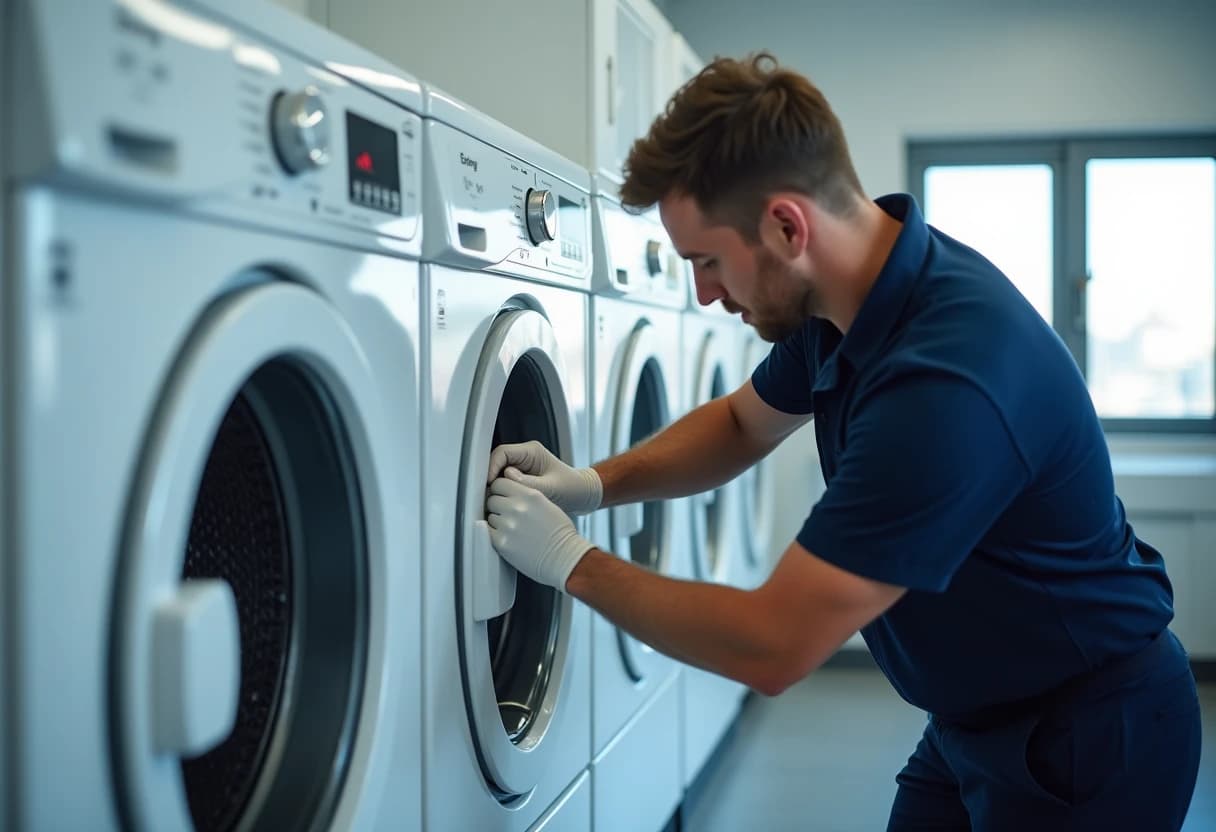
Lint is the most flammable substance most buildings produce daily, and dryer vents concentrate it precisely where heat lives. The National Fire Protection Association's data is blunt: failure to clean is the leading factor in home clothes dryer fires, and multi-family buildings carry the compounded exposure of many dryers behind one set of walls. Our Malden commercial program serves condominiums, apartment buildings, townhome HOAs, senior housing and laundromats with full-building vent cleaning: every run brushed and vacuumed end to end, terminations and dampers cleared and checked, hazardous transition ducts flagged, and airflow measured after cleaning. Boards get one flat proposal, residents get minimal disruption, and everyone gets the report that proves it happened.
Why Commercial & Multi-Unit Dryer Vent Cleaning Matters for Malden Homes
The fire math of multi-unit buildings is unforgiving. FEMA estimates about 2,900 residential clothes dryer fires per year, causing deaths, injuries and roughly $35 million in property loss — and the leading factor, cited in around a third of these fires, is failure to clean. A single-family dryer fire endangers one household; the same fire in a triple-decker, garden apartment or high-rise endangers dozens, spreads through shared walls and chases, and lands on the association's master policy. Every dryer in your building produces lint with every load, and every foot of vent duct collects it — narrowing airflow, extending dry times, and raising temperatures inside the duct until the day lint, heat and airflow restriction intersect. Professional cleaning resets every run in the building to clear, and the documentation resets your liability posture: when an insurer, an attorney or a fire marshal asks about vent maintenance, a dated per-unit report is the difference between diligence and exposure. No board wants to explain a preventable fire; a maintenance program means never having to.
Whether it is a triple-decker near Malden Center, a mid-rise condominium off Middlesex Fells Reservation, or garden apartments elsewhere in Malden, the venting problems rhyme: lint-loaded runs, blocked or screened terminations, transition ducts that should have been replaced years ago. Malden is packed with early-1900s two-families, triple-deckers and Victorians on small lots, joined by a fast-growing cluster of mid-rise apartment and condo buildings around Malden Center's Orange Line stop. The older multifamilies carry a mix of steam, retrofitted forced-air and per-floor furnace setups, while the new transit-oriented buildings depend on shared ventilation shafts and long dryer duct runs to the roof. Malden's condo boom around the Orange Line has filled the city with stacked in-unit laundry, and multi-story dryer runs here clog with lint far faster than a typical single-family vent. In the older two-family stock, basement furnaces shared between floors spread one unit's dust problems through the whole house. As a local company based 13 miles away in West Newton, we have cleaned building-wide across Middlesex County for associations, HOAs and management portfolios — with volume pricing per unit, crews that respect residents' homes, and reporting standardized so multi-building managers can compare properties at a glance.
Our Commercial & Multi-Unit Dryer Vent Cleaning Process in Malden
1Building Walkthrough & Per-Unit Proposal
Every building project starts with a walkthrough: we identify how each unit vents — individual wall runs, shared vertical risers, common trunk lines — locate terminations on walls and roofs, note access requirements, and inspect representative runs. The proposal that follows prices the building flat, per unit, with riser and common-duct service itemized, so boards approve a known number.
2Resident Coordination & Scheduling
Access is the hard part of multi-unit work, and we manage it for you. Our coordinator provides notice templates for management to distribute, builds a unit-by-unit schedule in efficient sequences, confirms time windows, and tracks completions and no-access units in real time. Buildings typically complete in one to three days, and residents are in their homes for minutes, not hours.
3Dryer-Side Service: Transition Duct & Connection
The first feet of the vent path fail most often: crushed transition hoses behind the dryer, lint packed at the wall connection, and prohibited foil accordion duct that sags into lint-collecting bellies. We service this section in every unit — machine pulled, area vacuumed, transition cleaned or replacement offered, connection remade properly — because a clean wall duct fed through a clogged transition solves nothing.
4Mechanical Cleaning of the Full Vent Run
The in-wall duct is cleaned end to end with rotary brush systems driven through the full run while a high-powered vacuum captures dislodged lint — the same agitation-plus-extraction principle as NADCA duct cleaning, sized for 4-inch dryer duct. Long runs and multiple elbows get repeat passes; the pass is complete when the brush returns clean and airflow verifies.
5Shared Risers, Common Trunks & Booster Fans
High-rise and mid-rise venting is a system, not a bundle of individual runs. Our crews clean shared risers top-down from roof terminations with weighted rotary lines, verify each unit's takeoff where it joins the common duct, and confirm draft through the full stack afterward. Central exhaust fans and pressure-relief dampers serving laundry stacks are cleaned and checked in the same mobilization.
6Termination Service & Exterior Verification
Every vent ends at a termination, and terminations fail constantly: flaps stuck open to pests or frozen shut with lint, screens added by well-meaning painters (code prohibits them — they trap lint), caps crushed or painted over, bird and rodent nests in the hood. We clear and verify every termination, on walls or roofs, with ladder and roof access included in the project scope.
7Airflow Verification & Building Compliance Report
The project closes with documentation built for its real audiences. Management receives a unit-by-unit log with service dates and technician notes; the board receives a summary with building-level findings — riser condition, termination issues, prohibited transition ducts by unit — and prioritized recommendations; and the insurance-ready certificate states scope, method and completion date. Next year's cycle is calendared before we leave.
Benefits of Professional Commercial & Multi-Unit Dryer Vent Cleaning in Malden
Insurance & Liability Documentation That Holds Up
Master-policy renewals increasingly ask when dryer vents were last professionally cleaned, and after any fire, maintenance records become the story. Our per-unit compliance report — cleaned, verified, exceptions documented, hazards flagged in writing — is formatted for exactly those readers: underwriters at renewal, adjusters after a claim, and counsel if it ever comes to that.
Shorter Dry Times & Lower Utility Costs
Every minute of extra runtime is heat pushed against a clogged duct: wasted energy, elevated temperatures, and accelerated wear. Post-cleaning, residents notice loads finishing in one cycle again — the most tangible everyday benefit of the program and the one that quiets the steady trickle of 'my dryer is broken' maintenance tickets.
Volume Pricing That Beats Unit-by-Unit Service
Left to individual residents, vent cleaning happens rarely, unevenly and at retail prices — and the shared ducts never get cleaned at all. Building-wide service inverts every part of that: complete coverage, common elements included, standardized quality, one invoice, and a per-unit rate that makes the line item easy to defend at budget time.
Hazard Discovery Before It Costs You
The inspection value of a building-wide project rivals the cleaning value. Our unit-by-unit documentation regularly surfaces conditions associations did not know they had — moisture damage from leaking ducts, code violations from old renovations, pest entry at damaged terminations — while they are still inexpensive line items rather than insurance claims.
Longer Dryer Life & Fewer Appliance Failures
Thermal fuse failures, the classic 'dryer runs but no heat' complaint, are overwhelmingly a venting symptom — the fuse did its job against trapped heat. Buildings on an annual cleaning program see this entire complaint category shrink, which residents experience as reliable machines and managers experience as a quieter work-order queue.
A Program, Not a Project
One-time cleanings decay; lint production never stops. An annual program keeps every run permanently inside its safe accumulation window, keeps documentation permanently current for insurers, and keeps the cost flat and predictable. Associations that institutionalize it typically spend less per year than their first catch-up cleaning cost — and never face a catch-up again.
Signs Your Malden Home Needs Commercial & Multi-Unit Dryer Vent Cleaning
Insurance Questionnaires or Post-Incident Requirements
Post-incident requirements are the hard version of the sign: a fire or near-miss anywhere in the building, an adjuster's inquiry, or a fire-department visit that noted lint at terminations. At that point documentation is being demanded rather than recommended. The same program that would have prevented the scrutiny now becomes its resolution — start it either way.
No One Can Say When Vents Were Last Cleaned
Buildings inherit their venting history blind: previous owners' renovations, decades of resident turnover, and zero records. FEMA's dryer-fire data — about 2,900 a year, led by failure to clean — describes exactly this population of never-serviced vents. A documented first cleaning moves your building out of that statistic's denominator.
Burning Smells, Hot Laundry Areas or Tripped Thermal Fuses
Laundry rooms that run noticeably hot and humid indicate exhaust air staying in the building — restricted ducts, failed boosters or leaking joints. Beyond discomfort, that moisture feeds mold in shared spaces and the heat stresses every machine in the room. Both symptoms resolve when the common venting actually moves its design airflow.
High-Duty Operations: Laundromats & Common Laundry Rooms
Watch the operational metrics: creeping gas consumption per load, customer complaints about damp clothes, machines cycling on high-limit switches. Each is restricted exhaust translated into operating cost. Duty-matched vent cleaning restores throughput and typically pays for itself in energy and uptime before its fire-safety value is even priced in.
Dryers Taking Two or More Cycles Per Load
Extended dry times are the classic first symptom of vent restriction: moist air cannot exit, so clothes tumble in humidity until the machine times out. When this complaint appears across multiple units in a building, the shared venting is implicated — and every affected dryer is running hotter and longer than its design intends.
Lint Visible at Terminations or on the Building Exterior
Terminations that never fully close — propped open by lint mats — do double damage: they confirm heavy internal accumulation, and they hold an open door for pests, drafts and winter freeze-up. Any visible lint at an exterior outlet justifies putting a camera and a brush through that run promptly.
Commercial & Multi-Unit Dryer Vent Cleaning Cost in Malden, MA
Multi-unit dryer vent cleaning in Greater Boston is priced per building, and the per-unit economics are the story: while a single-home service runs $150–$250, coordinated building projects typically price between $40 and $90 per unit depending on scale and complexity, with whole-building totals commonly landing between $300 for a small multi-family and $3,000 or more for larger properties. The honest drivers are unit count (bigger buildings earn lower per-unit rates), vent configuration (short individual wall runs price lowest; long improvised runs and shared vertical risers add equipment and time), termination access (ground-floor wall caps versus roof work or lift access), and machine handling (pulling and resetting each dryer versus laundry-room fleets). Shared risers, common trunks and booster fans are itemized separately as common-element service. Every proposal is flat and written after a walkthrough — the board approves a number, not an estimate.
Want the full pricing picture? See our complete Boston-area cost guide or call (617) 390-7145 for an exact flat quote for your Malden home.
Local Knowledge: Malden, Middlesex County
What makes Malden different? Malden is packed with early-1900s two-families, triple-deckers and Victorians on small lots, joined by a fast-growing cluster of mid-rise apartment and condo buildings around Malden Center's Orange Line stop. The older multifamilies carry a mix of steam, retrofitted forced-air and per-floor furnace setups, while the new transit-oriented buildings depend on shared ventilation shafts and long dryer duct runs to the roof. Malden's condo boom around the Orange Line has filled the city with stacked in-unit laundry, and multi-story dryer runs here clog with lint far faster than a typical single-family vent. In the older two-family stock, basement furnaces shared between floors spread one unit's dust problems through the whole house. For duct and dryer vent systems, those local factors translate into specific, predictable problems — and predictable problems are the ones we solve fastest. Call (617) 390-7145, tell us your street and home style, and we will quote the job accurately the first time, usually in under five minutes.
The Best Time of Year in Malden
Winter is dryer-fire season in New England, and the mechanics are seasonal in every direction. Cold months mean heavier laundry — flannels, fleeces, blankets — that sheds more lint per load; closed-up buildings mean any exhaust leak or interior-terminating vent dumps moisture where it condenses; and frozen or lint-jammed termination flaps restrict airflow exactly when dryers work hardest. Fire departments nationally see dryer-fire incidence peak in winter, and Massachusetts buildings fit the pattern. Fall is therefore the smart season for building-wide cleaning: every run cleared and every damper verified before the heavy-laundry months, and the project completed while roof and ladder access is still comfortable. Associations that anchor their annual cycle to September and October get the protection when it matters most — and beat the scheduling rush.
Why Choose Boston Air Duct Cleaners
We built this company around the jobs other duct cleaners do badly: the 130-year-old Victorian with panned-joist returns, the Malden condo with a 60-foot dryer run to the roof, the post-renovation house full of drywall dust. Our crews see Greater Boston's hardest systems every week, and the experience shows in the details — floor protection on the way in, sealed registers during the work, HEPA-vacuumed work areas on the way out, and imagery that proves the ducts are actually clean. Call (617) 390-7145 and judge the difference from the first conversation.
Serving Malden and Surrounding Communities
Malden sits in the heart of our service area, and neighboring Medford, Melrose, Everett, Revere, Saugus, Stoneham appointments share the same routes. That density is why our response times in this part of Middlesex County are among our fastest — and why you will see our trucks in the area week after week.