
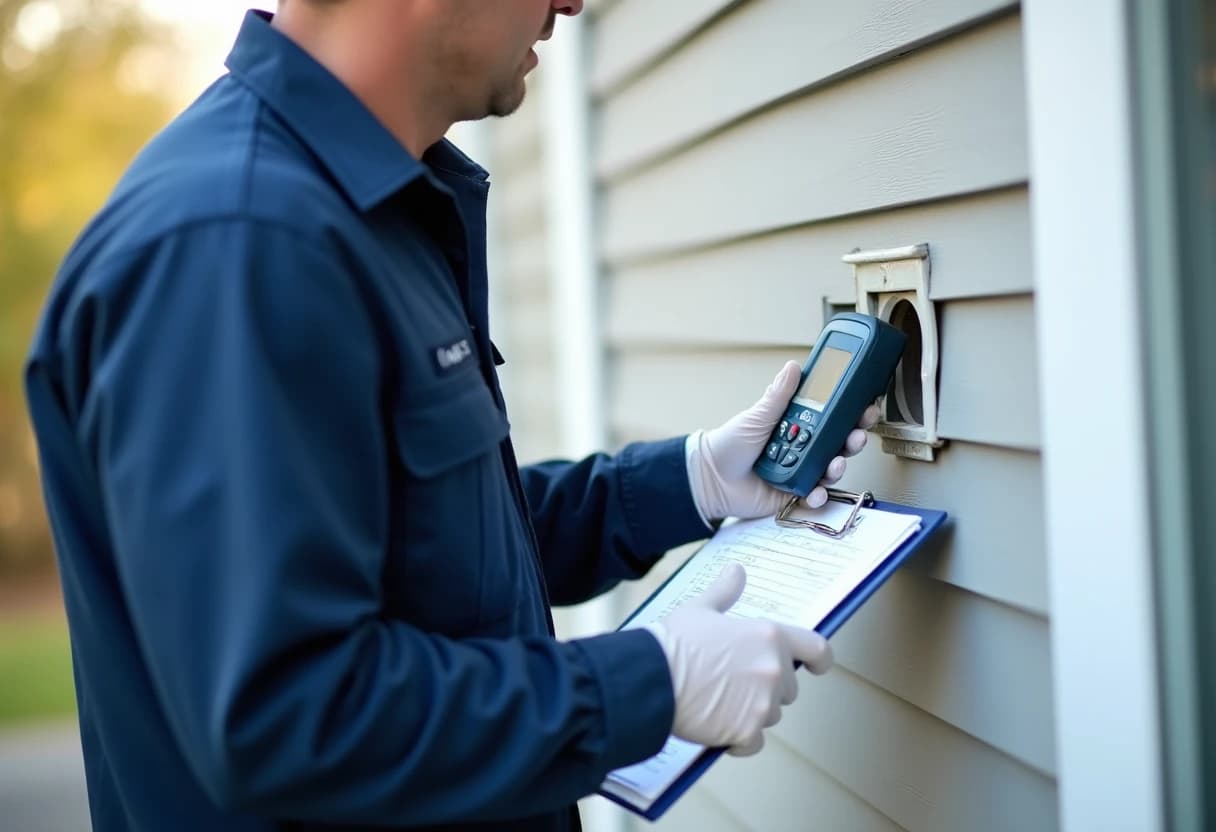
FEMA estimates around 2,900 home clothes dryer fires occur in the United States every year, and failure to clean the vent is the leading contributing factor. The trouble is that the danger is invisible: the lint that matters is not in the trap you clear after each load, it is packed inside the wall, ceiling or crawlspace duct you never see. Our Salem dryer vent inspection makes the invisible visible. A camera travels the entire exhaust run from the dryer connection to the outdoor termination, airflow is measured and compared against healthy benchmarks, and every finding is documented in a written report you can act on, file with your insurer, or hand to a home buyer.
Why Dryer Vent Inspection & Safety Check Matters for Salem Homes
An inspection is also how you avoid paying for cleaning you do not need. The dryer vent industry has its share of fear-based selling — alarming flashlight photos, on-the-spot 'emergency' upsells — and the antidote is measurement. Airflow in cubic feet per minute is not an opinion; a camera image of the duct interior is not a sales pitch. When we inspect a Salem home, the verdict follows the evidence: a short, straight, recently cleaned run that measures strong gets a clean bill of health and a reminder for next year. A long run with visible packing, a stuck damper or a code violation gets a specific, photographed finding and a flat-rate quote to fix exactly that. Homeowners who start with an inspection consistently spend less over time than those who buy blind cleanings on a calendar schedule — and they carry documentation the calendar-cleaners never have.
Ask a Salem firefighter what they think about dryer vents and you will get a strong opinion — lint fires are a call they run every year, and nearly all of them were preventable. Salem's stock spans nearly four centuries, from First Period and Federal mansions in the McIntire District to dense brick rowhouses and triple-deckers near The Point, plus mid-century homes in Witchcraft Heights and waterfront condo conversions around Pickering Wharf. Retrofitting modern HVAC into these historic shells produces some of the most improvised duct routing on the North Shore, threaded through chimneys, closets and centuries-old framing. Salem's harborfront location and famously old building stock combine sea air, original horsehair plaster dust and layers of renovation debris inside duct systems. With so many historic homes converted to condos and short-term rentals for the October crowds, owners here often discover their shared vent and duct runs have never been mapped, let alone cleaned. That combination of aging housing and hardworking laundry rooms is precisely where annual inspections earn their keep. Our Salem inspections take under an hour: airflow measured at the hood, camera run the length of the duct, termination and damper checked, lint load scored, code compliance reviewed. About a third of local vents pass clean. The rest get caught early — which is the entire point.
Our Dryer Vent Inspection & Safety Check Process in Salem
1Interview & Visual Assessment
First, context: your answers about drying performance and service history frame the inspection, and a walk of the laundry area frames the system. We identify the duct material, count visible elbows, locate where the run enters the structure, and note anything — crushing, kinks, tape-only joints — that already tells part of the story.
2Airflow Measurement at the Termination
With the dryer running on air-only, we measure exhaust velocity at the exterior termination using a calibrated anemometer and convert it to airflow volume. A healthy vent typically delivers strong, steady flow; a weak reading quantifies restriction before we ever look inside. This number anchors the whole report — objective, repeatable and comparable year over year.
3Full-Length Camera Inspection
The camera answers the question the airflow number raises. We feed it the full length of the duct, documenting interior condition foot by foot: where lint is packing, whether joints have pulled apart inside the wall, whether a previous installer used screws or materials the code prohibits. Nothing in the run stays hidden or hypothetical.
4Termination Hood & Damper Check
The exterior hood gets a hands-on inspection — flap movement, spring tension, seal condition, evidence of pest entry, and clearance from grade and snow lines. New England weather is hard on terminations; corroded hinges and stuck dampers are among our most common findings, and both restrict airflow as effectively as a clogged duct.
5Lint-Load Assessment & Fire-Risk Scoring
Combining the camera footage and airflow numbers, we score the system's lint load: how much fuel the duct is carrying and how fast it is accumulating based on household laundry volume. This converts raw findings into a clear risk statement — fine for now, clean this season, or clean immediately — with the evidence attached.
6Code-Compliance Review
We review the installation against the residential mechanical code for dryer exhaust: smooth rigid metal duct (not foil or plastic flex in concealed runs), a maximum of 35 feet equivalent length with deductions for each elbow, no screws penetrating the airstream, proper termination with a backdraft damper and no screen. Violations are photographed and explained.
7Written Safety Report & Recommendations
You receive a dated written report: airflow measurement, camera findings with photos, termination condition, lint-load score, code observations and a clear recommendation. It is formatted for practical reuse — insurance files, condo boards, real-estate disclosures — and it establishes the baseline every future annual inspection is compared against.
Benefits of Professional Dryer Vent Inspection & Safety Check in Salem
Fire Risk Caught Before It Matters
Lint fires do not announce themselves; they accumulate. An inspection converts that slow, invisible buildup into a number and a photograph you can act on. Homeowners who inspect annually essentially never experience a vent-related fire, because the fuel never gets the chance to reach a dangerous load.
Lower Drying Costs & Longer Appliance Life
Dryers fail early for one dominant reason: heat stress from poor exhaust. High-limit switches, thermal fuses and heating elements all die young in restricted systems. An annual inspection keeps the appliance operating within its design envelope, which routinely doubles the useful life of components that cost $150+ per repair visit.
Protection From Moisture & Carbon Monoxide
Every load of laundry evaporates roughly a gallon of water, and all of it must exit through this one duct. Joints that separated inside a ceiling deliver that gallon into your structure instead. The camera pass finds hidden leaks that no exterior symptom would reveal until damage was done.
No Unnecessary Cleanings
Fear sells a lot of dryer vent cleanings that ducts did not need. Our answer is evidence: your own duct on camera, your own airflow in numbers. When the data says clean, we quote it flat; when it says pass, you keep your money and gain a report. Either way you decide from facts.
Real-Estate & Insurance Documentation
Condo associations and landlords in Massachusetts are steadily adding dryer vent verification to their maintenance requirements after well-publicized multi-family lint fires. Our per-unit reports satisfy property managers and boards in one visit, with scheduling built for buildings — multiple units, one appointment block, individual documentation.
Hidden Code Violations Exposed
Many chronic lint problems are really installation problems: the duct violates length, material or fastening rules and will clog on schedule forever until corrected. The compliance review identifies the root cause, so you can stop paying to clean a duct that was built to fail.
Signs Your Salem Home Needs Dryer Vent Inspection & Safety Check
You Cannot Remember the Last Service
Dryer vents fail on a schedule set by laundry volume, duct length and installation quality — variables you cannot assess from the laundry room. Annual inspection is the standing recommendation of fire-safety agencies precisely because no visible cue reliably announces when a vent crosses from fine to dangerous.
Burning or Musty Smells During Operation
Trust your nose. Scorched smells mean lint meeting heat; sour smells mean water pooling where it should not; animal odors mean something has moved into the duct or hood. Each has a distinct cause and a distinct fix, and a single camera inspection distinguishes among them definitively.
The Dryer or Laundry Room Feels Hot
Modern dryers protect themselves from restricted vents by cycling their high-limit switch — you experience this as a hot machine, lukewarm loads and mysteriously long cycles. The safety is working, but it was not designed for daily duty. An inspection identifies the restriction before the safety component fails.
No Visible Exhaust at the Outside Hood
Step outside while the dryer runs: you should see the damper held open by strong airflow and feel a confident stream of warm air. A flap barely moving — or not moving at all — means severe restriction or a stuck damper, and the system needs professional attention.
Recent Renovation, New Dryer or New Home
Renovations disturb dryer ducts constantly — runs get crushed by new framing, terminations get sided or painted over, and 'temporary' flex connections become permanent. If contractors have worked near your laundry area or exterior walls, an inspection verifies the exhaust path survived the project.
Clothes Take More Than One Cycle
Drying time is the vent's report card. Loads that once took 45 minutes now taking 80 means delivered airflow has fallen substantially — and every extra minute is money and heat stress. If your laundry routine has quietly stretched over the past year, the duct is asking for an inspection.
Dryer Vent Inspection & Safety Check Cost in Salem, MA
A standalone dryer vent inspection in Greater Boston runs $79 to $149, with most single-family homes landing near the middle. The variables are access and complexity: a first-floor laundry with a short run to a reachable exterior hood sits at the low end, while roof terminations, multi-story runs, stacked or hard-to-move appliances, and long concealed ducts requiring extended camera work move the price up. Multi-unit buildings are quoted per unit with volume discounts for associations and property managers booking a full building. What the fee always includes: anemometer airflow measurement, full-length camera inspection, exterior hood and damper evaluation, lint-load scoring, code-compliance review, and the written photographic report. What it never includes: pressure to buy anything. If cleaning or repair is warranted, you receive a flat-rate quote alongside the findings — and if we perform the cleaning during the same visit, the inspection fee is credited toward it, which is how most customers who need work choose to proceed.
Want the full pricing picture? See our complete Boston-area cost guide or call (617) 390-7145 for an exact flat quote for your Salem home.
Local Knowledge: Salem, Essex County
Serving Salem means knowing Salem. Salem's stock spans nearly four centuries, from First Period and Federal mansions in the McIntire District to dense brick rowhouses and triple-deckers near The Point, plus mid-century homes in Witchcraft Heights and waterfront condo conversions around Pickering Wharf. Retrofitting modern HVAC into these historic shells produces some of the most improvised duct routing on the North Shore, threaded through chimneys, closets and centuries-old framing. Salem's harborfront location and famously old building stock combine sea air, original horsehair plaster dust and layers of renovation debris inside duct systems. With so many historic homes converted to condos and short-term rentals for the October crowds, owners here often discover their shared vent and duct runs have never been mapped, let alone cleaned. Those conditions shape how we work here: which brush heads come off the truck, how we protect finishes in older interiors, and what we expect to find when the camera goes into a 01970 duct system. Our crews are in and around Salem nearly every week — often for neighbors of past customers — so scheduling is fast and our arrival windows hold.
The Best Time of Year in Salem
Massachusetts winters stress the exhaust side of a dryer in ways most owners never see. Warm, moist exhaust meeting sub-freezing duct sections condenses, and that condensation turns dry lint into wet mats that cling and clog. Terminations ice up; damper flaps freeze shut overnight and get forced by the morning's first load; snow drifts bury low wall hoods entirely. A mid-winter inspection is often the year's most revealing one — we routinely find seasonal blockages that did not exist in September. If drying times slow every January in your house, that pattern itself is a finding worth investigating.
Why Choose Boston Air Duct Cleaners
Boston Air Duct Cleaners is a local, owner-operated company based at 1121 Washington St in West Newton — not a national franchise dispatching subcontractors. Every crew is our own: background-checked, factory-trained on commercial negative-pressure equipment, and fully insured. We quote flat prices before work begins, document every job with before-and-after photos, and follow NADCA-standard source-removal methods on every system we touch. That is why so much of our work comes from repeat customers, property managers and word-of-mouth referrals across Essex County.
Serving Salem and Surrounding Communities
Salem sits in the heart of our service area, and neighboring Peabody, Beverly, Marblehead, Danvers, Swampscott, Lynn appointments share the same routes. That density is why our response times in this part of Essex County are among our fastest — and why you will see our trucks in the area week after week.