
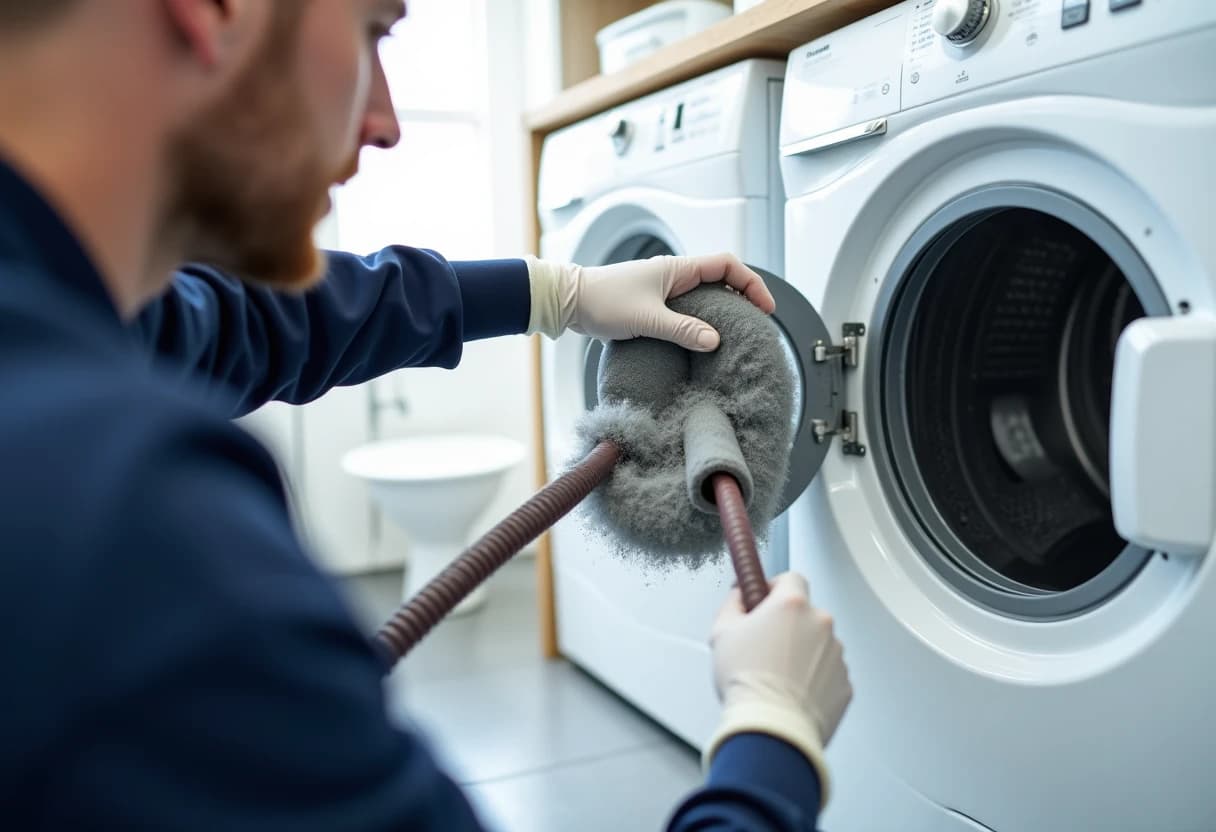
Dryer vent cleaning is the least expensive service we offer and arguably the most important. Lint is one of the most flammable materials in any home — fire academies literally use it as tinder — and a clogged vent surrounds your dryer's heating element with it while blocking the airflow that keeps temperatures in check. Our Natick crews clean the complete exhaust path: the transition hose behind the dryer, every foot of the wall or ceiling duct, and the exterior hood or roof cap where lint and bird nests collect. We finish with an airflow verification so you know the line is genuinely clear, not just cleaner.
Why Dryer Vent Cleaning Matters for Natick Homes
Beyond fire risk, a clogged dryer vent is a moisture and air-quality problem. Each load of laundry releases roughly a gallon of water as vapor, and all of it is supposed to leave the house through the vent. When lint restricts the line, that moisture lingers in the duct — turning lint into damp mats that block further — and backs up into the laundry area, where it condenses on cold surfaces, peels paint, and feeds mold and mildew growth. Gas dryers raise the stakes further: their exhaust carries combustion byproducts including carbon monoxide, and a blocked vent can push those gases back into living space. The EPA's guidance on indoor moisture and mold is blunt — control the moisture source and you control the growth. For laundry areas, the vent is the moisture source control, and keeping it clear is not optional. Our cleaning restores the full exhaust path so water vapor, heat and combustion byproducts go where they were designed to go: outside.
Dryer vents in Natick are rarely the short, straight runs the appliance manuals assume. Natick spans everything from South Natick's antique Colonials along the Charles to dense postwar capes and ranches built for returning GIs, plus a fast-growing crop of luxury condos and apartments around the mall and West Natick commuter rail. The postwar neighborhoods are heavily retrofitted with central air riding on original 1950s ductwork, while the new multifamily buildings run compact fan-coil and shared-riser systems. Teardown-rebuild activity keeps construction dust circulating through whole streets. Laundry hookups in these homes were often added or relocated long after construction, so vents snake through finished basements, chase old framing, and exit wherever a path could be found — sometimes at the roof, sometimes behind shrubbery at grade. Long, elbow-heavy runs collect lint far faster than simple ones. Natick's teardown wave means many homes sit next to active construction for months, and we constantly clear drywall and silica dust from systems near rebuild sites. Homes around Lake Cochituate also deal with elevated humidity and summer algae-season odors that get pulled into ductwork through basement returns. Our technicians clean Natick vents every week with equipment sized for exactly these conditions: rotary brush systems that hold power through 35-foot runs and multiple bends, and ladders and roof gear for high terminations.
Our Dryer Vent Cleaning Process in Natick
1Inspect the Dryer, Transition Duct & Vent Path
First we establish what we are cleaning: duct material, run length, number of bends, and termination type. We also measure baseline airflow at the exterior hood with the dryer running. That number matters — it is how we prove, at the end of the visit, that the cleaning actually restored the exhaust capacity your dryer needs.
2Protect the Laundry Area & Disconnect the Dryer
The dryer comes away from the wall and off the duct so we can clean the whole line, not just what a stub brush reaches. This is also when hidden problems surface: lint packed behind the machine, transition hoses crushed flat by the dryer being pushed back too far, and disconnected joints quietly venting into the wall.
3Rotary Brush the Full Length of the Duct
Mechanical agitation is what separates professional cleaning from blow-through methods. The rotary brush physically breaks up compacted lint that air pressure alone would only compress further. We select brush heads sized to your duct — standard 4-inch for code-compliant lines, alternates for older oversized or reduced runs — so the bristles actually contact the duct wall the whole way.
4Capture Everything With HEPA Vacuum Extraction
As the brush works, a HEPA-filtered vacuum runs simultaneously on the duct, pulling loosened lint into a sealed collection system instead of letting it blow into your laundry room or yard. The combination — agitate and extract at once — is what leaves the duct genuinely empty rather than redistributing the clog.
5Clean From the Exterior Termination Inward
Cleaning from both ends is non-negotiable on longer runs. The last few feet before the termination, and the hood itself, accumulate the densest lint — it is where moist exhaust meets cold outdoor air and fibers mat together. We open the hood, clear the damper, remove nesting if present, and brush the final duct section back toward the vacuum.
6Service the Transition Duct & Reconnect
Reassembly is done to code and to the appliance manual: UL-listed transition duct, proper clamps, no more than the listed connector length, and the dryer set far enough from the wall that the duct keeps its shape. We level the machine, verify the gas connection is undisturbed on gas units, and run a test cycle before calling the mechanical work done.
7Verify Airflow & Walk You Through the Results
We run the dryer and inspect the termination together — you should see the damper flap standing open under confident airflow, something many homeowners have literally never observed on their own vent. Your technician reviews photos, flags any code or condition issues for future attention, and records your service date for an annual reminder.
Benefits of Professional Dryer Vent Cleaning in Natick
Lower Energy Bills
Dryers are among the most energy-hungry appliances in the home, and a clogged vent makes every load cost more. Restoring design airflow means the heating element runs at intended temperatures for intended durations. The savings recur with every cycle, quietly, for as long as the vent stays clear.
Documentation for Insurance, Condos & Peace of Mind
For landlords and multi-family owners, documented dryer vent service is due-diligence gold: it demonstrates fire-safety maintenance across units in a single record. We service whole buildings in one visit with per-unit documentation, which is why property managers across Greater Boston keep us on an annual rotation.
Less Moisture, Mildew & Musty Odor
Basement laundry areas in New England fight humidity even on good days; a restricted dryer vent turns them into swamp rooms. Post-cleaning, customers consistently report the laundry area feels drier, smells cleaner, and stops fogging windows and sweating pipes during dryer cycles.
Dramatically Reduced Fire Risk
After cleaning, your dryer's exhaust runs cool and free, its high-temperature safety switches stop cycling, and the duct holds no fuel load waiting for a spark. For households that run daily laundry — big families, home businesses, multi-generational homes — that risk reduction compounds with every load.
Faster Drying Times
A blocked vent traps humid air in the drum, so the dryer tumbles wet clothes in wet air. Clearing the line lets each cycle actually exhaust the gallon of water a typical load releases. Drying times commonly drop 30 to 50 percent after cleaning a significantly restricted vent — time you get back every laundry day.
Safer Operation for Gas Dryers
Gas dryer exhaust carries combustion byproducts, including carbon monoxide, and the vent is the only path designed to remove them. A blocked line can force those gases back into living space. Cleaning restores the engineered exhaust path — a meaningful safety margin for any home with a gas appliance and a real necessity for homes with bedrooms near the laundry.
Signs Your Natick Home Needs Dryer Vent Cleaning
Clothes Take More Than One Cycle to Dry
The single most reliable symptom. A healthy dryer dries a standard load in 35 to 50 minutes; when towels need a second cycle or jeans come out damp at the waistband, exhaust airflow has dropped. The dryer has not gotten weaker — the vent has gotten narrower. Cleaning restores the original performance in one visit.
Burning Smell During a Cycle
A hot, singed odor while the dryer runs is lint beginning to scorch — on the heating element, in the internal ducting or in the exhaust line. It is the most serious warning sign on this list. Stop the dryer, let it cool, and do not run full loads again until the vent and machine interior have been cleaned.
It Has Been More Than a Year
New homeowners: assume the vent has never been cleaned unless the sellers documented otherwise. It is one of the most neglected systems in any real-estate transaction. A move-in cleaning costs $149 to $299, establishes your baseline, and starts the annual clock at a date you actually know.
Lint Building Up Behind or Inside the Dryer
Lint accumulating behind the machine, around the transition hose or under the dryer means the exhaust path is leaking or backing up — lint should travel out, not settle in. It is both a symptom of restriction and a hazard in itself, since this lint sits nearest the heat source. A cleaning addresses the cause and clears the accumulation.
Dryer or Clothes Are Hot to the Touch
A dryer cabinet too hot to rest a hand on, or clothes that come out scorching, means exhaust heat is not leaving the machine. That heat is being absorbed by the dryer's components — and by the lint in the duct. This is the pre-ignition condition fire investigators describe; treat it as urgent, not cosmetic.
Laundry Room Gets Hot and Humid
In winter, backed-up dryer moisture migrates to the coldest nearby surfaces — window frames, exterior-wall corners, basement sills — and condenses there, feeding mold New England homes already fight. If winter condensation spikes on laundry days, your vent is contributing and a cleaning will subtract it.
Dryer Vent Cleaning Cost in Natick, MA
For budgeting across property types: single-family homes run $149 to $299 as described; condos are usually $149 to $199 unless the unit vents to the roof; and multi-family buildings get per-unit rates that drop meaningfully when we clean all units in one visit — the arrangement most triple-decker owners and condo associations choose, both for cost and for the single insurance-ready service record covering the building. Commercial laundry and shared-venting systems are quoted after a walkthrough. Frequency matters to lifetime cost too: an annual cleaning is quick and inexpensive because accumulation is light, while a vent neglected for five years often needs blockage-level work at the top of the range, and sometimes reveals damage requiring repair. The cheapest way to own a dryer vent, year over year, is to clean it on schedule — which is why we log your service date and send a reminder when the next one is due.
Want the full pricing picture? See our complete Boston-area cost guide or call (617) 390-7145 for an exact flat quote for your Natick home.
Local Knowledge: Natick, Middlesex County
What makes Natick different? Natick spans everything from South Natick's antique Colonials along the Charles to dense postwar capes and ranches built for returning GIs, plus a fast-growing crop of luxury condos and apartments around the mall and West Natick commuter rail. The postwar neighborhoods are heavily retrofitted with central air riding on original 1950s ductwork, while the new multifamily buildings run compact fan-coil and shared-riser systems. Teardown-rebuild activity keeps construction dust circulating through whole streets. Natick's teardown wave means many homes sit next to active construction for months, and we constantly clear drywall and silica dust from systems near rebuild sites. Homes around Lake Cochituate also deal with elevated humidity and summer algae-season odors that get pulled into ductwork through basement returns. For duct and dryer vent systems, those local factors translate into specific, predictable problems — and predictable problems are the ones we solve fastest. Call (617) 390-7145, tell us your street and home style, and we will quote the job accurately the first time, usually in under five minutes.
The Best Time of Year in Natick
The region's old housing stock gives dryer venting a seasonal twist all its own. Many Massachusetts laundry hookups were retrofitted into basements and back halls generations after the house was built, producing long runs through unheated spaces — crawl areas, garages, exterior wall cavities. In winter, those cold sections become condensation zones where exhaust moisture freezes into lint ice; in the spring thaw, the melt soaks the accumulation into a paste. Homes near the coast add salt-air corrosion at the termination, seizing dampers and rusting hoods. Annual cleaning with a termination inspection catches all of this on a schedule, rather than during a February failure with a full laundry basket waiting.
Why Choose Boston Air Duct Cleaners
Boston Air Duct Cleaners is a local, owner-operated company based at 1121 Washington St in West Newton — not a national franchise dispatching subcontractors. Every crew is our own: background-checked, factory-trained on commercial negative-pressure equipment, and fully insured. We quote flat prices before work begins, document every job with before-and-after photos, and follow NADCA-standard source-removal methods on every system we touch. That is why so much of our work comes from repeat customers, property managers and word-of-mouth referrals across Middlesex County.
Serving Natick and Surrounding Communities
Beyond Natick, our crews cover the surrounding communities daily — including Framingham, Wellesley, Sherborn, Wayland, Ashland, Dover. Because routes cluster geographically, booking alongside a neighboring appointment often unlocks same-day service and combined-visit savings. Wherever you are in Middlesex County, the same flat-rate pricing, insured technicians and photo-documented process applies.