
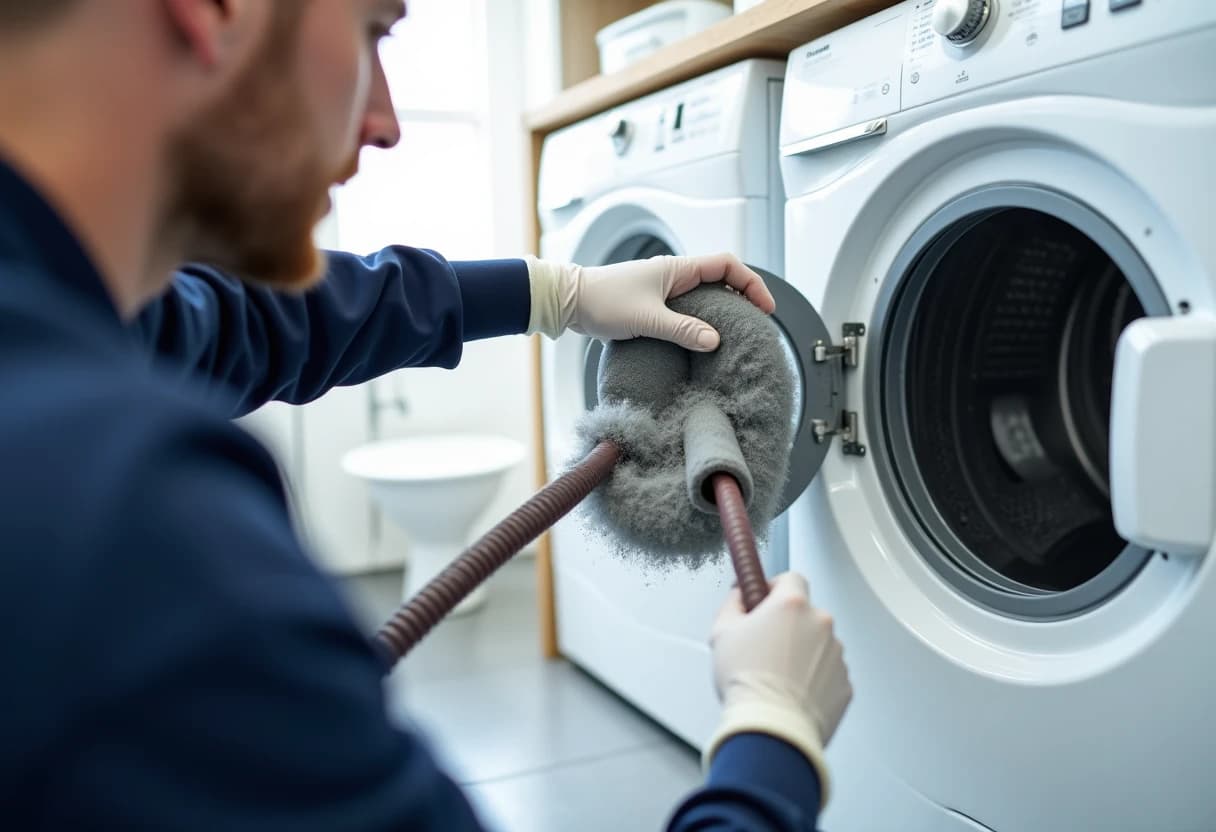
Every load of laundry sheds lint, and your dryer's lint screen catches only a fraction of it. The rest travels into the exhaust duct, where it snags on joints, elbows and screw tips and slowly packs the line shut. FEMA estimates around 2,900 home clothes dryer fires occur in the US every year, and failure to clean the vent is the leading contributing factor. Our East Boston dryer vent cleaning service removes that hazard completely: a rotary brush scrubs the full length of the duct while a HEPA vacuum captures the lint, and we clean from both the dryer side and the exterior termination so nothing is left behind.
Why Dryer Vent Cleaning Matters for East Boston Homes
The fire statistics on clothes dryers deserve to be taken literally. FEMA's national estimates attribute roughly 2,900 residential fires per year to clothes dryers, causing an estimated five deaths, one hundred injuries and $35 million in property loss — and the leading factor, cited in about a third of these fires, is failure to clean. The mechanism is simple: lint escapes past the screen on every cycle, accumulates in the duct, restricts airflow, and drives exhaust temperatures upward until the lint itself — which ignites easily and burns fast — meets a hot enough surface or a stray spark from the dryer's heating element. A professional cleaning breaks every link in that chain at once. It removes the fuel, restores the airflow that keeps operating temperatures in the safe range, and gives a trained technician a look at the transition duct, joints and termination where problems concentrate. For $149 to $299, it is the cheapest fire prevention a homeowner can buy, and it pays part of itself back in energy savings immediately.
East Boston homeowners tend to discover their dryer vent problem in winter, when a marginal vent finally fails: cold-stiffened exterior dampers stick, moist exhaust meets freezing duct sections and condenses into lint cement, and holiday laundry loads push the system past its limit. East Boston's streets are lined with tightly packed triple-deckers and brick rowhouses from the immigrant boom of the early 1900s, now joined by a fast-growing waterfront of new condo buildings along the harbor at Jeffries Point and Clippership Wharf. The old stock carries the usual retrofit story - radiator-era buildings with forced air added unit by unit - while the new waterfront buildings use heat pumps and ERV systems whose compact ductwork still needs regular cleaning. Basements sit low and damp this close to the harbor. Eastie homes deal with a distinctive air mix: salt-laden harbor humidity, jet exhaust and particulates from Logan's runways, and dust from a decade of waterfront construction. Many residents keep windows closed under the flight paths, which makes the condition of the ductwork matter even more since the HVAC system handles nearly all air turnover. Corroded exterior vent hoods from the salt air are something we replace here routinely. We keep winter availability across Suffolk County precisely because blocked-vent calls spike from December through February. Booking a fall cleaning is the smarter move — but whenever you call, our East Boston route coverage means fast scheduling and a flat price that includes the full run, elbows, and the exterior termination.
Our Dryer Vent Cleaning Process in East Boston
1Inspect the Dryer, Transition Duct & Vent Path
First we establish what we are cleaning: duct material, run length, number of bends, and termination type. We also measure baseline airflow at the exterior hood with the dryer running. That number matters — it is how we prove, at the end of the visit, that the cleaning actually restored the exhaust capacity your dryer needs.
2Protect the Laundry Area & Disconnect the Dryer
Before cleaning starts, we lay floor protection, carefully slide the dryer out without scarring floors, and disconnect the transition duct. Gas dryers are handled with proper care around the flexible gas connector — we never strain it. With the duct open at the appliance end, we have the access needed to clean the entire run.
3Rotary Brush the Full Length of the Duct
Mechanical agitation is what separates professional cleaning from blow-through methods. The rotary brush physically breaks up compacted lint that air pressure alone would only compress further. We select brush heads sized to your duct — standard 4-inch for code-compliant lines, alternates for older oversized or reduced runs — so the bristles actually contact the duct wall the whole way.
4Capture Everything With HEPA Vacuum Extraction
As the brush works, a HEPA-filtered vacuum runs simultaneously on the duct, pulling loosened lint into a sealed collection system instead of letting it blow into your laundry room or yard. The combination — agitate and extract at once — is what leaves the duct genuinely empty rather than redistributing the clog.
5Clean From the Exterior Termination Inward
The exterior hood gets hands-on service: damper flap cleaned and checked for free movement, cage or screen cleared (or removal recommended — screens on dryer terminations trap lint and violate most codes), and the visible duct section brushed. A damper that cannot close invites drafts and pests; one that cannot open blocks the entire system.
6Service the Transition Duct & Reconnect
Before reconnecting, we vacuum the dryer's own lint trap housing and accessible internal ducting, where years of screen bypass collects near the heating element. Then the transition duct is cleaned or replaced, clamped properly — never screwed, since screw tips inside the airstream snag lint — and the dryer is positioned to leave the duct an easy, unkinked path.
7Verify Airflow & Walk You Through the Results
Final checks: test cycle run, exhaust verified at the hood, laundry area vacuumed and everything returned to place. If we found issues cleaning cannot fix — overlong runs, crushed sections, illegal materials — you get straight documentation and a separate quote, never pressure. Most vents simply need this cleaning, once a year, and nothing more.
Benefits of Professional Dryer Vent Cleaning in East Boston
Less Moisture, Mildew & Musty Odor
Each load exhausts about a gallon of water as vapor. When the vent is blocked, that moisture backs into the laundry room and the duct itself — condensing on walls, peeling paint, and feeding mildew. A clear vent sends the humidity outside, drying out the laundry area and eliminating the damp, musty smell that clings to blocked systems.
Safer Operation for Gas Dryers
Gas dryer exhaust carries combustion byproducts, including carbon monoxide, and the vent is the only path designed to remove them. A blocked line can force those gases back into living space. Cleaning restores the engineered exhaust path — a meaningful safety margin for any home with a gas appliance and a real necessity for homes with bedrooms near the laundry.
Longer Dryer Lifespan & Fewer Repairs
New dryers deserve clean vents from day one — manufacturers require adequate exhaust airflow for warranty coverage, and delivery crews almost never clean the existing duct. If you have recently replaced your dryer and skipped the vent, you have connected a new engine to a clogged tailpipe.
Lower Energy Bills
Dryers are among the most energy-hungry appliances in the home, and a clogged vent makes every load cost more. Restoring design airflow means the heating element runs at intended temperatures for intended durations. The savings recur with every cycle, quietly, for as long as the vent stays clear.
Faster Drying Times
If laundry has become an all-day affair, the fix is rarely a new dryer. We regularly clean vents for customers who were quoted $1,000+ appliance replacements, and the old machine performs like new once it can breathe. Try the $149 to $299 solution before the four-figure one.
Documentation for Insurance, Condos & Peace of Mind
The quiet benefit is simply knowing. A dryer vent is invisible infrastructure that most homeowners have never once seen inside — and after our visit, you have photos, airflow numbers and a professional's assessment on file. That certainty, renewed once a year, is worth the modest price by itself.
Signs Your East Boston Home Needs Dryer Vent Cleaning
Burning Smell During a Cycle
That 'hot lint' smell is exactly what it seems: fibers reaching their scorching point somewhere in the airflow path. Sometimes it is a sock against the element; usually it is accumulation. Either way, the difference between a smell and a fire can be one overloaded cycle. We prioritize these calls for same-week service.
Dryer or Clothes Are Hot to the Touch
Excess heat is the fire chain's first visible link: restricted airflow, rising temperatures, and a duct lined with fuel. If the top of your dryer doubles as a hand warmer or the laundry room bakes during cycles, stop using the machine for long runs and have the vent cleaned promptly.
Clothes Take More Than One Cycle to Dry
Modern sensor-dry machines mask the problem by simply running longer, so watch total time rather than dampness. A sensor cycle that used to finish in 45 minutes and now runs 75 is reporting a restricted vent the only way it can. Believe it before the thermal fuse makes the point more expensively.
The Exterior Vent Flap Barely Opens
Step outside during a drying cycle and look at the termination hood. The damper should stand fully open with a strong, warm airstream you can feel from a foot away. A flap that flutters weakly, opens halfway or stays shut is showing you the blockage directly — the cheapest diagnostic in home maintenance.
Lint Building Up Behind or Inside the Dryer
Check your lint screen pattern too: if the screen suddenly catches less than usual, lint is bypassing it into the machine and duct — often because backpressure from a blocked vent is redirecting airflow. Less lint on the screen frequently means more in the duct, not cleaner laundry.
It Has Been More Than a Year
Households that run a load daily, dry pet bedding, or share laundry across a multi-family building accumulate lint at two to three times the average rate and should clean every six to twelve months. A quiet couple doing weekly laundry can stretch toward the annual mark, but rarely safely beyond it.
Dryer Vent Cleaning Cost in East Boston, MA
It helps to weigh the price against the alternatives. A $149 to $299 annual cleaning stands against: $10 to $20 a month in energy waste from a restricted vent; $150 to $400 appliance repair visits for blown thermal fuses and burned elements that blocked vents cause; $800 to $1,200 for the dryer replacement that chronic overheating hastens; and the uncapped cost of a lint fire, which averages five figures in property damage even when contained quickly. Insurance data and FEMA's fire statistics make dryer vent cleaning one of the highest-return maintenance dollars in the home. We keep the pricing flat and published because the service only works as prevention if people actually book it annually — surprise invoices are how homeowners talk themselves into skipping years, and skipped years are how blockages happen.
Want the full pricing picture? See our complete Boston-area cost guide or call (617) 390-7145 for an exact flat quote for your East Boston home.
Local Knowledge: East Boston, Suffolk County
Every town's ductwork tells the story of its housing. East Boston's streets are lined with tightly packed triple-deckers and brick rowhouses from the immigrant boom of the early 1900s, now joined by a fast-growing waterfront of new condo buildings along the harbor at Jeffries Point and Clippership Wharf. The old stock carries the usual retrofit story - radiator-era buildings with forced air added unit by unit - while the new waterfront buildings use heat pumps and ERV systems whose compact ductwork still needs regular cleaning. Basements sit low and damp this close to the harbor. Eastie homes deal with a distinctive air mix: salt-laden harbor humidity, jet exhaust and particulates from Logan's runways, and dust from a decade of waterfront construction. Many residents keep windows closed under the flight paths, which makes the condition of the ductwork matter even more since the HVAC system handles nearly all air turnover. Corroded exterior vent hoods from the salt air are something we replace here routinely. We plan East Boston jobs around those realities, from equipment selection to time on site, and it shows in the results. If you live near Maverick Square or anywhere across East Boston's 02128 area, we have almost certainly cleaned a system like yours before — and we can tell you exactly what to expect before we arrive.
The Best Time of Year in East Boston
New England's humid summers work on dryer vents from the other direction. High dew points mean exhaust moisture lingers in the duct instead of flashing away, and damp lint packs harder and grips duct walls tighter than dry lint ever does. Basement laundry areas — the Massachusetts default — add their own ambient humidity to the mix. By September, a vent that entered summer marginal is often matted solid. Summer is also nesting season at the other end of the line: birds and squirrels find an unscreened, warm, sheltered dryer termination irresistible, and a spring nest becomes a fall blockage. Our cleanings clear both problems and note whether your termination needs a code-compliant guard.
Why Choose Boston Air Duct Cleaners
As a West Newton-based company, we treat East Boston like the neighborhood it is — because for us, it is. Our reputation lives or dies on local referrals, so every job gets the full process: complete system cleaning under negative pressure, mechanical agitation of every run, blower compartment service, and a documented walkthrough before we leave. We are licensed and insured, our estimates are free and flat, and our schedule holds same-day slots for urgent calls. One visit and you will understand why neighbors keep our magnet on the fridge.
Serving East Boston and Surrounding Communities
Beyond East Boston, our crews cover the surrounding communities daily — including Winthrop, Revere, Chelsea, Charlestown, Boston, Everett. Because routes cluster geographically, booking alongside a neighboring appointment often unlocks same-day service and combined-visit savings. Wherever you are in Suffolk County, the same flat-rate pricing, insured technicians and photo-documented process applies.