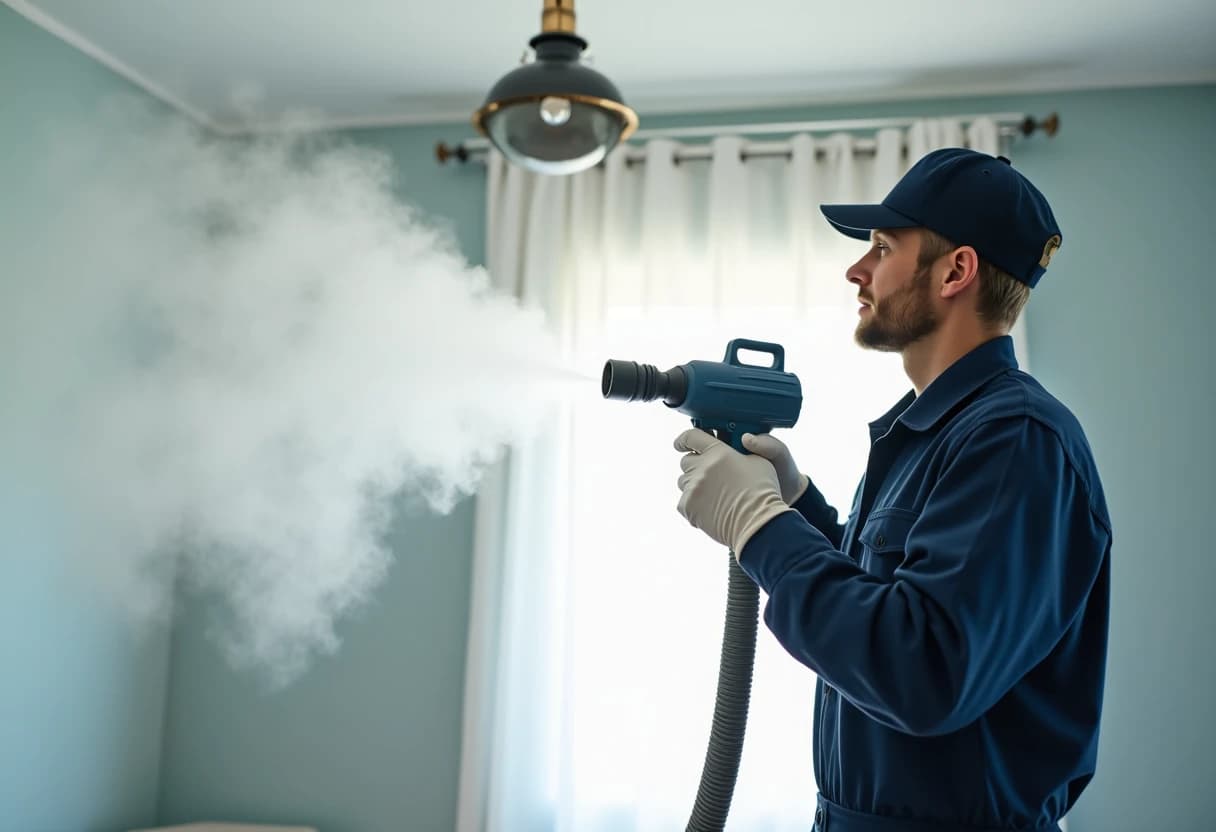
The EPA's guidance on duct treatments is specific: chemical biocides should be applied only after mechanical cleaning, and only products registered for use in HVAC systems belong in your air path. That is exactly how we sanitize ducts in Melrose. First the system is cleaned to bare surfaces under negative pressure; then an EPA-registered antimicrobial is atomized through the supply and return network at label rates, treating the seams, joints and textures no brush can fully reach. The treatment kills odor-causing bacteria, neutralizes microbial residue and inhibits regrowth — and because it lands on clean metal rather than a dust blanket, it actually works. We will also tell you plainly when your system does not need it.
Why Air Duct Sanitizing & Deodorizing Matters for Melrose Homes
Odors that ride the airflow defeat every surface-level remedy because the HVAC system out-circulates them all. A home's air passes through the duct network several times an hour; if that network holds odor-saturated residue, every pass re-scents every room. This is why the dog smell survives shampooing the carpets, why the smoke ghost outlives three coats of paint, and why the musty note returns each summer no matter what happens in the basement. Candles, plug-ins and sprays add fragrance on top of the odor — the olfactory equivalent of painting over rust. Source treatment is the only durable fix: remove the odor-holding film mechanically, then neutralize what remains chemically with an EPA-registered antimicrobial designed for HVAC application. Homes treated this way do not smell like lavender or 'clean linen' afterward. They smell like nothing — which, as anyone who has fought a persistent house odor knows, is the entire goal. The difference walking in the front door is immediate, and it is the single most commented-on result in our customer reviews.
Air in Melrose carries its own seasonal load. Melrose homeowners restore their Victorians constantly, and sanding, plaster repair and attic insulation projects leave fine renovation dust that recirculates through retrofit duct systems for years. Homes tucked against the Fells also pull in outsized loads of spring tree pollen from the reservation's forest. Melrose is a showcase of intact Victorian architecture - Queen Annes, mansard-roofed Second Empires and shingled four-squares built for early rail commuters - along with two-families near the Wyoming and Cedar Park stations. Most were built for steam or gravity heat, so today's forced-air and central-AC systems are retrofits squeezed through closets and attics with narrow, high-static duct runs. Between humid summers dampening duct interiors and long winters sealing houses around whatever the system holds, odors here compound year over year rather than airing out. Sanitizing resets that accumulation: after cleaning strips the film, EPA-registered treatment neutralizes the bacteria and residue that generate the smell, and the closed-window months circulate neutral air instead of concentrated history. Fall bookings from Melrose fill early for precisely this reason — call ahead of the season.
Our Air Duct Sanitizing & Deodorizing Process in Melrose
1Odor Assessment & Honest Qualification
Not every odor is a duct odor, and not every duct needs sanitizing — the EPA does not recommend routine biocide use, and neither do we. Your visit starts with diagnosis: camera inspection of the duct film, a look at the coil and drain pan, moisture readings where mustiness is the complaint. You get a straight answer about whether treatment is warranted before anyone sells you anything.
2Source-Removal Cleaning First
EPA guidance is explicit that treatments belong on cleaned surfaces only, and our sequence honors it: full source-removal cleaning before any product is introduced. This is the honest-versus-theater divide in duct sanitizing. Fog through dirty ducts and the smell returns in weeks as bacteria recolonize the untouched film; clean first and the treatment bonds to bare metal, where it can actually work.
3Product Selection & Preparation
We match the chemistry to the problem: an EPA-registered antimicrobial labeled for HVAC use as the base treatment, with odor-counteractant chemistry added for smoke, pet or severe musty situations. You see the product names and safety data sheets before application — never a vague 'proprietary treatment' — and we review re-entry timing, typically just a few hours, with you up front.
4Whole-System Antimicrobial Fogging
The treatment is atomized into a fine fog and introduced through the duct network while controlled airflow carries it the length of every supply and return. The fog deposits on all interior surfaces — including the seams, joints and corrugations mechanical cleaning cannot polish — killing odor-causing bacteria and neutralizing microbial residue on contact. Full-system coverage takes under an hour in most homes.
5Coil, Drain Pan & Blower Treatment
The dampest components carry the strongest biology, so the air handler wet section gets direct treatment: evaporator coil surfaces, the drain pan and its trap, and the blower wheel and housing. Musty odors disproportionately originate here — a slimy pan or biofilmed coil can perfume an entire house — and treating the ducts while skipping the equipment leaves the source in place.
6Deodorizing Pass for Stubborn Odors
Severe cases get layered treatment: antimicrobial fogging for the biology, counteractant application for chemical residue, and where warranted, guidance on the adjacent surfaces — returns pull air across ceilings and walls, and a smoke-saturated house can re-seed clean ducts. We are candid about that boundary: ducts are our domain, and we will tell you when a whole-home odor needs remediation beyond them.
7System Airing, Verification & Walkthrough
After label contact time elapses, we run the system to air the treatment through, reinstall registers, and walk the home with you register by register. You should smell neutral air — not fragrance, not chemicals, nothing. You receive the product documentation, re-entry guidance already satisfied by the airing process in most cases, and our callback commitment if any trace of the original odor resurfaces.
Benefits of Professional Air Duct Sanitizing & Deodorizing in Melrose
Odors Neutralized at the Source, Not Masked
The failure of masking is chemical: fragrance molecules and odor molecules coexist, so the nose gets both — that sickly candle-over-dog note every guest recognizes. Neutralization is different chemistry entirely: the odor compounds are broken down or bound, and the bacteria regenerating them are killed. Once the source stops producing, nothing needs covering, and the difference is unmistakable at the front door.
A True Reset for Newly Purchased Homes
For buyers of older Massachusetts homes especially, the duct system may hold half a century of prior households. A documented cleaning and EPA-registered treatment resets it to a known-clean baseline — valuable for allergy-prone families, essential where the sellers had pets or smoked, and reassuring in any home whose maintenance history is a shrug. Start fresh literally.
Pet Odor Elimination That Actually Holds
Multi-pet and long-tenure pet households benefit most: the accumulation scales with animal-years, and no surface cleaning touches the duct-borne share. Post-treatment, the improvement compounds — ongoing dander still sheds, but it lands in a neutral system rather than layering onto decades of saturated film, and routine filter changes keep the new baseline for years.
Musty Summer Smell Broken for Good
That damp blast at AC start-up is bacteria metabolizing humid duct film — a cycle that returns every muggy stretch and worsens annually. Sanitizing removes the film and leaves treated surfaces the biology cannot recolonize, so the next humid week produces silence from the registers. For many Massachusetts households this is the first summer without the smell in a decade.
Smoke Ghosts Finally Evicted
Fire and smoke events leave the same signature at higher intensity: acrid residue through every duct the system ran during or after the event. Alongside your restoration work, duct cleaning with counteractant treatment prevents the classic post-fire complaint — a rebuilt, repainted home that still exhales smoke on warm days. We coordinate with restoration timelines regularly.
Small Add-On Cost, Outsized Payoff
For sellers, the return is measurable: smell shapes showings within seconds, and a few hundred dollars of source treatment protects list price far better than thousands in cosmetic touch-ups layered over an odor buyers will attribute to bigger problems. Agents who have watched a musty or pet-scented listing sit know exactly why they refer us pre-listing.
Signs Your Melrose Home Needs Air Duct Sanitizing & Deodorizing
Musty Blast When the Heat or AC Starts
Many households normalize this smell for years — a funky thirty seconds, then fine, so it never quite becomes a project. It should: the odor is live biology metabolizing residue in your air path, it recurs because the substrate remains, and it trends worse. One treatment visit ends a nuisance you had stopped noticing you tolerated.
Pets Present or Past
The threshold question: can guests tell you have animals without seeing them? If yes, the ducts are broadcasting, and the smell is stronger than your adapted nose reports. Households with multiple pets or long pet tenure carry proportionally heavier duct reservoirs, and they see the most dramatic before-and-after from a single cleaning-plus-treatment visit.
You Just Bought the Home
Even a home that smells fine at purchase benefits from the reset when history is unknown: odor thresholds are personal, previous owners' normal may not be yours, and the first heating season has a way of releasing what summer showings concealed. Buyers who sanitize at move-in never have to wonder what October's first furnace cycle will announce.
Guests Notice a Smell You No Longer Can
A useful self-test: leave home for a full week, then pay attention in the first ten seconds through the front door before your nose recalibrates. Whatever you catch in that window is what everyone else gets every visit. If there is anything there — mustiness, animals, staleness — the air system is the first place to look.
Odors Return No Matter How Much You Clean
The tell is the rhythm: rooms smell fine with the system off, and the odor rebuilds when it runs. Surfaces cannot cause that pattern; airflow can. Homeowners often spend months eliminating suspects — carpets, drains, trash areas, basements — before checking the one system that touches every room. The register test takes ten seconds: smell the air it delivers.
Smoke History in the Home
The classic frustration: a fully renovated home that still exhales cigarettes on the first hot day. The renovation never entered the ductwork, where smoke residue coats every run the returns fed for years. If your renovation checklist did not include the air system, the smell has a protected reservoir — and an easy explanation for its persistence.
Air Duct Sanitizing & Deodorizing Cost in Melrose, MA
Air duct sanitizing in Greater Boston runs $250 to $500 as a standalone service, and $75 to $200 when bundled with duct cleaning — the bundle discount reflects that the system is already sealed, accessed and under negative pressure, so the marginal cost is chemistry and application time rather than a second full mobilization. Within those ranges, price tracks system size (number of runs and zones determines product volume and fogging time), the odor profile (straightforward musty or pet situations need the antimicrobial pass alone, while smoke and severe cases add counteractant treatment), and how much wet-section work the coil, drain pan and blower need. One structural note on honest pricing: because effective sanitizing requires clean surfaces, a standalone quote for a system with dirty ducts must include cleaning — which is why legitimate standalone pricing converges toward the bundle anyway. A company happy to fog your uncleaned ducts for $149 is selling you a scented failure; the EPA's guidance that biocides follow mechanical cleaning is not a formality, it is why the treatment works at all.
Want the full pricing picture? See our complete Boston-area cost guide or call (617) 390-7145 for an exact flat quote for your Melrose home.
Local Knowledge: Melrose, Middlesex County
Every town's ductwork tells the story of its housing. Melrose is a showcase of intact Victorian architecture - Queen Annes, mansard-roofed Second Empires and shingled four-squares built for early rail commuters - along with two-families near the Wyoming and Cedar Park stations. Most were built for steam or gravity heat, so today's forced-air and central-AC systems are retrofits squeezed through closets and attics with narrow, high-static duct runs. Melrose homeowners restore their Victorians constantly, and sanding, plaster repair and attic insulation projects leave fine renovation dust that recirculates through retrofit duct systems for years. Homes tucked against the Fells also pull in outsized loads of spring tree pollen from the reservation's forest. We plan Melrose jobs around those realities, from equipment selection to time on site, and it shows in the results. If you live near Melrose Main Street or anywhere across Melrose's 02176 area, we have almost certainly cleaned a system like yours before — and we can tell you exactly what to expect before we arrive.
The Best Time of Year in Melrose
Spring earns its place in the sanitizing calendar through real estate and fresh starts. The March-through-June listing season puts thousands of Massachusetts homes in front of buyers whose first impression is olfactory, and pre-listing treatment — source-removal cleaning plus deodorizing — is the highest-leverage few hundred dollars a seller with any odor history can spend. Spring is also peak move-in season, and the between-closing-and-boxes window is the ideal moment to reset an inherited system: empty house, open access, and the previous owners' biological archive neutralized before your family's first night. Finally, spring cleaning momentum is legitimate: households already deep-cleaning surfaces get compounding returns from treating the one system that re-contaminates them — finish the job upstream, and the downstream cleaning holds.
Why Choose Boston Air Duct Cleaners
As a West Newton-based company, we treat Melrose like the neighborhood it is — because for us, it is. Our reputation lives or dies on local referrals, so every job gets the full process: complete system cleaning under negative pressure, mechanical agitation of every run, blower compartment service, and a documented walkthrough before we leave. We are licensed and insured, our estimates are free and flat, and our schedule holds same-day slots for urgent calls. One visit and you will understand why neighbors keep our magnet on the fridge.
Serving Melrose and Surrounding Communities
Melrose sits in the heart of our service area, and neighboring Malden, Stoneham, Wakefield, Saugus, Medford, Reading appointments share the same routes. That density is why our response times in this part of Middlesex County are among our fastest — and why you will see our trucks in the area week after week.