
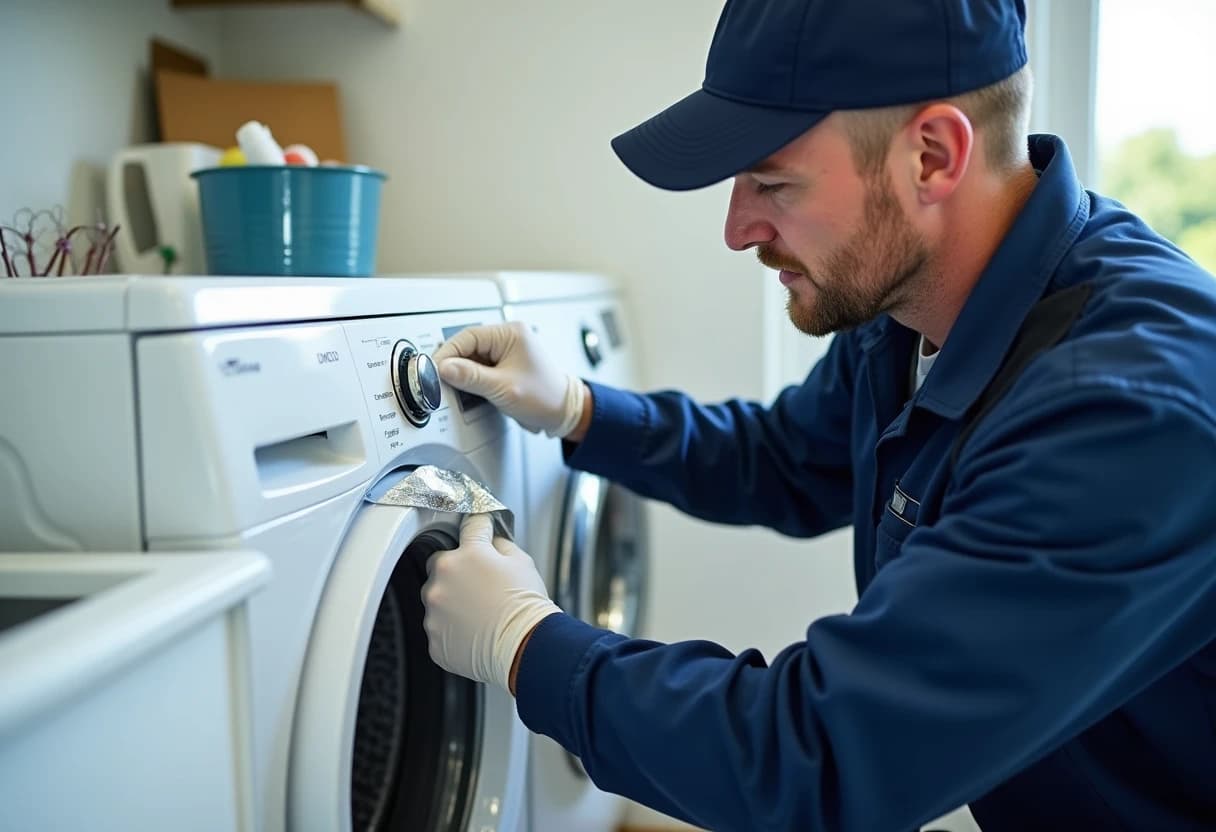
Homeowners in Melrose usually discover a broken dryer vent through a symptom that seems unrelated: a water stain on the ceiling under the laundry, lint appearing in the basement, a mildew smell in one wall, or an energy bill that crept up as the dryer strained. Our repair service finds the failure and fixes it for good — with 4-inch smooth rigid metal duct, joints fitted and clamped without airstream-piercing screws, seams sealed with UL-listed foil tape, and a new exterior hood where the old damper has failed. We are local, insured, and we photograph every repair so you can see exactly what was wrong and exactly what made it right.
Why Dryer Vent Repair Matters for Melrose Homes
The exterior termination takes the worst weather abuse of any part of the system, and its failures invite problems in both directions. A damper flap that has rusted, cracked or lost its spring no longer closes — leaving a permanent 4-inch hole in your building envelope through which winter air pours in (homeowners feel it as a cold laundry room and see it on heating bills), and through which birds, squirrels and mice enter to nest in a warm, sheltered duct. A damper wedged shut by paint, ice or a failed hinge blocks the vent as thoroughly as any lint clog. Screened hoods, common on older installs and on handyman replacements, violate dryer-vent code for a simple reason: the mesh mats over with lint in months. We replace failed terminations with quality metal hoods sized to the duct, with free-swinging dampers and pest protection designed for dryer exhaust, sealed to the siding or masonry so the wall assembly stays dry. It is often the cheapest repair on the menu and one of the most consequential.
Winters around Melrose are hard on dryer vents in ways warmer regions never see. Melrose homeowners restore their Victorians constantly, and sanding, plaster repair and attic insulation projects leave fine renovation dust that recirculates through retrofit duct systems for years. Homes tucked against the Fells also pull in outsized loads of spring tree pollen from the reservation's forest. Exhaust moisture condenses and freezes in duct sections crossing cold basements and exterior walls, dampers ice shut, and snow buries grade-level hoods. Melrose is a showcase of intact Victorian architecture - Queen Annes, mansard-roofed Second Empires and shingled four-squares built for early rail commuters - along with two-families near the Wyoming and Cedar Park stations. Most were built for steam or gravity heat, so today's forced-air and central-AC systems are retrofits squeezed through closets and attics with narrow, high-static duct runs. Those homes often route vents through the coldest parts of the structure, which is why our Melrose condensation repairs so often involve insulating and re-sloping duct in unheated space. We fix the winter failure and the design weakness behind it, so the same problem does not return with the next cold snap.
Our Dryer Vent Repair Process in Melrose
1Diagnose the Full Exhaust Path
Repair starts with finding every failure, not just the obvious one. We trace the duct from the dryer's outlet to the exterior termination, inspecting each accessible section and joint, and test airflow at both ends with the dryer running. Weak exterior flow with strong drum heat means the exhaust is escaping en route — and we find where.
2Protect the Area & Open Access
Access is half of dryer vent repair in older homes. We come prepared for ceiling-hung basement runs, duct concealed above suspended ceilings, and sections buried in soffits. Our aim is always the least invasive route to a proper repair — and clear communication before anything is opened.
3Reconnect & Properly Fasten Separated Joints
We do not just push a failed joint back together; we rebuild it so it cannot fail the same way. That means cleaning mating surfaces, correcting the misalignment or unsupported weight that pulled the joint apart, adding hangers or strapping where the run lacked support, and sealing the finished connection against both air and moisture leakage.
4Replace Crushed, Corroded or Non-Compliant Sections
Duct that is crushed, kinked, rusted through or made of prohibited material gets replaced, not patched. We install 4-inch smooth-interior rigid metal duct — the material the IRC's dryer exhaust rules specify — cut to fit, joined without airstream-piercing fasteners, and supported so it cannot sag into water-pooling bellies.
5Cure Condensation: Slope, Seal & Insulate
Moisture-damaged components are replaced as part of the cure: corroded duct sections, rusted clamps, sodden insulation. We also check the termination damper, since a flap frozen or stuck partly shut is a common hidden cause of the backpressure that drives moist exhaust out through joints in the first place.
6Repair or Replace the Exterior Hood & Damper
Where pests have entered through a failed damper, we remove nesting material from the duct, clean the affected section, and install a termination with pest protection that does not restrict airflow. If the old hood was painted shut — common on older multi-family buildings — we free or replace it and note the repaint risk for the future.
7Replace the Transition Duct & Reset the Dryer
This step catches the last common failure point: many 'vent problems' are actually transition hoses flattened to a slot behind the machine. The compliant connector, correctly fitted and protected by proper dryer placement, ensures the airflow we restored in the wall actually reaches the duct from the appliance.
8Verify Airflow & Document the Repair
You receive photo documentation of the failures found and the repairs made — valuable for insurance files, condo associations, home sales and your own records. We also note the condition of everything we did not repair, so you have an honest picture of the vent's remaining lifespan and its next likely maintenance date.
Benefits of Professional Dryer Vent Repair in Melrose
A Serious Fire Hazard, Eliminated
Code-compliant materials are themselves a safety upgrade: smooth rigid metal resists lint accumulation, clamped joints hold under heat and vibration, and a proper termination keeps nesting animals from plugging the line. A repaired vent is not just fixed — it is a fundamentally lower-risk system than what it replaces.
Decades of Reliable Service From One Repair
We stand behind the work: repairs are documented, photographed and guaranteed, and because we also clean vents, we see our own repairs again on annual visits — a feedback loop that keeps our standards honest. The repair you buy is one we expect to inspect ourselves for years.
Restored Drying Performance
Customers are often startled by the change: a vent we repaired after years of gradual crushing gives them back the dryer they bought. If your drying times worsened after an appliance delivery, a renovation, or a move of the machine — events that crush transitions and separate joints — repair, not replacement, is very likely the answer.
Code Compliance & Inspection-Ready Documentation
Compliance is not paperwork for its own sake; each code provision encodes a failure the industry learned about the hard way. Smooth interiors resist lint. Clamped joints survive heat. Unscreened dampers do not mat over. A to-code vent is simply a vent engineered not to fail the common ways.
Pest Entry Points Closed
A dryer vent with a failed damper is an open, warm, sheltered 4-inch doorway — irresistible to birds, squirrels and mice, whose nests then block the duct and whose presence contaminates it. Repairing the termination closes the doorway with a damper and guard designed for dryer exhaust, ending the nest-remove-repeat cycle for good.
Lower Energy and Repair Bills
A dryer fighting a damaged vent runs longer per load and hotter per minute — both metered directly on your utility bill, often $10 to $20 a month for a busy household. Repair returns cycles to design length. The savings recur every laundry day, quietly repaying the one-time repair cost within the first year or two.
Signs Your Melrose Home Needs Dryer Vent Repair
Visibly Damaged, Kinked or Sagging Duct
Sag matters more than it looks: a bellied section pools condensate, which soaks lint into a mat, which adds weight, which deepens the sag. The cycle ends in a blocked or rusted-through low point. Adding proper support and restoring slope while the duct is still sound is a small repair that prevents a large one.
Musty or Mildew Smell in the Laundry Area
If freshly dried clothes pick up a sour or musty note, moisture is lingering somewhere in the exhaust path — often damp lint mats in a bellied or leaking duct section. Cleaning removes the mats; repair fixes the sag or leak that created them. Without the repair, the mats and the smell return.
A Home Inspection or Appliance Tech Flagged the Vent
When an appliance technician condemns your vent while servicing the dryer, believe them: they have just measured the backpressure your machine fights on every load. Repairing the duct protects the repair they made — a new heating element or thermal fuse installed against a failed vent will simply fail again.
Lint Appearing Where It Shouldn't
Lint around the exterior hood is normal in small amounts; lint anywhere else along the run is not. Interior lint accumulation is doubly serious because it is fuel collecting where no cleaning schedule can reach it — the escape point must be sealed, and the accessible accumulation removed.
Slow Drying That Cleaning Didn't Fix
The symptom pattern is diagnostic: strong heat in the drum with weak or absent airflow at the exterior hood means exhaust is going somewhere else. That somewhere is the failure point. It is a fifteen-minute find for a technician with airflow instruments and knowledge of how these runs are routed in local housing.
Exterior Damper Broken, Stuck or Missing
Look at the hood outside: a damper flap hanging loose, rusted stiff, cracked off, painted shut or missing entirely is a failed termination. Stuck open, it drains heat and admits pests all winter; stuck shut, it blocks the vent completely. Either way the fix is a proper replacement hood — one of the fastest, most cost-effective repairs on our list.
Dryer Vent Repair Cost in Melrose, MA
Dryer vent repair in Greater Boston typically runs $150 to $450, and the spread is about what failed and where. At the low end: transition hose replacement with a compliant semi-rigid connector, exterior hood and damper replacement, or reconnecting an accessible separated joint — each roughly $150 to $250 including parts. Mid-range, $250 to $350, covers replacing damaged duct sections with rigid metal, curing condensation with re-sloping, sealing and insulation, or repairs involving moderate access work. The top of the range, $350 to $450, reflects concealed-joint repairs requiring access openings, multi-failure jobs combining several fixes, corroded runs needing substantial replacement, or difficult terminations on upper walls and roofs. Every quote is flat and follows a diagnosis you can see — photos of the actual failure — so you know what you are paying to fix. If damage is extensive enough that full replacement or rerouting makes better sense than repair, we say so and quote that option separately rather than selling repairs onto a duct that has reached its end.
Want the full pricing picture? See our complete Boston-area cost guide or call (617) 390-7145 for an exact flat quote for your Melrose home.
Local Knowledge: Melrose, Middlesex County
Serving Melrose means knowing Melrose. Melrose is a showcase of intact Victorian architecture - Queen Annes, mansard-roofed Second Empires and shingled four-squares built for early rail commuters - along with two-families near the Wyoming and Cedar Park stations. Most were built for steam or gravity heat, so today's forced-air and central-AC systems are retrofits squeezed through closets and attics with narrow, high-static duct runs. Melrose homeowners restore their Victorians constantly, and sanding, plaster repair and attic insulation projects leave fine renovation dust that recirculates through retrofit duct systems for years. Homes tucked against the Fells also pull in outsized loads of spring tree pollen from the reservation's forest. Those conditions shape how we work here: which brush heads come off the truck, how we protect finishes in older interiors, and what we expect to find when the camera goes into a 02176 duct system. Our crews are in and around Melrose nearly every week — often for neighbors of past customers — so scheduling is fast and our arrival windows hold.
The Best Time of Year in Melrose
There is also a renovation-season rhythm to dryer vent damage in Greater Boston. The region's busiest remodeling months — spring through fall — are when concealed ducts get crushed by new framing, disconnected by trades working in ceilings, buried behind new finishes, or simply forgotten in layout changes that leave the dryer farther from its termination than code allows. Many of our fall repair calls trace directly to summer projects. If your home was renovated this year and laundry performance changed afterward, the connection is likely literal: a disturbed joint or flattened section behind the new work. We diagnose with airflow testing before opening anything, and where access through fresh finishes is needed, we keep it minimal and coordinate with your contractor's restoration.
Why Choose Boston Air Duct Cleaners
What separates us from the coupon crowd is simple: we do the whole job, we prove it, and we charge what we quoted. Our technicians clean supplies, returns, trunks and blower compartments on every visit — never a cosmetic vent wipe. Photo documentation comes standard, pricing is flat and confirmed up front, and our trucks carry true commercial vacuum equipment, not rented shop-vacs. Based in West Newton and serving Melrose year-round, we answer our own phone at (617) 390-7145 and stand behind every cleaning with a satisfaction guarantee.
Serving Melrose and Surrounding Communities
Melrose sits in the heart of our service area, and neighboring Malden, Stoneham, Wakefield, Saugus, Medford, Reading appointments share the same routes. That density is why our response times in this part of Middlesex County are among our fastest — and why you will see our trucks in the area week after week.